What Is PPC? A Complete Guide for 2026

Pay-per-click advertising is one of the most effective ways to drive qualified traffic to your website. When done right, PPC delivers immediate visibility, precise targeting, and measurable results that directly impact your bottom line.
But here’s the thing – PPC can also burn through your budget faster than you can say “Google Ads” if you don’t know what you’re doing. We’ve seen businesses waste thousands on poorly targeted campaigns that attract clicks but zero customers.
In this guide, we’ll break down everything you need to know about PPC advertising, from the basics to advanced strategies that actually work. You’ll discover how to create campaigns that generate real returns, not just impressive click-through rates.
For more detail, see our guide on PPC keyword research guide.
What Is PPC Advertising?
PPC stands for pay-per-click – a digital advertising model where you pay each time someone clicks on your ad. Think of it as buying visits to your website instead of earning them organically through SEO.
Here’s how it works: You bid on keywords relevant to your business. When someone searches for those terms, your ad appears above or below the organic search results. You only pay when someone actually clicks your ad – not when it displays.
This makes PPC fundamentally different from traditional advertising where you pay for impressions regardless of engagement. With PPC, every dollar spent represents genuine interest from potential customers.
Types of PPC Advertising
PPC extends far beyond Google search ads. The most common types include:
- Search ads: Text-based ads that appear in search engine results
- Display ads: Visual banners shown on websites across the internet
- Shopping ads: Product listings with images and prices
- Video ads: Promotional content on platforms like YouTube
- Social media ads: Sponsored posts on Facebook, Instagram, LinkedIn, and Twitter
Why Google Ads Dominates PPC
Google Ads handles over 8.5 billion searches daily, making it the largest PPC platform by far. When people need something, they Google it – which means your ads appear exactly when intent is highest.
What sets Google Ads apart is its auction system. You’re not just bidding on ad placement – you’re competing on relevance, quality, and user experience. Google rewards advertisers who create helpful, relevant ads with better positions and lower costs.
How Google’s Ad Auction Works
Google doesn’t simply show the highest bidder’s ad. Instead, it uses Ad Rank – a combination of your bid amount, ad quality, and expected impact of ad extensions. This means a well-crafted ad with a lower bid can outrank a poorly written ad with a higher bid.
Quality Score plays a massive role here. Google calculates this based on your ad’s relevance, expected click-through rate, and landing page experience. Higher Quality Scores mean lower costs and better ad positions – a win-win for advertisers who focus on user value.
Essential Elements of Successful PPC Campaigns
Creating profitable PPC campaigns requires attention to three core elements. Get these right, and your ads will generate consistent returns. Miss any one, and you’ll struggle to break even.
Keyword Research and Selection
Your keyword strategy makes or breaks your campaign. Focus on terms that indicate buying intent rather than just general interest. Someone searching “web design company Melbourne” is much more likely to hire you than someone searching “what is web design”.
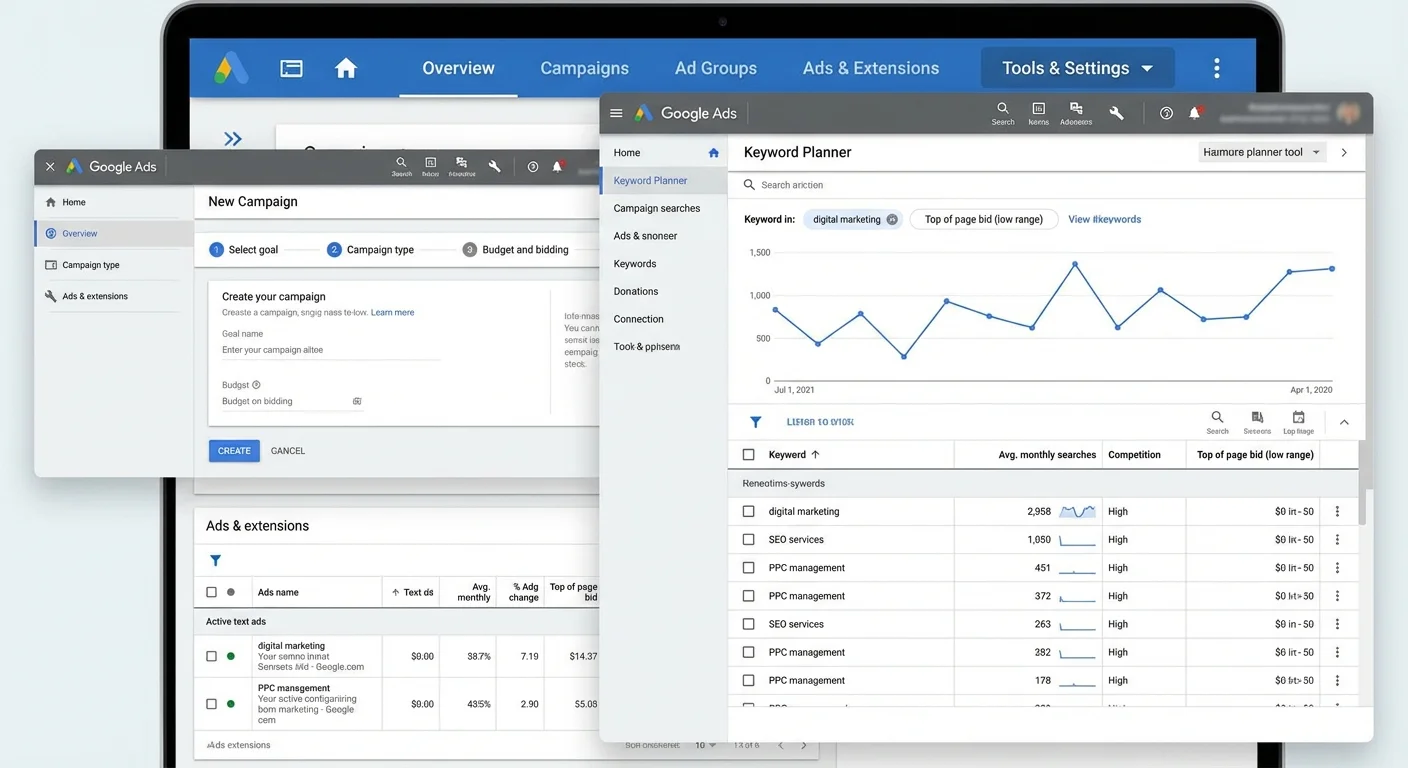
Build your keyword lists using tools like Google Keyword Planner, but don’t stop there. Analyse your competitors’ ads, review your website analytics for organic terms that convert, and consider seasonal variations in search behaviour.
Remember to use different match types strategically:
- Exact match: Precise control but limited reach
- Phrase match: Balanced approach for most campaigns
- Broad match: Maximum reach but requires careful negative keyword management
Landing Page Optimisation
Your landing page determines whether clicks convert into customers. Google also evaluates landing page quality when calculating your Quality Score, directly affecting your costs and ad positions.
High-converting landing pages share common characteristics:
- Clear, compelling headlines that match your ad copy
- Obvious calls-to-action that tell visitors exactly what to do next
- Fast loading speeds (under 3 seconds is essential)
- Mobile-friendly design that works perfectly on all devices
- Trust signals like testimonials, reviews, and security badges
Many businesses make the mistake of sending all PPC traffic to their homepage. Instead, create dedicated landing pages for each campaign that speak directly to the searcher’s intent. For insights on improving website performance, check out our guide on why speed matters in web design.
Ad Copy That Converts
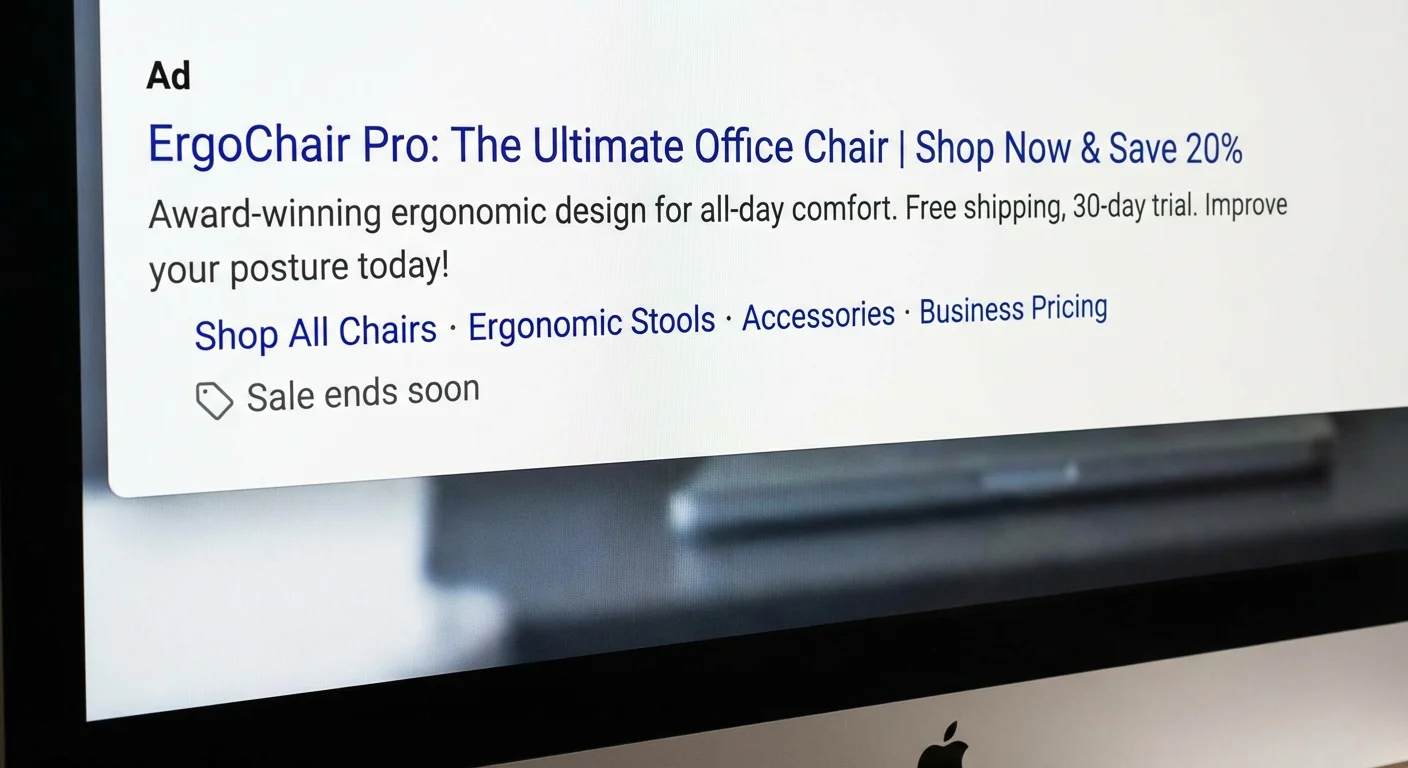
Your ad copy needs to accomplish three things: grab attention, communicate value, and encourage clicks. You have limited space – typically 30 characters for headlines and 90 for descriptions – so every word counts.
Effective ad copy includes:
- Your target keyword in the headline
- A clear value proposition or unique selling point
- A compelling call-to-action
- Relevant ad extensions (sitelinks, callouts, structured snippets)
For detailed strategies on creating high-performing ad copy, explore our 16 tactics for converting AdWords copy.
PPC Best Practices for Maximum ROI
Launching your campaign is just the beginning. Successful PPC management requires ongoing optimisation and refinement. Here’s how to improve your results consistently.
Campaign Structure and Organisation
Organise your campaigns logically around your business goals. Create separate campaigns for different product lines, services, or geographic targets. This allows for more precise budget allocation and performance tracking.
Within each campaign, group related keywords into tightly themed ad groups. This enables you to write more relevant ad copy and direct traffic to more specific landing pages. For example, separate “web design services” from “SEO services” even if they’re in the same campaign.
Smart Bidding and Budget Management
Google’s automated bidding strategies can significantly improve performance when used correctly. Target CPA (cost per acquisition) works well for established campaigns with conversion data, while Target ROAS (return on ad spend) suits businesses with varying product values.
However, don’t rely entirely on automation. Monitor performance closely and adjust when Google’s algorithms don’t align with your business objectives. Our article on AdWords smart bidding best practices provides detailed guidance.
Remarketing for Better Results
Remarketing allows you to reconnect with people who’ve already visited your website. These audiences typically convert at higher rates and lower costs because they’re already familiar with your brand.
Create different remarketing lists for different user behaviours:
- All website visitors (general brand awareness)
- Product page viewers (specific product promotions)
- Cart abandoners (completion incentives)
- Past customers (upselling opportunities)
Learn more about building effective remarketing strategies in our guide to 5 remarketing lists that boost your AdWords game.
Common PPC Mistakes to Avoid
Even experienced marketers make costly PPC mistakes. Here are the most common pitfalls and how to avoid them.
Ignoring Negative Keywords
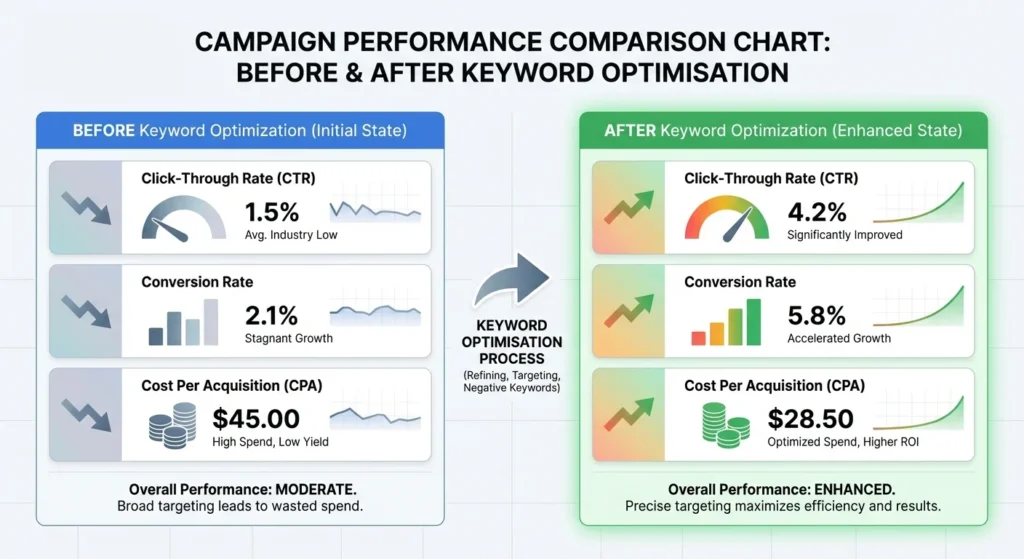
Negative keywords prevent your ads from showing for irrelevant searches. Without them, you’ll waste money on clicks from people who’ll never convert. Regularly review search terms reports and add irrelevant queries as negative keywords.
Set-and-Forget Mentality
PPC requires active management. Market conditions change, competitors adjust their strategies, and seasonal trends affect search behaviour. Schedule weekly reviews to optimise bids, pause underperforming keywords, and test new ad variations.
Should You Manage PPC In-House or Outsource?
Many businesses start managing PPC themselves to save money, but this often backfires. Google Ads looks simple on the surface, but effective campaign management requires deep platform knowledge, ongoing optimisation skills, and significant time investment.
Professional PPC management typically pays for itself through improved performance. Experienced specialists know how to avoid costly mistakes, implement advanced strategies, and extract maximum value from your budget.
Consider outsourcing if you:
- Lack time for daily campaign monitoring
- Don’t have dedicated PPC expertise in-house
- Want to focus on core business activities
- Need access to advanced tools and techniques
At PWD Digital Agency, we’ve managed successful PPC campaigns across industries since 2007. Our approach focuses on driving genuine business results, not just vanity metrics. Explore our digital marketing services to see how we can help grow your business.
For more detail, see our guide on comparing PPC with influencer marketing.
Measuring PPC Success
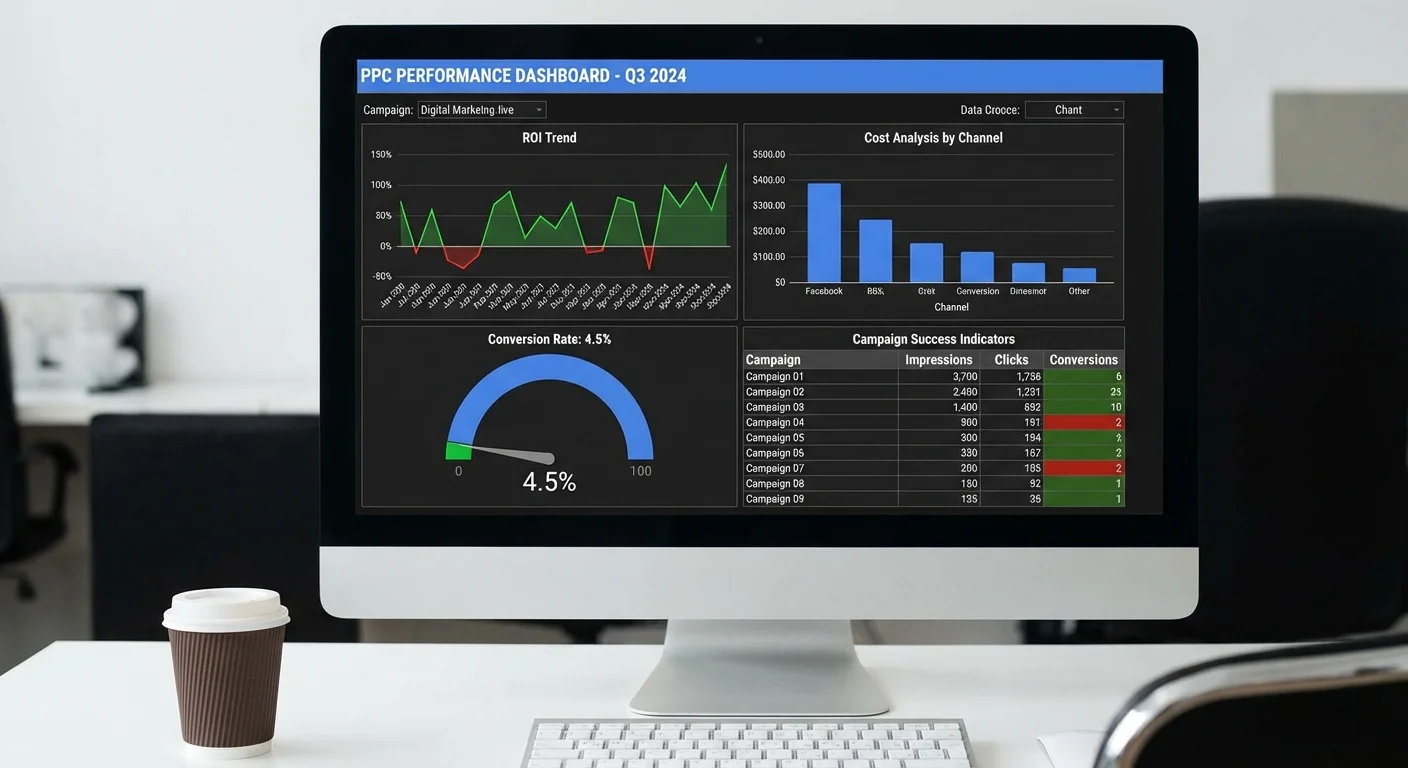
Track the right metrics to understand your PPC performance. Focus on business outcomes rather than vanity metrics that don’t impact your bottom line.
Key performance indicators include:
- Conversion rate: Percentage of clicks that result in desired actions
- Cost per conversion: How much you pay for each conversion
- Return on ad spend (ROAS): Revenue generated per dollar spent
- Quality Score: Google’s rating of your ad relevance and landing page experience
- Impression share: How often your ads show for target keywords
For a deeper dive into tracking performance, read our guide on 13 digital marketing metrics to track for success.
Frequently Asked Questions
How much should I budget for PPC advertising?
Start with what you can afford to lose while learning. Most businesses begin with $1000-3000 monthly budgets, but this varies by industry and competition. Focus on return on investment rather than absolute spend.
How long does it take to see results from PPC?
You’ll see traffic immediately, but meaningful results take 4-8 weeks. This allows time to gather data, optimise campaigns, and let Google’s algorithms learn your audience preferences.
Is PPC better than SEO for my business?
Both serve different purposes. PPC delivers immediate visibility and traffic, while SEO builds long-term organic presence. Most successful businesses use both strategies together for maximum impact.
What’s a good click-through rate for Google Ads?
Average CTRs vary by industry, but 2-3% is typical for search ads. Focus on improving relevance rather than chasing high CTRs that don’t convert into sales.
Can I run PPC ads with a small budget?
Absolutely. Start small, focus on highly targeted keywords, and reinvest profits to scale gradually. Many successful campaigns began with budgets under $500 per month.
How do I know if my PPC campaigns are profitable?
Track conversions and calculate your return on ad spend (ROAS). If you’re generating more revenue than you’re spending on ads, your campaigns are profitable. Factor in profit margins, not just total revenue.