Google Ads Tutorial for Beginners (2026 Edition)

Looking to run your first Google Ads campaign but feeling overwhelmed by the platform? You’re not alone. Google Ads (formerly Google AdWords) is one of the most powerful advertising platforms available, but it can seem complex when you’re starting out. This guide will walk you through everything you need to know to set up your first successful campaign and start driving qualified traffic to your business.
With over 8.5 billion daily search queries, Google represents the largest opportunity to reach potential customers actively searching for your products or services. The key is understanding how the platform works and setting up your campaigns for success from day one.
How Google Ads Actually Works
Google Ads operates on an auction system where advertisers bid on keywords relevant to their business. When someone searches for those keywords, Google runs an instant auction to determine which ads appear and in what order. The highest bidders typically get the top positions, but Google also considers ad quality and relevance.
Understanding your bidding options is essential for managing costs effectively. You’ll choose from three main bidding models:
-
CPC (Cost-Per-Click): You pay only when someone clicks your ad. This is the most common option for beginners as you’re paying for actual engagement. Costs vary dramatically based on keyword competition – legal terms might cost $50+ per click while niche hobby keywords could be under $1.
-
CPE (Cost-Per-Engagement): You pay when users take specific actions like watching your video ad or filling out a form. This works well for brand awareness campaigns where you want meaningful interaction beyond just clicks.
-
CPM (Cost-Per-Thousand Impressions): You pay for every thousand times your ad is shown, regardless of clicks. This suits businesses focused on brand visibility rather than immediate conversions.
For most beginners, CPC offers the best control and measurability. You can see exactly what you’re paying for each visitor to your site.
Setting Up Your Google Ads Account
Getting started requires just a Google account and a few minutes of setup. The process is straightforward, but the decisions you make here will impact your campaigns going forward.
Creating Your Account
- Visit ads.google.com and click “Start Now”
- Sign in with your existing Google account or create one
- Enter your business information including time zone and currency – choose these carefully as they can’t be changed later
- Verify your business details and billing information
That’s it – you now have access to Google’s advertising platform. But before you start spending money, there’s some groundwork to cover.
Pre-Campaign Planning That Actually Matters
Most Google Ads failures happen before the campaign even launches. Poor planning leads to wasted budgets, irrelevant traffic, and disappointing results. Here’s what you need to nail before you create your first ad.
Define Your Goals
“More traffic” isn’t a goal – it’s a vanity metric. What specific action do you want people to take? Are you driving phone calls, online purchases, email signups, or quote requests? Your goal determines everything from ad copy to bidding strategy. If you want phone calls, you’ll bid differently than if you want online sales.
Set Your Budget Realistically
Start with what you can afford to lose while learning. Google Ads isn’t instant magic – expect a testing period where you’re optimising rather than profiting. A good starting point is $30-50 per day if you’re targeting local customers, or $100+ per day for competitive industries or broader markets.
Remember: your budget determines how much data you can collect. Too small a budget means you can’t gather enough information to make smart optimisation decisions.
Research Your Keywords
Use Google’s Keyword Planner tool to find terms your customers actually search for. Focus on intent – someone searching “buy running shoes online” is much more valuable than someone searching “running shoes history”. Target 10-20 closely related keywords for your first campaign rather than trying to cover everything.
Long-tail keywords (3-4+ words) often convert better and cost less than broad terms. “Emergency plumber Sydney CBD” is more targeted and typically cheaper than just “plumber”.
Optimise Your Landing Page
Your ad can be perfect, but if your landing page doesn’t deliver on the promise, you’ll waste every click. The page people land on should match your ad’s message and make it easy for them to take your desired action. Fast loading times, clear headlines, and obvious next steps are non-negotiable.
Creating Your First Campaign
Now for the practical steps. Log into your Google Ads account and follow these steps to create a campaign that actually works.
Step 1: Configure Your Targeting
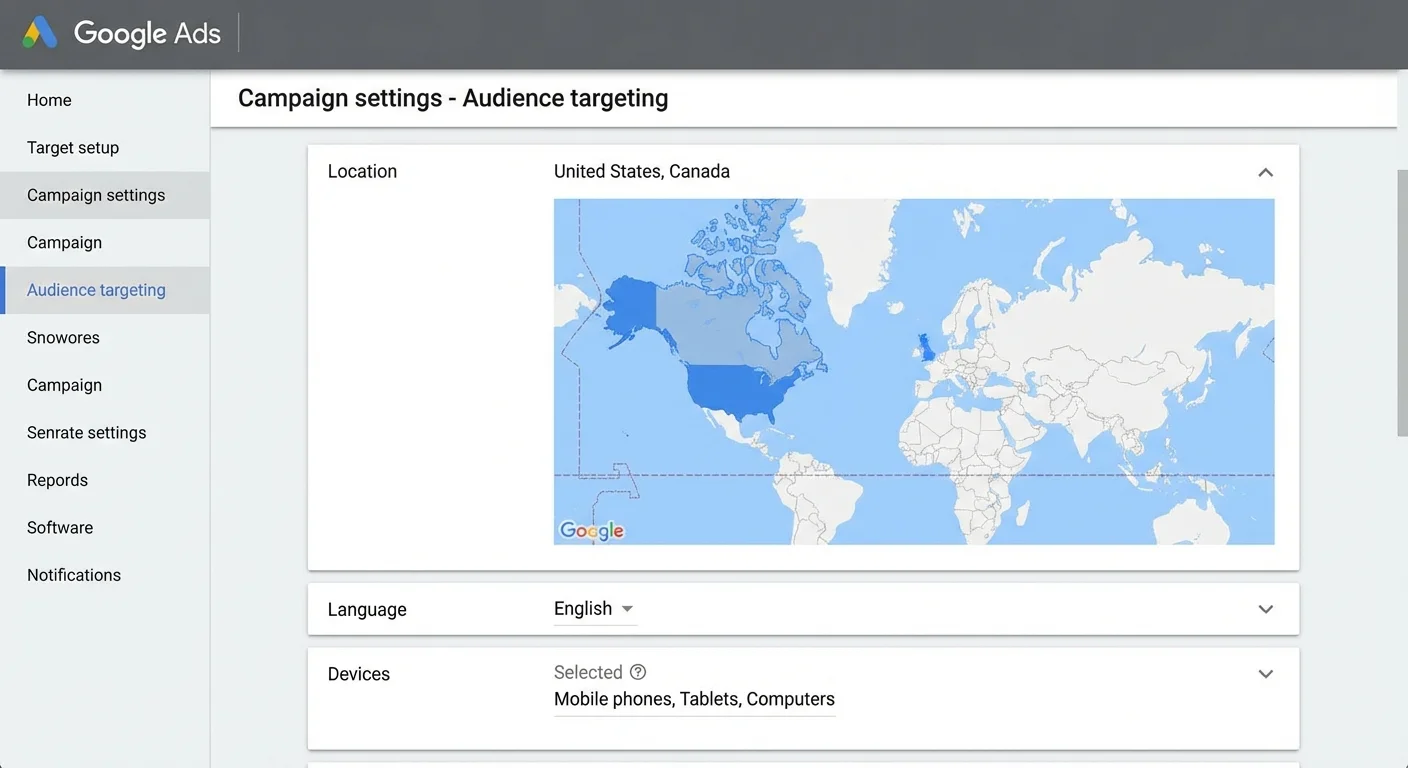
Start by setting your geographic targeting. Be specific – if you’re a local business, target your service area plus a small buffer, not the entire country. You can exclude areas where you don’t operate to avoid wasting budget on irrelevant clicks.
Choose your language settings carefully. If you only operate in English, don’t target other languages just because you think it might bring more traffic. Irrelevant traffic wastes money.
Device targeting matters too. If your website doesn’t work well on mobile, or if your service primarily targets desktop users, adjust accordingly. Most businesses should start by targeting all devices and then optimise based on performance data.
Step 2: Write Compelling Ad Copy
Your ad copy has one job: get qualified people to click. You’re working within tight character limits, so every word counts. Headlines get 30 characters each (you can have up to 3), and descriptions get 90 characters each (you can have up to 2).
Include your main keyword in at least one headline, but make it read naturally. “Best Plumber Sydney” is better than “Plumber Sydney Best Services”. Use your description to highlight what makes you different – fast response times, 24/7 availability, free quotes, local expertise.
Create multiple ad variations to test what works best. Google will automatically show the best-performing combinations once you have enough data.
Step 3: Set Your Budget and Bidding
You’ll choose between daily budgets (amount per day) or campaign budgets (total amount over campaign duration). Daily budgets give you more control and are better for beginners.
For bidding strategy, start with “Maximise clicks” if you want traffic, or “Target CPA” if you know what a conversion is worth to you. Avoid fully automated bidding until you understand how your campaigns perform.
Google will often recommend higher budgets than you need. Start conservatively – you can always increase budgets for successful campaigns later.
Step 4: Review and Launch
Before going live, double-check everything: ad copy spelling, landing page links, targeting settings, and budget limits. Use Google’s ad preview tool to see how your ads will appear on different devices.
Once you publish, your ads typically go through a review process that takes 1-2 business days. Google checks that your ads comply with their policies before they start showing.
Tracking Performance and Results
Running ads without tracking performance is like driving blindfolded. Google Ads provides detailed data, but you need to know what metrics actually matter for your business goals.
Key Metrics to Monitor
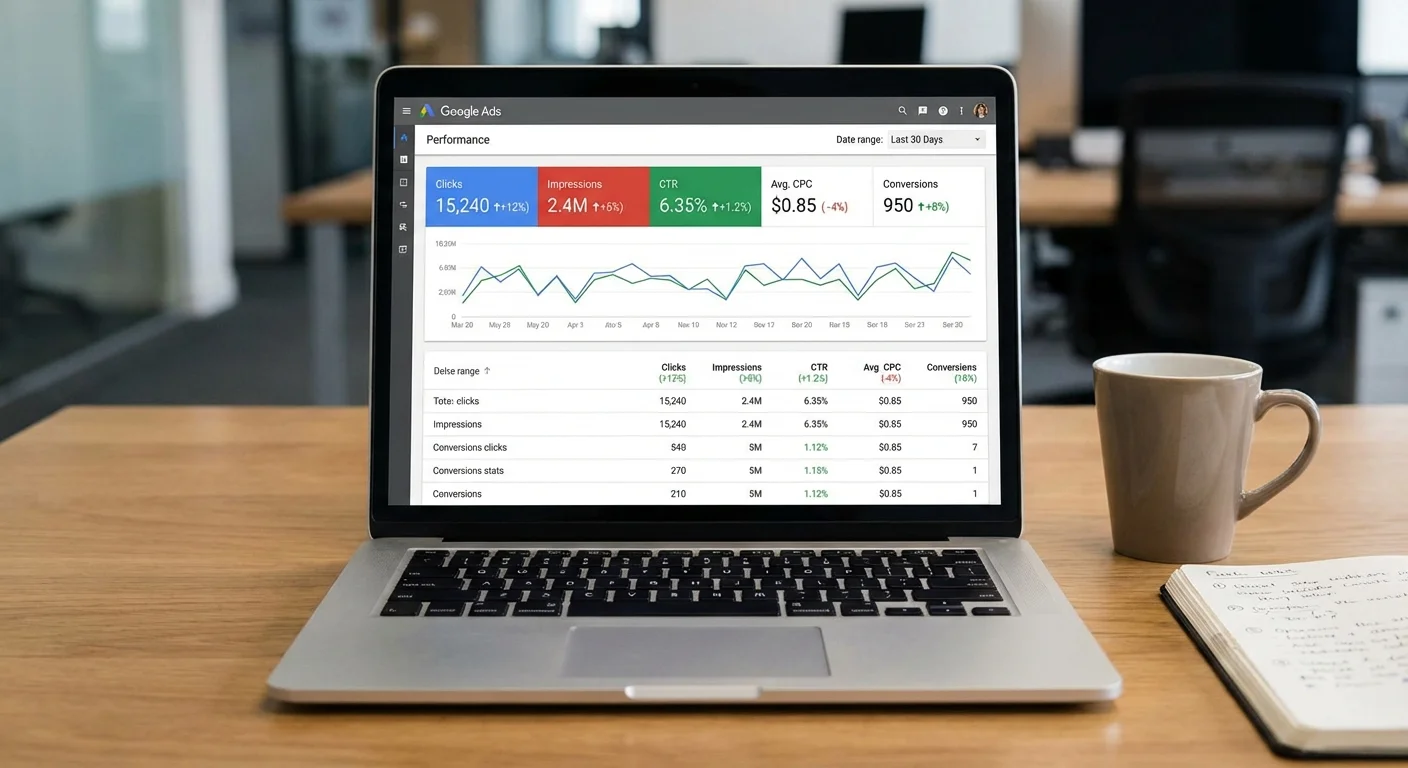
Click-through rate (CTR) shows how relevant your ads are to searchers. Industry averages range from 2-8%, but focus on your own trends rather than benchmarks. Improving CTR often reduces your costs.
Quality Score affects how much you pay per click. Google rates your keywords on relevance, ad quality, and landing page experience. Higher scores mean lower costs and better ad positions.
Conversion tracking is the most important setup you’ll make. Install the Google Ads conversion pixel on your thank-you pages, contact forms, or wherever customers complete your desired action. This tells you which keywords and ads actually drive business results, not just website visitors.
Optimisation That Works
Wait at least 2-4 weeks before making major changes. Google’s algorithm needs time to learn and optimise your campaigns. However, you can pause obviously poor-performing keywords or ads sooner to stop wasting budget.
Focus on one change at a time. If you adjust bids, ad copy, and keywords simultaneously, you won’t know what caused any performance changes. Make single changes and let them run for a week before evaluating results.
Use negative keywords to exclude irrelevant searches. If you’re a wedding photographer, add “free” and “courses” as negative keywords to avoid people looking for free photos or photography lessons.
Advanced Tips for Better Results
Once you’ve mastered the basics, these strategies can significantly improve your campaign performance and reduce costs.
Use ad extensions to make your ads larger and more informative. Sitelink extensions show additional pages from your website. Call extensions add your phone number. Location extensions show your business address. These extensions increase your ad’s real estate and often improve click-through rates.
Implement remarketing to target people who’ve already visited your website. These audiences typically convert at much higher rates than cold traffic, and you can bid more aggressively for them. Building effective remarketing lists can significantly boost your campaign performance.
Test different match types for your keywords. Exact match gives you tight control but limited reach. Phrase match offers more volume while maintaining relevance. Broad match reaches the most people but requires careful negative keyword management.
Schedule your ads for when your customers are most active. If you’re a B2B company, running ads at 2 AM probably wastes money. Use day-parting to show ads only during your business hours or when your phone is answered.

When to Get Professional Help
Google Ads success requires ongoing attention and expertise. If you’re spending more than $2,000 per month or not seeing the results you need, consider working with specialists who manage campaigns daily.
Professional management becomes valuable when you need advanced ad copy strategies, complex campaign structures, or integration with broader digital marketing strategies. Experts can also implement advanced automated features that maximise your return on investment.
At PWD Digital Agency, we’ve been managing Google Ads campaigns for over 15 years. Our team understands the platform’s complexities and stays current with the latest features and best practices. We focus on delivering measurable results that grow your business, not just increasing traffic numbers.
Whether you’re just starting out or need to improve existing campaigns, contact our team to discuss how we can help you achieve better results from your Google Ads investment.
Frequently Asked Questions
How much should I budget for my first Google Ads campaign?
Start with $30-50 per day for local businesses or $100+ for competitive industries. This gives you enough data to optimise while limiting risk during the learning phase.
How long does it take to see results from Google Ads?
You’ll see clicks and traffic immediately, but meaningful conversion data typically takes 2-4 weeks. Allow at least 30 days before making major campaign changes.
What’s the difference between Google Ads and Google AdWords?
There’s no difference – Google AdWords was rebranded to Google Ads in 2018. It’s the same advertising platform with updated branding and additional features.
Should I use broad match or exact match keywords?
Start with exact match for control, then expand to phrase match once you understand which terms convert. Broad match requires more management but can discover new opportunities.
How do I know if my Google Ads are working?
Track conversions, not just clicks. Set up conversion tracking to measure actual business results like sales, leads, or phone calls generated from your ads.
Can I run Google Ads without a website?
You need a landing page, but it doesn’t have to be a full website. A dedicated landing page that matches your ad’s promise and includes clear contact information can work effectively.