Black Hat vs White Hat SEO: What You Need to Know

Ever noticed how in old movies, villains wore black hats and heroes wore white? They’d try dodgy shortcuts to win, but the hero always triumphed through persistence and playing by the rules. SEO follows exactly the same story.
Black hat SEO might promise quick wins, but it’s the digital equivalent of cheating at cards—eventually, you get caught and banned from the table. White hat SEO takes more work upfront, but delivers sustainable results that actually build your business.
At PWD Digital Agency, we’ve seen businesses rise and fall based on their SEO approach. Here’s everything you need to know about choosing the right path for your website.

What Makes Black Hat SEO So Dangerous
Black hat SEO uses tactics that violate Google’s guidelines to manipulate search rankings. These techniques focus on tricking search engines rather than helping users—and Google hates being tricked.
The appeal is obvious: faster results, less effort, seemingly easy wins. But these shortcuts lead to penalties, traffic drops, and sometimes complete removal from search results. We’ve helped dozens of businesses recover from black hat penalties, and it’s never pretty.
Common Black Hat Techniques to Avoid
Keyword Stuffing
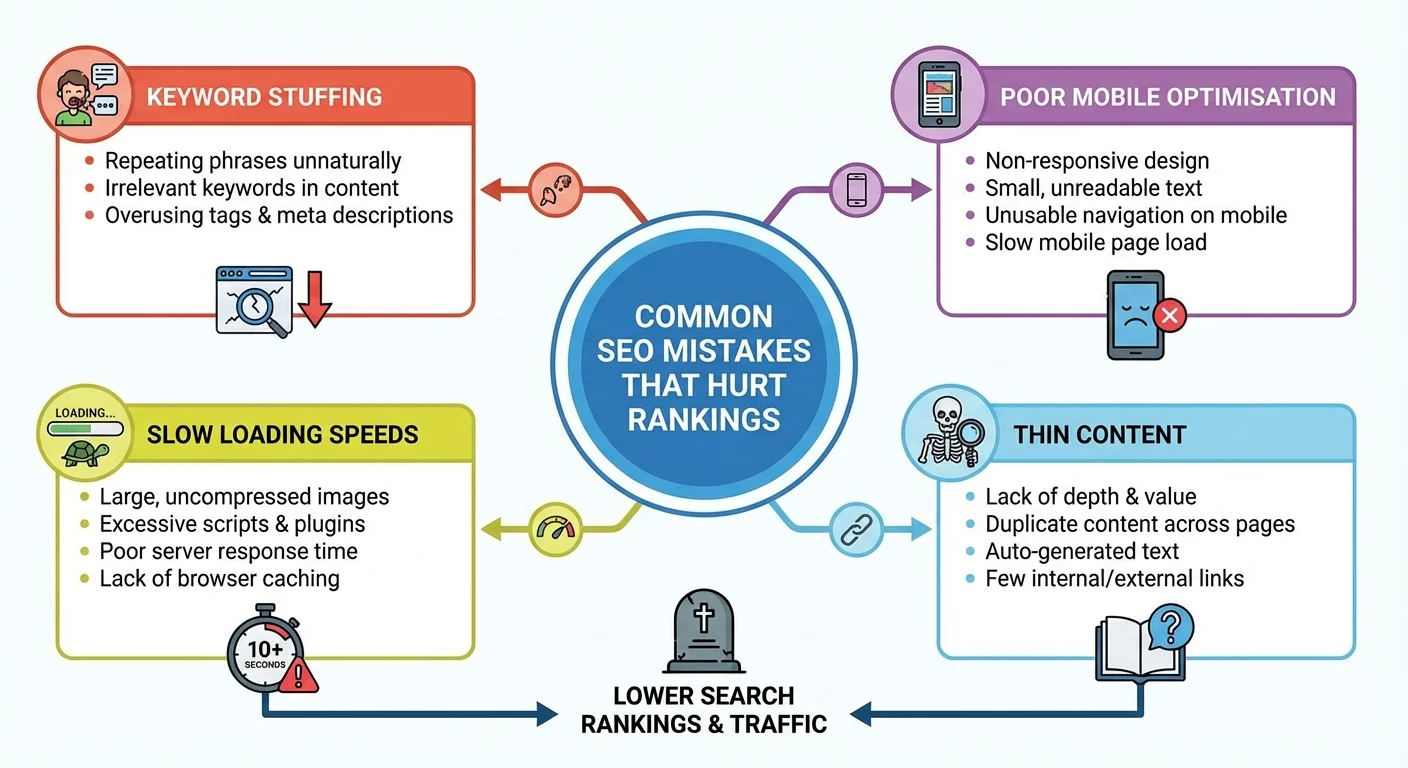
Cramming keywords everywhere they don’t belong makes content unreadable. Search engines spot this instantly—they’re looking for natural language that helps users, not robotic repetition.

Link Spam and Automated Content
Blasting irrelevant comments with your website link across the internet creates toxic backlinks. Google’s algorithms identify these patterns and penalise sites that use them.
Hidden Text and Cloaking
Hiding keywords in white text on white backgrounds or showing different content to search engines versus users breaks Google’s fundamental trust principle. These tactics trigger automatic penalties.
Doorway Pages
Creating fake pages stuffed with keywords that redirect users elsewhere provides zero value and wastes everyone’s time. Google removes these pages when discovered.
Why Black Hat SEO Always Backfires
Google processes billions of searches daily and invests heavily in detecting manipulation. Their algorithms become smarter every update, and manual review teams actively hunt down violators.
When caught, penalties range from ranking drops to complete de-indexing. Recovery takes months or years of clean-up work. We’ve seen successful businesses lose 90% of their organic traffic overnight due to black hat penalties.
White Hat SEO: Building Long-Term Success
White hat SEO follows Google’s guidelines to create genuine value for users. It takes longer to see results, but those results last and compound over time.
This approach focuses on understanding what your audience needs and delivering it better than competitors. When you solve real problems, Google rewards you with higher rankings because satisfied users mean successful search results.
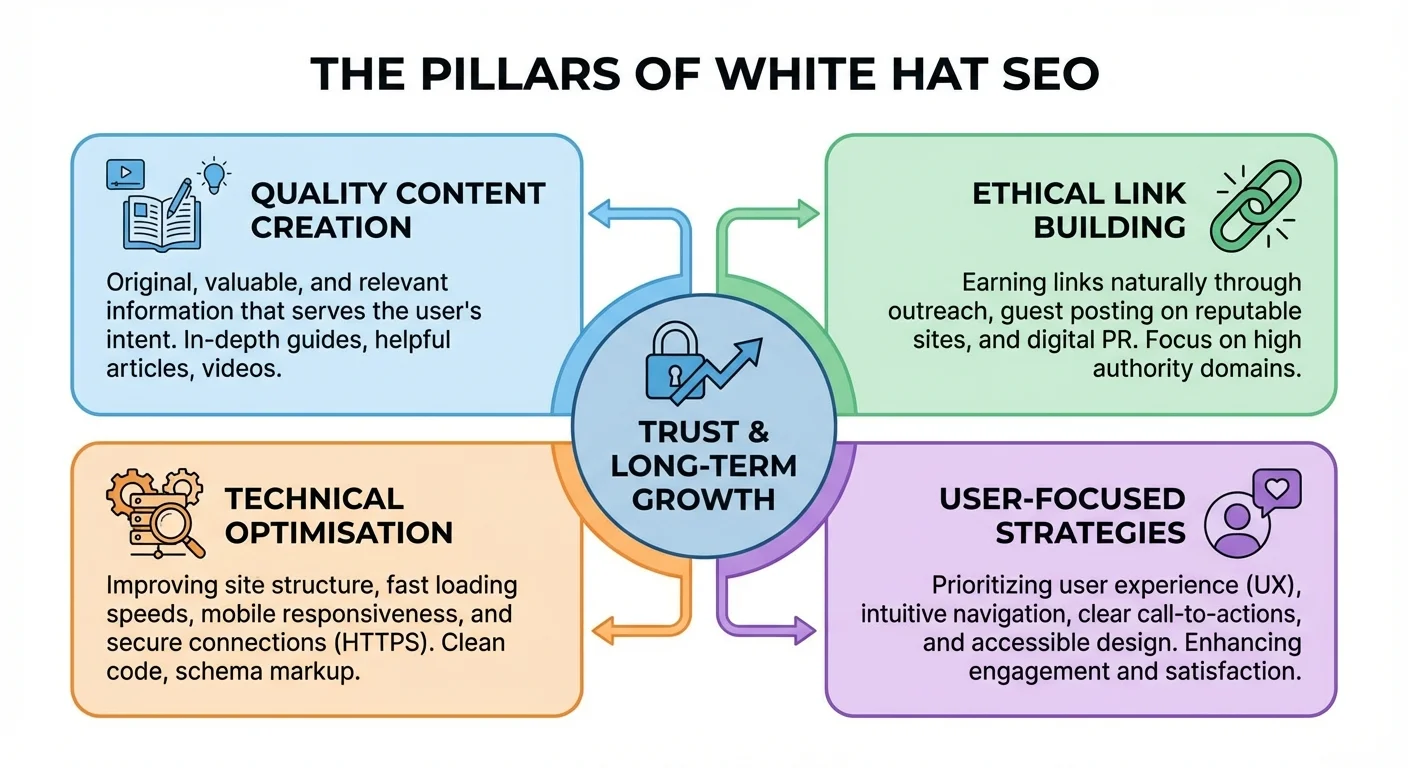
Effective White Hat Techniques That Work
Quality Content Creation
Research what your audience searches for and create detailed, helpful content that answers their questions. This builds authority and encourages natural sharing and linking.
Technical Optimisation
Proper heading structure, fast loading speeds, mobile responsiveness, and clean code help search engines understand and rank your content. Technical SEO forms the foundation of successful rankings.
Strategic Keyword Research
Understanding search intent and targeting keywords your audience actually uses drives qualified traffic. Tools like Google Keyword Planner and SEMrush reveal opportunities competitors miss.
Ethical Link Building
Earning links through valuable content, guest posting on relevant sites, and building genuine relationships creates the authority signals Google values most. Effective link building requires patience but delivers lasting results.

Internal Linking Strategy
Connecting related pages helps users navigate your site and distributes authority across important pages. Smart internal linking improves user experience and search engine crawling.
Measuring Your SEO Success
White hat SEO success requires tracking the right metrics. Traffic increases matter, but qualified traffic that converts matters more.
Key performance indicators include organic traffic growth, keyword ranking improvements, time on page, bounce rate, and ultimately, conversions from organic search. Tracking SEO KPIs helps you understand which efforts drive real business results.

Timeline for White Hat Results
Expect 3-6 months before seeing significant ranking improvements for competitive keywords. New content typically takes 2-4 weeks to appear in search results, with full ranking potential developing over 6-12 months.
Local SEO often shows faster results, especially for businesses with strong location signals. National and international campaigns require more patience but deliver greater long-term value.
Avoiding Common SEO Mistakes
Even well-intentioned SEO efforts can backfire without proper knowledge. Common SEO mistakes include targeting keywords too broad or competitive, ignoring mobile optimisation, and neglecting page speed.
Another frequent error is publishing thin content that doesn’t fully address user queries. Google prefers fewer, more detailed pages over many shallow ones.
The Business Case for White Hat SEO
White hat SEO builds sustainable competitive advantages that compound over time. High-quality content continues attracting visitors years after publication, while earned links provide ongoing authority signals.
This approach also protects your investment. Black hat penalties can destroy months of work overnight, while white hat strategies become more effective with age.
Consider the lifetime value: a single well-optimised page can generate thousands of qualified visitors over several years. That return on investment beats any quick-fix alternative.
Getting Started with Ethical SEO
Start by auditing your current website for any questionable tactics. Remove or fix issues like keyword stuffing, low-quality content, or suspicious backlinks before they cause problems.
Focus on understanding your audience’s search behaviour and creating content that genuinely helps them. Optimising blog posts provides a solid foundation for broader SEO success.
Consider working with experienced professionals who understand both the technical aspects and strategic thinking required for sustainable results. Our team has helped hundreds of Australian businesses build successful SEO strategies without cutting corners.
Frequently Asked Questions
What happens if Google catches me using black hat SEO?
Google can penalise your website with ranking drops, traffic loss, or complete removal from search results. Recovery often takes 6-12 months of clean-up work.
How long does white hat SEO take to show results?
Most websites see initial improvements in 3-6 months, with significant results developing over 6-12 months for competitive keywords.
Can I recover from a Google penalty?
Yes, but it requires identifying and fixing all problematic tactics, then submitting a reconsideration request. The process can take several months.
Is white hat SEO more expensive than black hat?
White hat SEO requires more upfront investment but delivers better long-term ROI and avoids costly penalty recovery efforts.
What’s the biggest difference between black hat and white hat SEO?
Black hat focuses on tricking search engines for quick gains, while white hat focuses on helping users with valuable content for sustainable growth.