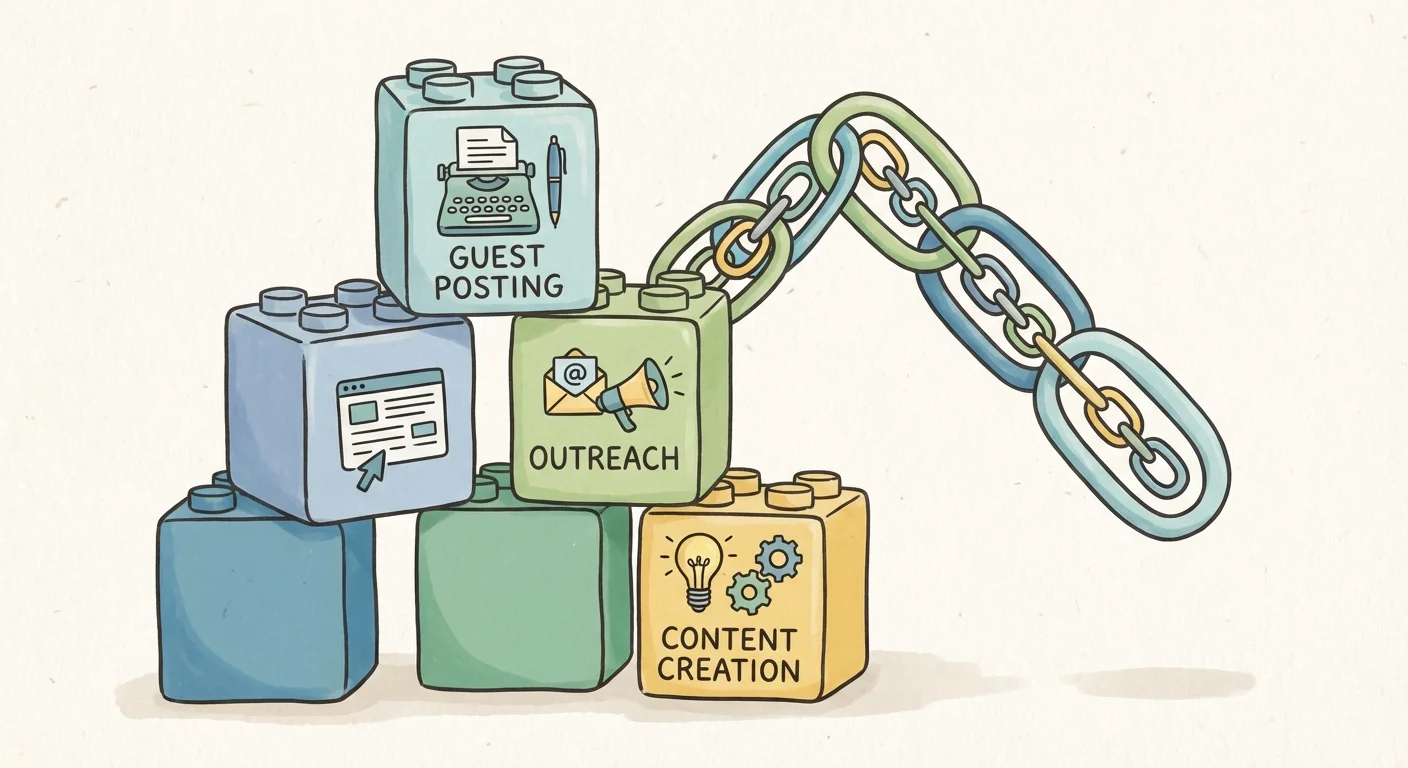
10 Easy Link Building Strategies That Actually Work in 2026

Link building remains one of the most powerful ways to boost your search rankings and drive organic traffic. Yet many business owners struggle with where to start or find themselves overwhelmed by complex strategies that seem impossible to execute.
The truth? Effective link building doesn’t require a massive budget or years of experience. What it does require is consistency, strategic thinking, and the right approach. These 10 proven strategies will help you build high-quality backlinks that actually move the needle on your rankings.

Create Content That Naturally Attracts Links
The foundation of any successful link building campaign is content worth linking to. Think about what makes you bookmark or share content — it solves a problem, provides unique insights, or offers something you can’t find elsewhere.
Focus on creating “linkable assets” like detailed guides, original research, industry reports, or tools that provide genuine value. These pieces naturally attract backlinks because other websites want to reference authoritative sources. Consider what questions your audience asks most frequently and build detailed resources around those topics.
For example, if you’re in digital marketing, a detailed breakdown of digital marketing metrics with real examples and benchmarks becomes reference material for other marketers. The more specific and actionable your content, the higher its linking potential.
Master the Art of Strategic Outreach
Direct outreach might feel uncomfortable, but it’s still one of the most effective link building methods. The key lies in personalisation and genuine value exchange rather than mass email blasts.
Start by identifying websites in your industry that regularly publish content similar to yours. Look at their recent posts and find opportunities where your content could add value to their readers. When reaching out, reference specific articles they’ve published and explain exactly how your content complements or enhances their existing resources.
Success rates improve dramatically when you focus on building relationships rather than just asking for links. Follow the journalists and bloggers you want to connect with on social media, engage with their content, and establish rapport before making your pitch.

Choose Guest Posting Opportunities Wisely
Guest posting delivers results when you’re selective about platforms and focus on audience alignment rather than just domain authority. Publishing on a site with engaged readers in your target market beats posting on a high-authority site with no audience overlap.
Research potential guest posting opportunities by looking at where your competitors contribute content and identifying gaps you could fill. Pay attention to engagement levels on guest posts — comments, shares, and discussion indicate an active audience that might convert into website visitors or customers.
Before pitching, read several recent guest posts on the target site to understand their content style and audience preferences. Tailor your pitch to show you understand their editorial standards and can deliver content their readers will value.
Amplify Your Content Through Social Channels
Social media doesn’t directly impact SEO rankings, but it significantly increases your content’s visibility and linking potential. Every additional person who sees your content represents a potential linking opportunity.
Share your content across all relevant platforms, but adapt the format and messaging for each channel. LinkedIn performs well for B2B content, while Twitter excels for breaking industry news or quick tips. Consider creating platform-specific content that drives traffic back to your detailed blog posts.
Don’t just share once and forget. Successful social media marketing requires consistent promotion over time, resharing valuable content with fresh angles or updated insights.
Research and Target High-Probability Link Sources
Smart link building starts with identifying websites most likely to link to your content. This research phase saves significant time and improves your success rate compared to random outreach.

Use Google search operators to find sites that link to similar content. Search for your target keywords plus phrases like “resources,” “links,” or “further reading.” These searches reveal websites that regularly link to external content in your niche.
Industry publications, professional associations, and resource directories often maintain curated lists of helpful tools and content. Getting featured on these lists provides high-quality, relevant backlinks that search engines value.
Turn Broken Links Into Link Opportunities
Broken link building offers a win-win scenario — you help website owners fix their broken links while earning backlinks to your content. This strategy works because you’re providing a solution to an existing problem rather than asking for favours.
Use tools like Check My Links (Chrome extension) or Broken Link Checker to identify broken outbound links on relevant websites. Focus on resource pages, “links” pages, and older blog posts that are more likely to have outdated links.
When you find broken links pointing to content similar to yours, reach out to the website owner with a friendly heads-up about the broken link and offer your content as a replacement. Keep the tone helpful rather than sales-focused — you’re doing them a favour by alerting them to the issue.
Analyse Competitor Link Profiles for Opportunities
Your competitors’ backlink profiles reveal tested link building opportunities in your industry. If a website links to your competitor, they’re likely open to linking to similar content from other relevant sources.

Tools like SEMrush, Ahrefs, or Moz Link Explorer let you analyse competitor backlinks in detail. Look for patterns in their link sources — do they get links from specific types of websites, industry publications, or directories?
Focus on replicating their highest-quality links rather than every single backlink. A single link from an authoritative industry publication outweighs dozens of low-quality directory listings. Understanding common SEO mistakes helps you avoid pursuing the wrong types of links.
Create Superior Versions of Competitor Content
The skyscraper technique involves finding successful content in your niche and creating something significantly better, then reaching out to sites that linked to the original piece. This works because you’re offering website owners an upgraded resource for their audience.
“Better” doesn’t just mean longer — it means more current, more detailed, better designed, or more actionable. Add recent examples, updated statistics, visual elements, or interactive features that make your version more valuable than the original.
When reaching out to sites that linked to the original content, explain specifically how your version improves upon what they already referenced. Show them the added value rather than just claiming your content is better.
Use HARO and Similar Platforms for Authority Links
Help a Reporter Out (HARO) connects journalists with expert sources, creating opportunities to earn high-authority backlinks from major publications. The key to HARO success lies in providing genuinely helpful insights rather than promotional responses.
Set up alerts for keywords relevant to your expertise and respond quickly to relevant queries. Journalists work on tight deadlines, so responses within the first few hours have the highest chance of being selected. Focus on queries where you can provide specific examples, data, or unique perspectives.
Similar platforms like SourceBottle (for Australian media) and ProfNet offer additional opportunities to connect with journalists seeking expert commentary. Building relationships with reporters in your industry can lead to recurring quote opportunities.
Track Your Progress and Optimise Your Approach
Effective link building requires ongoing measurement and refinement. Track not just the quantity of links earned, but their quality and impact on your search rankings and organic traffic.

Monitor important SEO KPIs like domain authority, referring domains, and keyword rankings to understand which link building tactics deliver the best results for your specific situation. Some strategies might work better for your industry or target audience than others.
Set up Google Alerts for your brand name to catch new mentions that might not include links yet. Reaching out to ask for a link when someone mentions your business or content often succeeds because they’re already familiar with your brand.
Remember that link building is a long-term strategy. Quality links take time to impact your rankings, but the cumulative effect of consistent effort compounds over time. Focus on building sustainable processes rather than looking for quick wins that might backfire.
Frequently Asked Questions
How long does it take to see results from link building?
Most websites start seeing ranking improvements within 3-6 months of consistent link building efforts. However, links from high-authority sites can impact rankings within weeks, while the full effect of a link building campaign often takes 6-12 months to materialise.
How many backlinks do I need to rank higher?
There’s no magic number of backlinks needed to rank higher. Quality matters more than quantity — one link from a highly relevant, authoritative site often outweighs dozens of low-quality links. Focus on earning links from reputable sources in your industry rather than chasing link counts.
What makes a high-quality backlink?
High-quality backlinks come from relevant, authoritative websites with good domain authority, natural anchor text, and editorial placement within content. The linking site should have genuine traffic and engagement, and the link should make sense in context.
Should I buy backlinks to speed up the process?
No, buying backlinks violates Google’s guidelines and can result in severe ranking penalties. Focus on earning links naturally through quality content and relationship building. The risks of paid links far outweigh any short-term benefits.
Can I do link building myself or do I need an agency?
You can definitely handle link building in-house, especially using strategies like creating shareable content, broken link building, and HARO. However, agencies bring experience, established relationships, and dedicated time that can accelerate results for businesses with larger budgets.
How do I know if my link building is working?
Monitor metrics like referring domains, domain authority, keyword rankings, and organic traffic. Tools like Google Search Console, SEMrush, or Ahrefs help track your backlink profile growth. Improvements in these metrics over 3-6 months indicate successful link building.