16 Tactics to Create Highly Converting Ad Copy in Google Ads

Ever wondered why your Google Ads get clicks but not conversions? Or why your competitors seem to dominate the search results while your carefully crafted ads barely make a dent?
The difference often comes down to ad copy that genuinely connects with searchers. While automation handles the heavy lifting of bid management and targeting, writing ad copy that converts remains firmly in human hands. And that’s exactly where your competitive advantage lies.
After managing thousands of Google Ads campaigns for Australian businesses, we’ve identified 16 proven tactics that consistently transform average ad copy into conversion machines. These aren’t theoretical concepts – they’re battle-tested strategies that work across industries, from e-commerce to professional services.
Why Ad Copy Still Matters (Despite All the Automation)
Google’s automation tools have revolutionised campaign management, but they can’t write compelling ad copy. Sure, responsive search ads test different combinations, but someone still needs to craft those headlines and descriptions. And that someone needs to understand what makes people click – and more importantly, what makes them convert.
Think about your own search behaviour. When you’re looking for something specific, which ads catch your eye? The generic ones that could apply to any business? Or the ones that speak directly to your needs, answer your questions, and feel like they understand exactly what you’re after?
Great ad copy bridges the gap between a user’s search intent and your landing page promise. It pre-qualifies traffic, sets expectations, and starts the conversion process before anyone even reaches your site. Get it wrong, and you’ll pay for clicks that never convert. Get it right, and you’ll see conversion rates that make your competitors wonder what you’re doing differently.
1. Match Search Intent With Surgical Precision
Search relevancy forms the foundation of converting ad copy. Users have trained themselves to scan results for their exact search terms – if they don’t see them, they move on. This behaviour makes keyword inclusion non-negotiable.
Include your primary keyword in the headline whenever possible. If someone searches for “emergency plumber Sydney”, seeing those exact words tells them instantly that your ad addresses their specific need. This isn’t just about quality score (though that helps) – it’s about meeting user expectations in milliseconds.
Beyond Basic Keyword Matching
Display URLs offer another opportunity for relevance signals. Most users don’t realise you can customise these paths, which means they trust them as genuine indicators of page content. A display URL like “example.com/emergency-plumber” carries more weight than “example.com/services” when someone needs urgent help.
Dynamic Keyword Insertion (DKI) seems like an easy solution for relevance, but proceed with caution. While {KeyWord:Default Text} can save time, it often creates awkward or misleading ads. Imagine someone searching for “chocolate cupcakes near me” and your bakery ad promising exactly that – except you only sell vanilla. Manual ad creation takes longer but delivers better results.
Our data from managing Google Ads campaigns shows manually crafted ads outperform DKI by 15-20% in conversion rate. The extra effort pays for itself through higher quality traffic and better user experience.
Local Relevance Drives Conversions
Australian consumers prefer local businesses – even for online purchases. Including suburb names, regions, or “near me” variations in your ad copy immediately establishes proximity and relevance. A Melbourne accountant targeting “small business tax return” should test “Small Business Tax Returns Melbourne” against generic variations.
2. Segment Your Audience for Maximum Impact
One-size-fits-all ad copy converts nobody effectively. Your 25-year-old first-time buyer responds to different messages than your 55-year-old property investor. Yet many advertisers run identical ads to both audiences and wonder why conversion rates stay flat.
Start by analysing your conversion data. Which demographics convert best? What language appears in their search queries? Build separate campaigns for distinct audience segments, then craft copy that speaks their language.
Funnel Stage Targeting
Where someone sits in the buying journey determines which messages resonate. Top-of-funnel searchers need education, not hard sells. Someone researching “what is SEO” won’t respond to “Buy SEO Services Now” – they need “Free SEO Guide for Beginners”.
Map your keywords to funnel stages:
- Awareness stage: Educational content, guides, “what is” queries
- Consideration stage: Comparisons, reviews, “best” searches
- Decision stage: Pricing, “buy”, brand searches
Each stage needs different ad copy. Awareness ads should promise knowledge. Consideration ads should highlight differentiators. Decision ads should remove friction and create urgency.
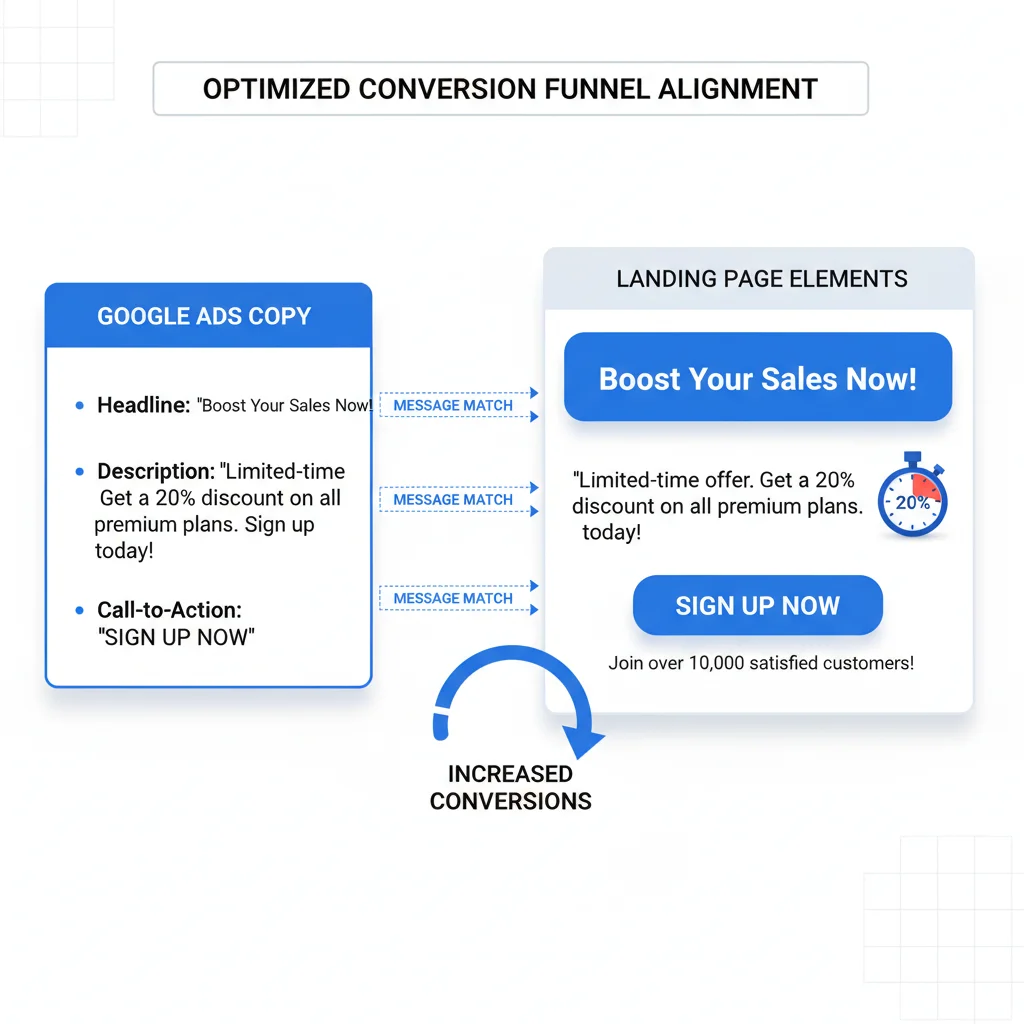
3. Align Ad Copy With Landing Page Reality
The fastest way to tank conversion rates? Promise one thing in your ad and deliver something else on your landing page. This disconnect creates immediate distrust and drives users straight to the back button.
Every claim, offer, and benefit mentioned in your ad must appear prominently on your landing page. If your ad promises “50% off winter jackets”, that offer better be the first thing visitors see – not buried in small print after they’ve scrolled past three other promotions.
Review your top-performing ads and audit their landing pages. Do headlines match? Are promised benefits immediately visible? Can users complete the action your ad suggests without hunting? Fix these alignment issues and watch conversion rates climb.
4. Keep Your Finger on the Pulse of Current Events
Timely ad copy outperforms evergreen messaging when done right. Major events, seasonal changes, and cultural moments create opportunities to connect with users through shared context.
During tax time, accountants who update their ads to reference “2024 tax return deadlines” see better engagement than those running generic “accounting services” copy. Sports retailers who mention major tournaments convert browsers into buyers by tapping into event excitement.
Set calendar reminders for industry-relevant events and update your ad copy accordingly. Just remember to change it back afterwards – nothing screams “neglected campaign” like Christmas sales running in February.
5. Maximise Expanded Text Ad Real Estate
Expanded text ads give you 30-character headlines and 90-character descriptions. Every character counts, but not in the way you might think. The goal isn’t to fill space – it’s to communicate value clearly.
Use the extra room to include keywords naturally, add compelling benefits, and write complete sentences. Compare these two approaches:
Poor use of space:
“Plumbing Services | Call Now | Available 24/7 | Best Prices Guaranteed!!!”
Effective use of space:
“Emergency Plumber Melbourne | Fixed Price Quotes, No Call-Out Fees”
The second example uses proper grammar, includes location, and highlights specific benefits. It builds trust while the first feels desperate and spammy.
6. Write Like a Professional, Not a Used Car Salesman
Poor grammar and excessive punctuation scream “untrustworthy” to potential customers. Every misplaced apostrophe, random capitalisation, or string of exclamation marks reduces credibility and conversions.
Professional ad copy follows these rules:
- Use sentence case, not RANDOM CAPITALS
- One exclamation mark maximum per ad
- Proper spelling and grammar always
- Natural keyword placement over forced insertion
- Complete thoughts, not keyword stuffing
Run every ad through a grammar checker before launching. Better to catch errors before customers do.
7. Craft Device-Specific Messaging
Mobile users behave differently than desktop users. They’re often on the go, have less patience for complexity, and prefer immediate solutions. Your ad copy should reflect these differences.
Mobile-optimised copy emphasises:
- Click-to-call functionality: “Tap to Call Now”
- Location proximity: “Just 5 Minutes from CBD”
- Speed and convenience: “60-Second Quote”
- Mobile-friendly actions: “Easy Mobile Booking”
Desktop copy can include more detail, comparison points, and research-focused messaging. Users on computers typically spend more time evaluating options before making decisions.
Split your campaigns by device type to test different messaging approaches. You’ll often find mobile campaigns need entirely different copy strategies to maximise conversions.
8. Let Numbers Do the Talking
Specific numbers build trust faster than vague claims. “Save money” means nothing. “Save $247 on average” makes people pay attention. Numbers feel factual, concrete, and believable.
Effective number usage includes:
- Exact prices: “Websites from $1,990” beats “Affordable websites”
- Specific savings: “Members save 23%” outperforms “Great discounts”
- Precise statistics: “97.3% customer satisfaction” feels more real than “Nearly 100% satisfaction”
- Time frames: “Results in 14 days” creates clear expectations
Include prices when you’re competitive. Users appreciate transparency, and pre-qualifying on price saves money on unqualified clicks. If someone can’t afford your service, better they learn that before clicking.
9. Balance Emotion With Authenticity
Emotional triggers work, but overuse breeds scepticism. Modern consumers have developed strong BS detectors after years of “LIMITED TIME!” and “ACT NOW!” messaging. The key? Genuine urgency and authentic emotional appeals.
Real urgency examples:
- “Tax Returns Due October 31st”
- “Only 3 Spots Left for November”
- “Winter Sale Ends Sunday”
These create urgency through factual scarcity or real deadlines. Contrast with manufactured urgency like “Hurry! Won’t Last!” which users rightfully ignore.
Positive emotions often outperform fear-based tactics. Instead of “Don’t Miss Out!”, try “Join 2,000+ Happy Customers”. Instead of threatening consequences, highlight benefits and community.
Countdown Customisers Add Real Urgency
Google’s countdown customiser shows exactly how long until an offer expires. This dynamic element updates automatically, creating genuine urgency without manipulation. Users trust countdowns because they’re verifiable and specific.
10. Extend Your Message With Strategic Extensions
Ad extensions aren’t afterthoughts – they’re integral parts of your message. Sitelinks, callouts, and structured snippets give you extra real estate to communicate value and push competitors down the page.
Each extension type serves a purpose:
- Sitelinks: Direct users to specific pages (“Price List”, “Book Online”, “Our Guarantee”)
- Callouts: Highlight key benefits (“Free Shipping”, “24/7 Support”, “No Lock-in Contracts”)
- Structured snippets: List specific offerings (“Services: SEO, Google Ads, Web Design”)
- Price extensions: Show product/service costs upfront
Create extension sets at the ad group level for maximum relevance. Generic account-level extensions miss opportunities to reinforce specific messages. A campaign for “wedding photography” needs different sitelinks than one for “corporate headshots”.
11. Write CTAs That Guide, Not Demand
“Click Here” and “Buy Now” feel pushy and generic. Effective CTAs guide users toward value while respecting their decision-making process. The best CTAs combine action with benefit.
Compare these approaches:
- Demanding: “Buy Now!”
Guiding: “See Prices & Order Online” - Demanding: “Sign Up!”
Guiding: “Get Your Free Marketing Audit” - Demanding: “Call Now!”
Guiding: “Speak to a Specialist Today”
Service businesses and high-ticket items need softer CTAs. “Learn More” and “See How It Works” respect the longer decision cycle. E-commerce can be more direct with “Shop Sale Items” or “View in Your Size”.
Test CTA variations religiously. Small wording changes can produce significant conversion improvements. Track not just clicks but actual conversions to identify which CTAs attract qualified traffic.
12. Pre-Qualify to Boost Conversion Quality
High click-through rates mean nothing if those clicks don’t convert. Smart advertisers use ad copy to filter out poor-fit prospects before they waste budget. This means being upfront about pricing, requirements, and target audience.
Pre-qualifying elements include:
- Price ranges: “Premium Coaching from $500/month”
- Geographic limits: “Sydney Metro Only”
- Audience specifications: “For Businesses with 10+ Employees”
- Requirements: “ABN Required for Trade Accounts”
Yes, pre-qualifying reduces CTR. But it dramatically improves conversion rates and ROI. Would you rather pay for 100 clicks with 1 conversion or 20 clicks with 5 conversions? The maths speaks for itself.
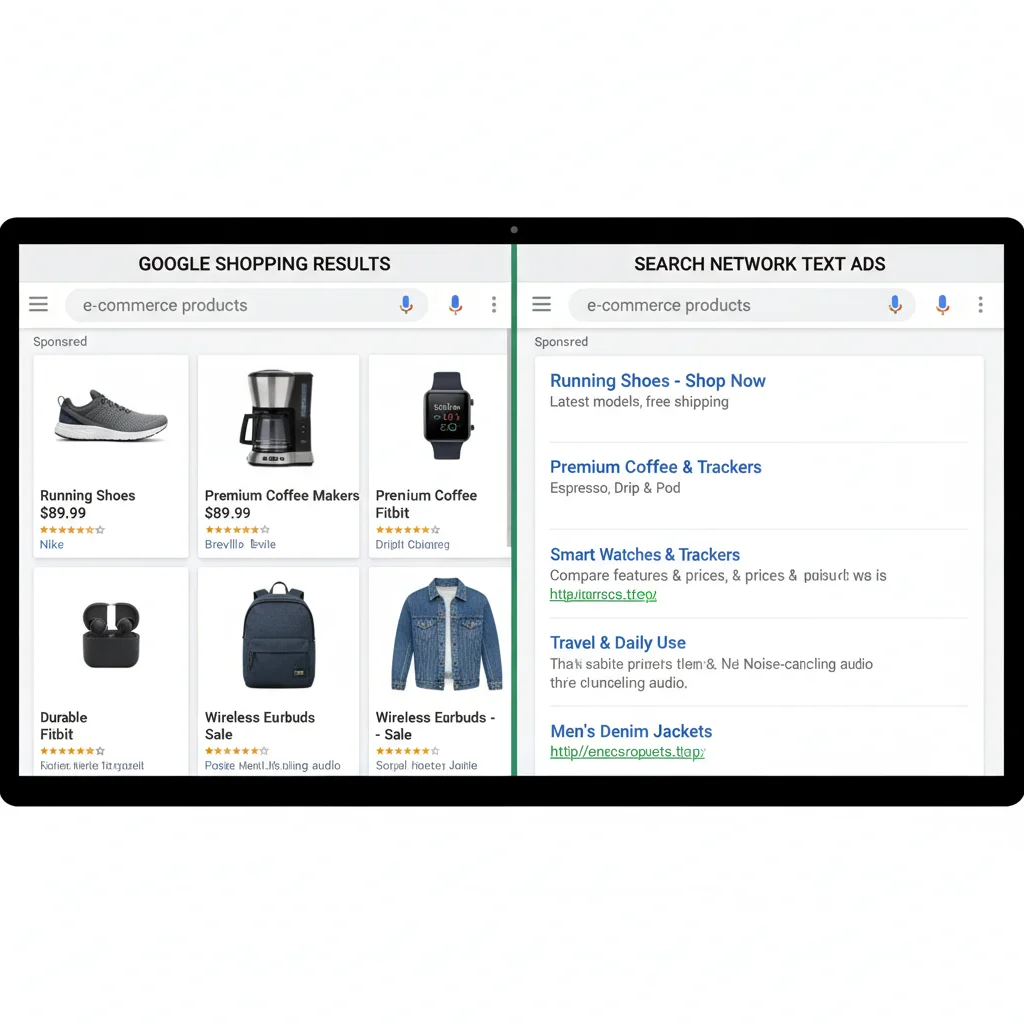
13. Don’t Abandon Search Ads for Shopping Campaigns
Google Shopping dominates e-commerce results, but smart retailers maintain search campaigns too. Why? Control and precision. Shopping campaigns rely on product feeds and Google’s matching algorithm. Search campaigns let you target exact queries with tailored messages.
Search ads excel when:
- Products have variations not visible in images
- You’re running specific promotions
- Targeting comparative searches
- Building brand awareness
- Capturing miss-spelled or unusual product terms
Run both campaign types and analyse performance by query type. You’ll often find search ads capture valuable traffic that Shopping campaigns miss entirely.
14. Personalise RLSA Ads With Previous Behaviour
Remarketing lists for search ads (RLSA) let you show different ads to previous visitors. Generic “come back” messages waste this opportunity. Instead, reference their specific interests and create genuine re-engagement.
Segment your remarketing lists by:
- Products viewed
- Cart abandoners
- Category browsers
- Time since visit
- Pages visited
Then craft specific messages: “Still thinking about those Nike runners? Free shipping this week” beats “We miss you! Come back!” every time.
For service businesses, RLSA ads can address common objections or offer incentives: “Ready to start your SEO campaign? First month 50% off for returning visitors.”
15. Test Everything, Assume Nothing
The best-performing ad copy often surprises even experienced marketers. What works for one business fails for another. Cultural differences, industry norms, and audience preferences make testing essential.
Test these elements systematically:
- Headlines (emotional vs factual)
- Descriptions (benefit-focused vs feature-focused)
- CTAs (soft vs direct)
- Prices (showing vs hiding)
- Social proof (reviews vs awards vs statistics)
Run tests for statistical significance – at least 300 impressions per variant. Document results and build a testing roadmap. Small improvements compound into major performance gains over time.
16. Stand Out by Being Memorable
Safe, boring ad copy blends into the background. While maintaining professionalism, inject personality that makes your ads memorable. This could mean humour, unusual analogies, or simply a distinctive voice.
A plumbing company might test: “Your Pipes Are Showing (We’ll Fix That)” against generic “24/7 Plumbing Services”. A web design agency could try “Websites That Don’t Look Like 1999” versus “Professional Web Design”.
The key? Stay relevant while being distinctive. Clever wordplay that confuses users backfires. But thoughtful creativity that clarifies your value proposition while entertaining? That’s advertising gold.
Bringing It All Together
Creating high-converting Google Ads copy requires both art and science. Start with relevance – match search intent, audience expectations, and landing page reality. Build on that foundation with clear benefits, specific numbers, and appropriate emotional appeals.
Remember that great ad copy doesn’t exist in isolation. It works with your targeting, bidding, and landing pages to create a cohesive experience. Every element should guide users smoothly from search to conversion.
Most importantly, never stop testing and refining. What converts today might falter tomorrow as competitors adapt and user expectations evolve. Stay curious, track everything, and let data guide your creative decisions.
Need help implementing these tactics in your Google Ads campaigns? Our team at PWD specialises in creating and optimising high-converting campaigns for Australian businesses. We combine creative copywriting with data-driven optimisation to deliver results that matter – actual conversions, not just clicks.
Whether you’re struggling with poor conversion rates, high costs per acquisition, or simply want to take your campaigns to the next level, we can help. Check out our guide to digital marketing trends for more insights, or get in touch to discuss your specific challenges.
Advanced Implementation Tips
Once you’ve mastered the basics, these advanced strategies can push your performance even further:
IF Functions for Dynamic Customisation
Google’s IF functions let you show different messages based on device or audience membership. Mobile users might see “Tap for Directions” while desktop users see “View Our Location”. This granular customisation improves relevance without creating separate ads.
Competitor Intelligence Mining
Regularly review competitor ads for inspiration and differentiation opportunities. If everyone’s claiming “best service”, you might win by being specific: “Average response time: 47 minutes”. Tools like SEMrush or SpyFu reveal competitor ad history and testing patterns.
Voice Search Optimisation
Voice searches tend to be longer and more conversational. Create ad groups targeting these natural language queries with equally conversational ad copy. “Where can I get my car serviced today?” needs different copy than “car service Melbourne”.
Seasonal Copy Libraries
Build a library of seasonal ad variations ready to deploy. Don’t scramble to write Easter promotions in April – plan your calendar and prepare copy in advance. This allows for thoughtful creation rather than rushed execution.
Common Mistakes to Avoid
Even experienced advertisers fall into these traps. Stay vigilant to maintain peak performance:
Neglecting Negative Keywords
Perfect ad copy attracts the wrong clicks without proper negative keywords. A premium service mentioning quality might attract bargain hunters searching for “cheap”. Regular search term reviews prevent wasted spend.
Copy-Landing Page Misalignment
This bears repeating because it’s so common. Every promise, every offer, every claim must be immediately findable on your landing page. Audit this monthly as landing pages change more often than ads.
Feature Focus Over Benefit Focus
Users don’t care that your software has “advanced algorithmic processing”. They care that it “saves 3 hours per week”. Always translate features into user benefits.
Ignoring Quality Score Factors
Ad relevance represents just one quality score component, but it’s the easiest to control. Higher quality scores mean lower CPCs and better positions. The effort invested in relevant copy pays dividends through reduced costs.
Measuring Success Beyond CTR
Click-through rate tells only part of the story. Track these metrics to gauge true ad copy effectiveness:
- Conversion rate by ad: Which messages drive action?
- Cost per conversion: Do higher CTR ads actually cost more per sale?
- Bounce rate: Are ads setting appropriate expectations?
- Time on site: Do visitors engage with your content?
- Return visitor rate: Did the experience match the promise?
Connect your Google Ads account to Analytics for deeper insights. Understanding post-click behaviour reveals which ad copy truly resonates versus which simply attracts curiosity clicks.
The Future of Ad Copy
As Google continues pushing automation, human creativity becomes more valuable, not less. Machines can optimise bids and test combinations, but they can’t understand nuance, emotion, or cultural context like humans can.
Responsive search ads now dominate, requiring advertisers to provide multiple headlines and descriptions. This shifts the skill from writing one perfect ad to creating cohesive collections that work in any combination. Think modular messaging rather than static advertisements.
The fundamentals remain unchanged: understand your audience, match their intent, deliver on promises, and test relentlessly. Master these principles and you’ll create ad copy that converts regardless of platform changes.
Ready to transform your Google Ads performance? Start with one campaign, implement these tactics systematically, and measure the results. For expert guidance on your journey, explore our essential metrics guide or reach out to discuss your specific challenges. The path from good to great starts with your next ad.
Frequently Asked Questions
How many ads should I create per ad group?
Create at least 3-5 ads per ad group for effective testing. With responsive search ads, provide 10-15 headlines and 4 descriptions to give Google’s algorithm enough variety to optimise performance.
Should I use dynamic keyword insertion in 2024?
Use DKI sparingly. While it saves time, manually crafted ads typically convert 15-20% better because they’re more relevant and natural-sounding. Reserve DKI for large campaigns where manual creation isn’t feasible.
What’s the ideal character count for headlines?
Aim for 25-30 characters in headlines to ensure full display across devices. Include your main keyword and a compelling benefit or differentiator within this limit.
How often should I update my ad copy?
Review performance monthly and refresh underperforming ads. Update all ads seasonally or when running promotions. High-performing ads can run longer but monitor for fatigue after 3-6 months.
Do prices in ads improve or hurt conversion rates?
Including prices typically improves conversion rates by pre-qualifying traffic. You’ll get fewer clicks but higher quality leads who already accept your pricing. Hide prices only if you’re premium-positioned or have complex pricing.
Which emotional triggers work best in Australian markets?
Australian audiences respond well to straightforward, benefit-focused copy with subtle social proof. Avoid hyperbole and aggressive urgency. Local references and understated humour often outperform hard-sell tactics.