What Is a Marketing Funnel? (And How to Build One in 2026)

Customer acquisition costs are rising. Competition for attention gets fiercer every day. Yet many businesses still rely on spray-and-pray marketing tactics that waste budget and miss opportunities.
For more detail, see our guide on personalised marketing tactics.
Marketing funnels solve this problem by creating structured pathways that guide prospects from first contact to purchase. They help you understand exactly where potential customers are in their buying journey and what they need to hear next.
We’ve been building and optimising marketing funnels for Australian businesses since 2007. Here’s everything you need to know about how they work, which type suits your business, and how to implement them effectively.
For more detail, see our guide on building an effective digital marketing funnel.
How Marketing Funnels Actually Work
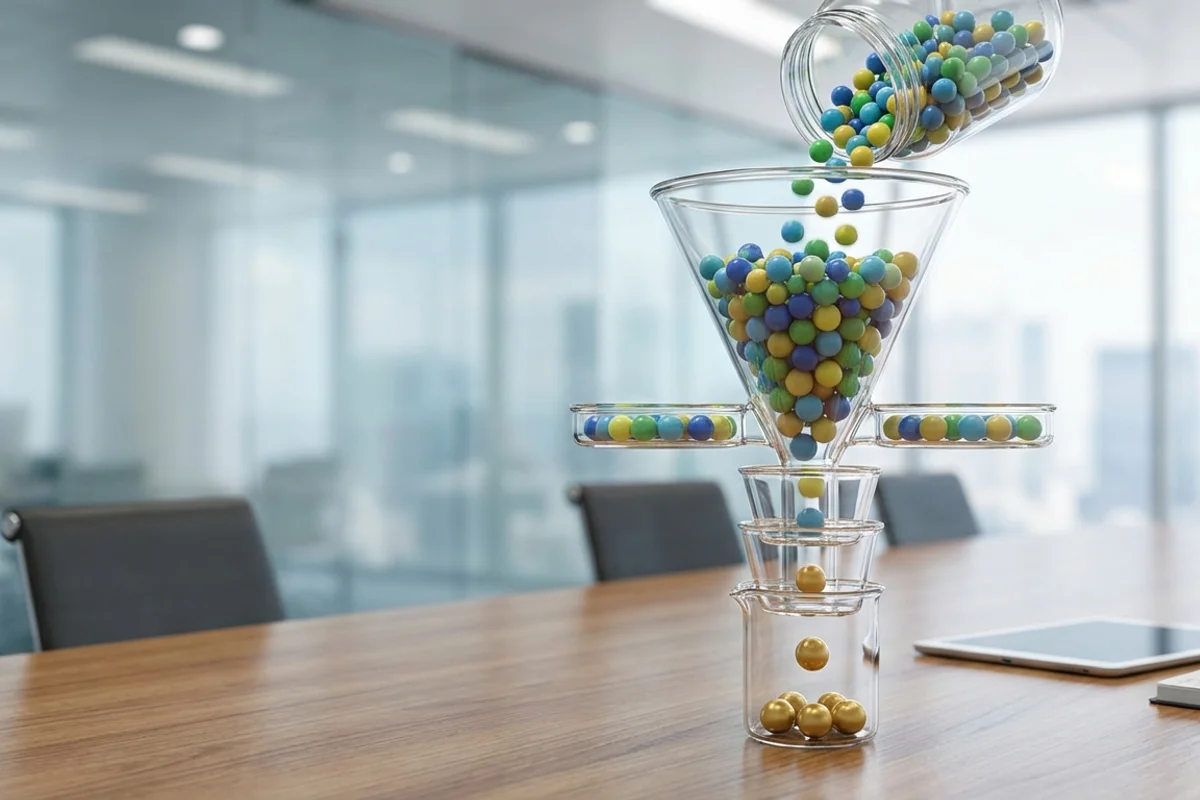
Think of a marketing funnel as a filtering system. At the top, you have thousands of potential customers who might need your product. At the bottom, you have qualified buyers ready to purchase.
The funnel shape represents reality – not everyone who discovers your brand will buy from you. People drop off at each stage. Some aren’t ready to buy. Others don’t see the value. Some simply forget about you.
Your job is to create specific content and experiences for each stage that move qualified prospects to the next level. The digital marketing strategies you use will vary depending on where someone sits in the funnel.
The AIDA Framework in Practice
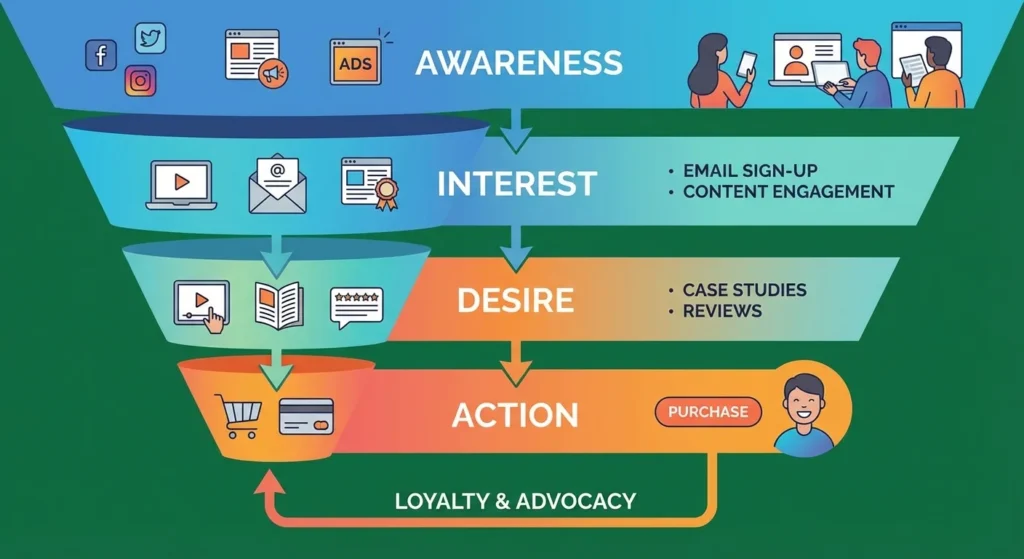
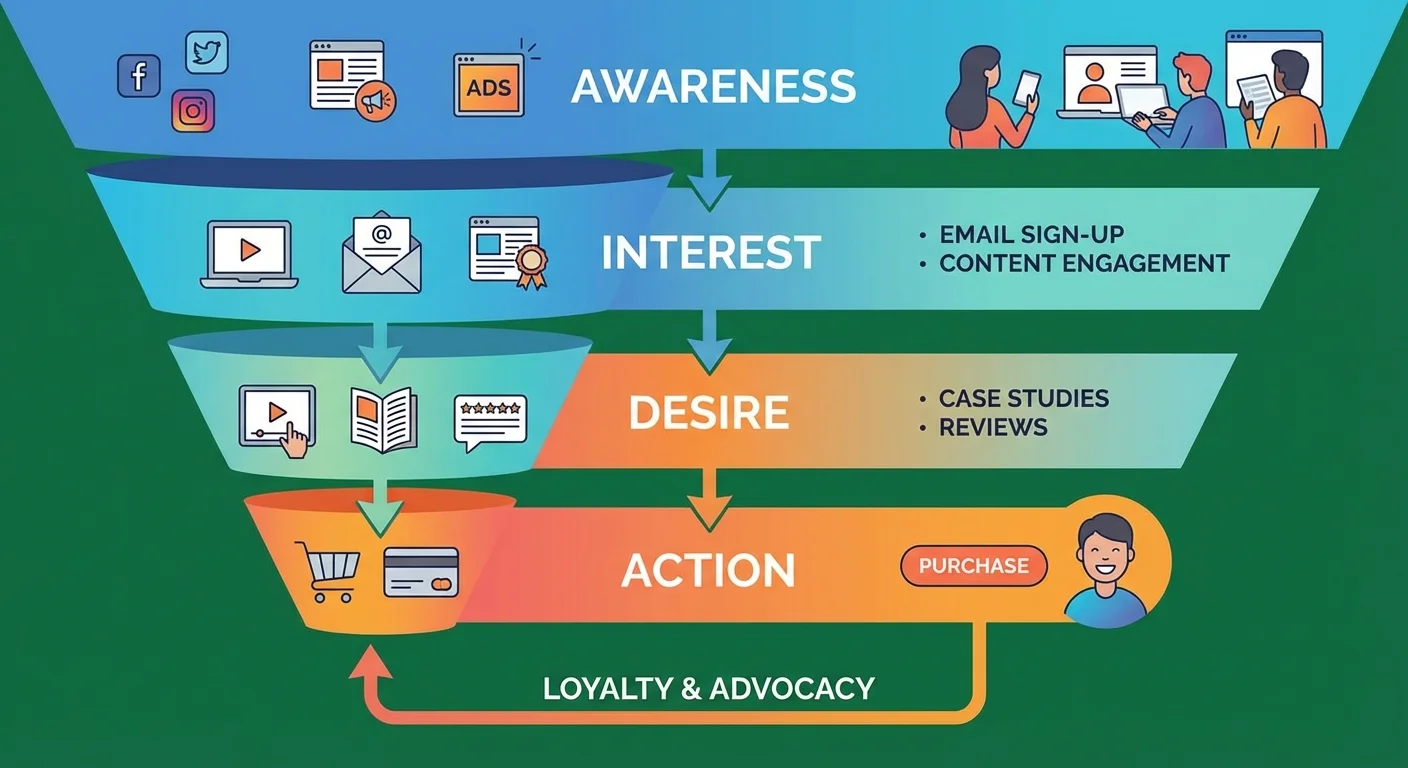
Most marketing funnels follow the AIDA model: Attention, Interest, Desire, Action. Here’s how it works in the real world:
- Attention: Blog posts, social media content, Google ads that solve problems
- Interest: Email newsletters, case studies, detailed guides that educate
- Desire: Product demos, testimonials, comparison charts that convince
- Action: Clear offers, easy checkout processes, follow-up sequences that convert
Marketing Funnels vs Sales Funnels: What’s the Difference?
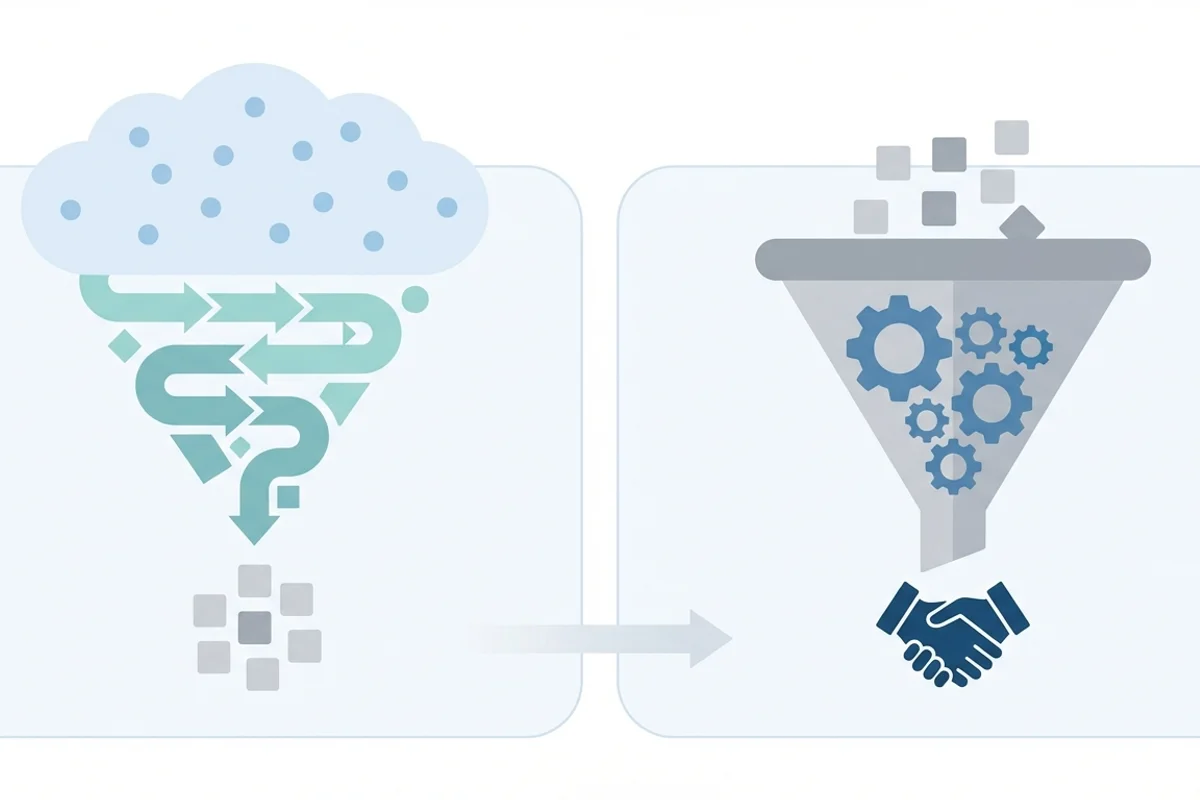
Many people use these terms interchangeably, but they serve different purposes. Understanding the distinction helps you build better customer journeys.
Marketing funnels cast a wide net. They attract people who might not even know they have a problem yet. The goal is awareness and education. You’re building trust and positioning your brand as a solution provider.
Sales funnels start where marketing funnels end. They target people who already know they need a solution and are comparing options. The messaging is more direct, specific, and conversion-focused.
In practice, the best businesses integrate both. Your B2B marketing strategy might use content marketing to feed the top of your marketing funnel, then retargeting ads to push qualified leads through your sales funnel.

8 Types of Marketing Funnels for Different Business Models

The traditional AIDA funnel works, but specific business models need specialised approaches. Here are the most effective funnel types we use with clients:
Purchase Funnel (E-commerce)
Perfect for online stores and e-commerce websites. This funnel optimises the entire buying journey: discovery → product page → cart → checkout → upsell.
Key elements include product recommendations, abandoned cart emails, trust signals (reviews, security badges), and post-purchase upsells. We typically see 15-20% conversion rate improvements when businesses implement proper purchase funnels.
Lead Magnet Funnel
Also called a squeeze page funnel. The single goal is collecting email addresses in exchange for valuable content. Think downloadable guides, checklists, templates, or free trials.
The key is offering something genuinely useful that solves an immediate problem. Generic newsletters don’t work anymore. People want specific, actionable value.
Webinar Funnel
Excellent for high-ticket services and complex products that need explanation. The funnel drives registrations for free educational webinars, then converts attendees into customers.
Structure: Landing page → Registration → Email sequence → Live webinar → Pitch → Follow-up sequence. Webinar funnels often generate higher-value sales because you’ve built significant trust through education.
Demo Funnel
Essential for software companies and technical services. Instead of trying to explain features through text, you show the product in action.
Works best with qualifying questions upfront. You want to ensure demo requests come from serious prospects, not tyre-kickers. Include company size, budget, timeline questions before booking.
Content Marketing Funnel
Built around valuable blog content and resources. Visitors discover your brand through SEO-optimised blog posts, then consume more content, join your email list, and eventually purchase.
This approach requires patience and consistency. Content funnels build authority over time, creating sustainable organic traffic and high-quality leads.
Membership Funnel
Designed for subscription businesses, online courses, and membership sites. Often starts with a free trial or low-cost entry point, then upsells to premium tiers.
The key is demonstrating value quickly. New members should see immediate benefits, or they’ll cancel before the trial ends. Include onboarding sequences and quick-win resources.
Social Media Funnel
Starts with engaging social content that drives traffic to landing pages. Works well for businesses with visual products or strong brand personalities.
The challenge is moving people off social platforms onto your owned media (email list, website). Offer platform-specific incentives and make the transition seamless.
Retargeting Funnel
Specifically targets people who’ve already visited your website but didn’t convert. Uses Facebook ads, Google ads, and email sequences to bring them back.
Segment your audiences based on behaviour. Someone who visited pricing pages needs different messaging than someone who only read blog posts. Remarketing audiences convert 3-5x higher than cold traffic when segmented properly.
Why Marketing Funnels Transform Business Results
Businesses without clear funnels waste massive amounts of money on unfocused marketing. They create content without knowing who it’s for or what action it should drive.
Measurable Performance at Every Stage
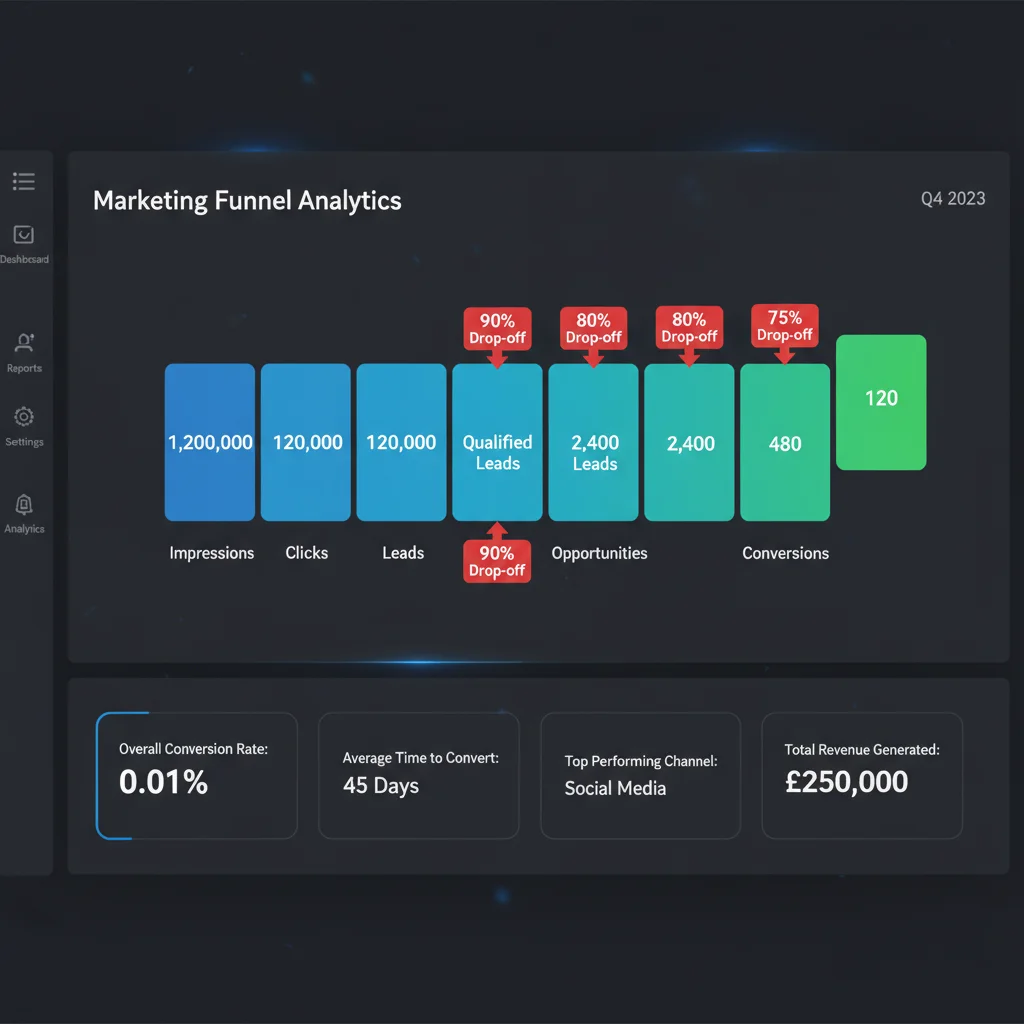
Funnels make your marketing accountable. You can see exactly where prospects drop off and why. Email open rates, landing page conversion rates, demo-to-sale percentages – everything becomes trackable.
This data reveals your biggest opportunities. Maybe your blog traffic converts well to email subscribers, but subscribers rarely become customers. That tells you to focus on email nurturing, not traffic generation.
Scalable Customer Acquisition
Well-built funnels work automatically. Once you’ve created the content, landing pages, and email sequences, they can handle thousands of prospects simultaneously.
Compare this to manual sales processes where every lead needs individual attention. Funnels let you scale without proportionally increasing costs.
Higher Customer Lifetime Value
Funnels don’t stop at the first sale. The best ones include upsells, cross-sells, and loyalty campaigns that increase customer value over time.
A customer who buys through a well-designed funnel typically spends 20-30% more than one who purchases through ad-hoc marketing efforts.
Building Your First Marketing Funnel
Start simple. Many businesses try to build complex multi-channel funnels immediately and end up with nothing that works properly.
Step 1: Define Your Customer Journey
Map out how customers currently find and buy from you. What content do they consume? What questions do they ask? Where do they get stuck?
Talk to recent customers about their buying process. You’ll discover gaps in your current approach and opportunities for improvement.
Step 2: Create Stage-Specific Content
Each funnel stage needs different content types. Awareness stage content educates and builds trust. Decision stage content compares options and addresses objections.
Don’t skip the middle stages. Many businesses have great top-of-funnel content (blogs, social posts) and strong bottom-funnel content (sales pages), but nothing that nurtures prospects in between.
Step 3: Set Up Tracking and Analytics
You can’t optimise what you don’t measure. Set up conversion tracking for each funnel stage. Use Google Analytics, your CRM system, and email marketing tools to track progress.
Focus on the key metrics that matter: cost per lead, lead-to-customer conversion rate, customer lifetime value, and time to purchase.
Common Marketing Funnel Mistakes to Avoid
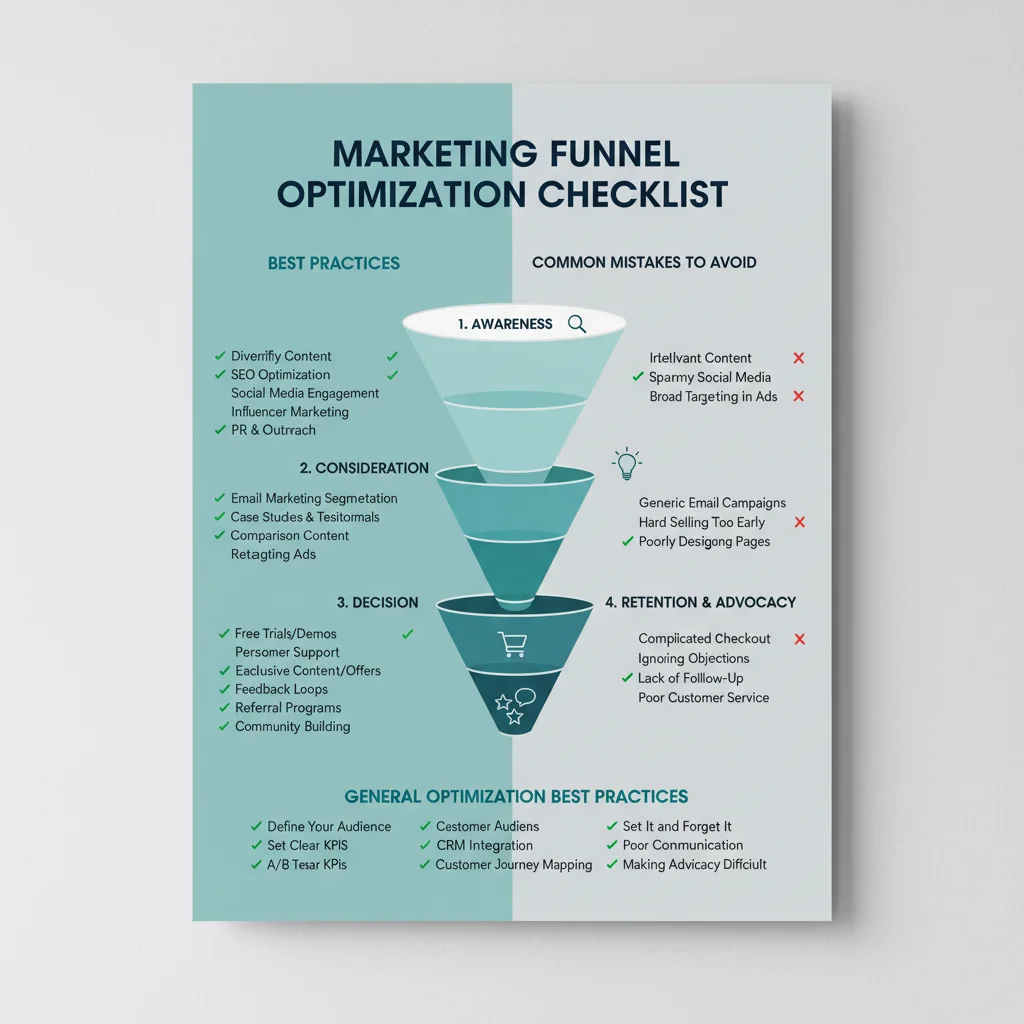
After building hundreds of funnels, we’ve seen the same mistakes repeatedly. Avoid these pitfalls to save time and money:
Skipping the Awareness Stage
Many businesses jump straight to sales messaging without building awareness and trust first. This approach works for very low-cost, impulse purchases, but fails for anything requiring consideration.
Invest in educational content that helps prospects understand their problem before you present your solution.
Too Many Steps
Complex funnels with dozens of steps might look sophisticated, but they create more opportunities for people to drop off. Start with 3-4 clear stages and add complexity only when needed.
Ignoring Mobile Experience
Over 60% of funnel traffic comes from mobile devices. If your landing pages aren’t mobile-optimised, you’re losing half your potential customers.
Test every step of your funnel on mobile devices. Forms should be easy to complete, pages should load quickly, and calls-to-action should be thumb-friendly.
No Follow-Up Sequences
Most people need multiple touchpoints before buying. If someone doesn’t convert immediately, they need nurturing through email sequences, retargeting ads, or sales calls.
Build automated follow-up sequences for each stage. Someone who downloads a lead magnet should receive different emails than someone who requests a demo.
Optimising Marketing Funnel Performance
Building the funnel is just the beginning. Continuous optimisation separates average results from exceptional ones.
A/B Testing Key Elements
Test one element at a time to identify what drives results. Priority testing areas include headlines, call-to-action buttons, form fields, and email subject lines.
Don’t test everything simultaneously. Focus on changes that could significantly impact conversion rates. A 5% improvement across multiple funnel stages compounds into substantial results.
Analysing Drop-Off Points
Identify where you lose the most prospects and why. Common drop-off points include long forms, unclear value propositions, and slow-loading pages.
Use heatmap tools to see how people interact with your pages. Watch session recordings to understand user behaviour. These insights reveal optimisation opportunities that data alone might miss.
Personalisation and Segmentation
Generic funnels convert poorly. Segment your audience based on traffic source, behaviour, company size, or industry. Create personalised experiences for each segment.
Someone who finds you through Google search has different needs than someone who clicks a Facebook ad. Your messaging should reflect these differences.
Getting Started with Professional Funnel Development
Marketing funnels transform how businesses acquire and retain customers. They provide structure to your marketing efforts and measurable returns on investment.
The key is starting with a clear understanding of your customer journey, then building systematic processes to guide prospects through each stage. Focus on one funnel type initially, perfect it, then expand to others.
Ready to build marketing funnels that actually convert? Contact our team to discuss your specific needs. We’ve helped hundreds of Australian businesses create customer acquisition systems that drive consistent growth.
Frequently Asked Questions
What’s the difference between a marketing funnel and a sales funnel?
Marketing funnels focus on awareness and education for a broad audience, while sales funnels target people who already know they need a solution. Marketing funnels cast a wide net to build trust, sales funnels convert qualified prospects.
How long does it take to see results from a marketing funnel?
Simple funnels can show results within 30-60 days, but complex funnels typically need 3-6 months for full optimisation. Content marketing funnels take longer to build momentum than paid advertising funnels.
What’s the most important metric to track in a marketing funnel?
Conversion rate between stages is the most critical metric. It shows where you’re losing prospects and reveals the biggest opportunities for improvement. Focus on cost per lead and customer lifetime value as secondary metrics.
How much should I spend on marketing funnel development?
Budget 10-20% of your annual marketing spend on funnel development and optimisation. Start with simple funnels using existing tools, then invest in custom development as you prove ROI and scale up.
Which marketing funnel type works best for small businesses?
Lead magnet funnels and content marketing funnels work well for small businesses because they’re cost-effective and build long-term value. They require time investment rather than large advertising budgets.
Can marketing funnels work for local businesses?
Absolutely. Local businesses can use location-specific content, Google My Business optimisation, and local SEO within their funnels. Focus on solving local problems and include testimonials from nearby customers.