How to Micro-Test New Product Ideas Using Google Ads

Testing a new product or service idea before full launch can save you thousands of dollars and months of wasted effort. While some brilliant innovations like search engines and mobile payments have transformed entire industries, countless promising ideas fail because founders never validated actual market demand.
Smart entrepreneurs still make costly mistakes by assuming they know exactly what customers want. That’s where micro testing with Google Ads comes in – a cost-effective way to validate demand, test messaging, and refine your approach before you invest serious money in development.
What is Micro Testing for New Products?

Micro testing involves running small-scale, targeted experiments to validate specific elements of your business idea before full-scale launch. Unlike traditional focus groups that can cost thousands and take weeks to organise, micro testing with Google Ads lets you gather real market data quickly and affordably.
The process works by creating controlled tests with limited budgets and timeframes. You can test everything from product names and pricing to messaging and target audiences. The beauty lies in testing one variable at a time to get clear, actionable data about what resonates with your potential customers.
Market testing reduces risk by validating viability before you commit serious resources. Micro testing specifically gives you granular insights into the best development and launch strategies through real market feedback rather than theoretical assumptions.
Why Google Ads Beats Traditional Market Research
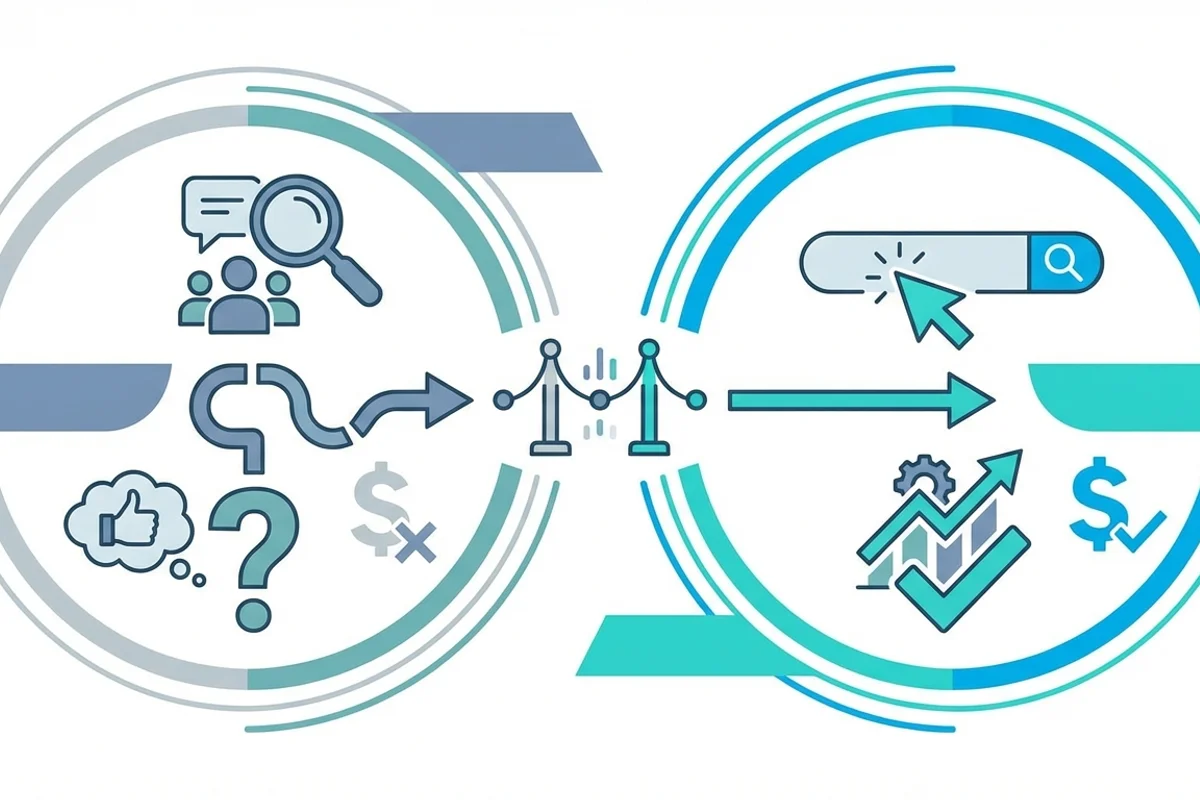
Focus groups and traditional market research have their place, but they’re expensive and often provide misleading results. People say one thing in a room full of strangers and do something completely different when spending their own money online.
Google Ads micro testing solves several problems with traditional research methods:
- Cost – You can run meaningful tests with budgets under $500
- Speed – Get results in days, not weeks
- Real behaviour – Track actual clicks and conversions, not stated intentions
- Scalability – Test multiple variations simultaneously
- Targeting precision – Reach exactly the right audience demographics
The cost-effectiveness particularly benefits smaller businesses and startups. Instead of spending thousands on focus groups for an unproven idea, you can validate demand and refine your approach for a fraction of the cost.

Research Market Demand Before You Start Testing

Before running paid campaigns, validate there’s sufficient market interest to justify your investment. Start with free tools to understand the landscape, then move to paid testing once you’ve confirmed basic demand exists.
Use Google Trends for Initial Market Assessment
Google Trends reveals search interest patterns over time. Enter keywords related to your product idea and analyse trending volume. This helps identify seasonal demand patterns and growing interest in emerging categories.
Compare multiple related terms simultaneously to understand the broader market. If your idea targets a completely new category, look for increasing trend lines that suggest growing awareness and demand.
Remember that Google Trends shows relative search volume, not absolute numbers. It’s perfect for understanding trends and seasonality but not for calculating exact market size.
Google Keyword Planner for Demand Validation
The Keyword Planner provides more precise search volume data, though Google now restricts full access to active advertisers. If you’re not currently running campaigns, you’ll see volume ranges rather than exact numbers.
Access the tool through your Google Ads account under Tools & Settings > Planning > Keyword Planner. Research keywords related to your product or service, making sure to set the correct geographic targeting for your launch market.
For non-advertisers, alternative tools like SERPS Keyword Research Tool or Mangools KWFinder provide similar functionality with actual search volume numbers. These paid tools often offer more detailed competitor analysis as well.
Understanding Competition and Cost Projections
Market demand means nothing if you can’t afford to compete for that attention. Use the Keyword Planner’s bid estimates to understand potential advertising costs. High competition often signals a profitable market, but also means you’ll need bigger budgets to compete effectively.
The forecasting tool estimates clicks and conversions for specific budgets and bids. While these projections aren’t perfect, they provide useful guidance for planning your micro testing budget and understanding ongoing marketing costs.
Setting Up Your Google Ads Micro Testing Campaign
With validated demand, you can design targeted experiments to test specific elements of your product or service. The key is testing one variable at a time while keeping budgets controlled and timelines defined.
What You Can Test with Micro Campaigns
Google Ads micro testing opens up almost unlimited possibilities for market research. You can test:
- Product or service names
- Pricing strategies and ranges
- Key features and benefits messaging
- Target audience segments
- Geographic markets
- Seasonal timing
- Brand positioning and taglines
- Visual elements and logos
- Call-to-action approaches
- Landing page designs and copy
The beauty of testing a non-existent product is complete creative freedom. You’re not constrained by current limitations, so you can test aspirational features and positioning to guide actual development.
Campaign Structure for Clean Data
Separate campaigns and ad groups for each test element. If you mix brand name tests with pricing tests in the same campaign, you won’t get clear insights about what’s driving results.
Create distinct keyword lists for your test campaigns to avoid competing with existing product campaigns. Use geographic targeting to limit your test scope and control costs – you can always expand successful tests to broader markets later.
Keep campaigns clearly labelled and organised. You’ll be analysing this data to make important business decisions, so clean structure is essential for accurate insights.
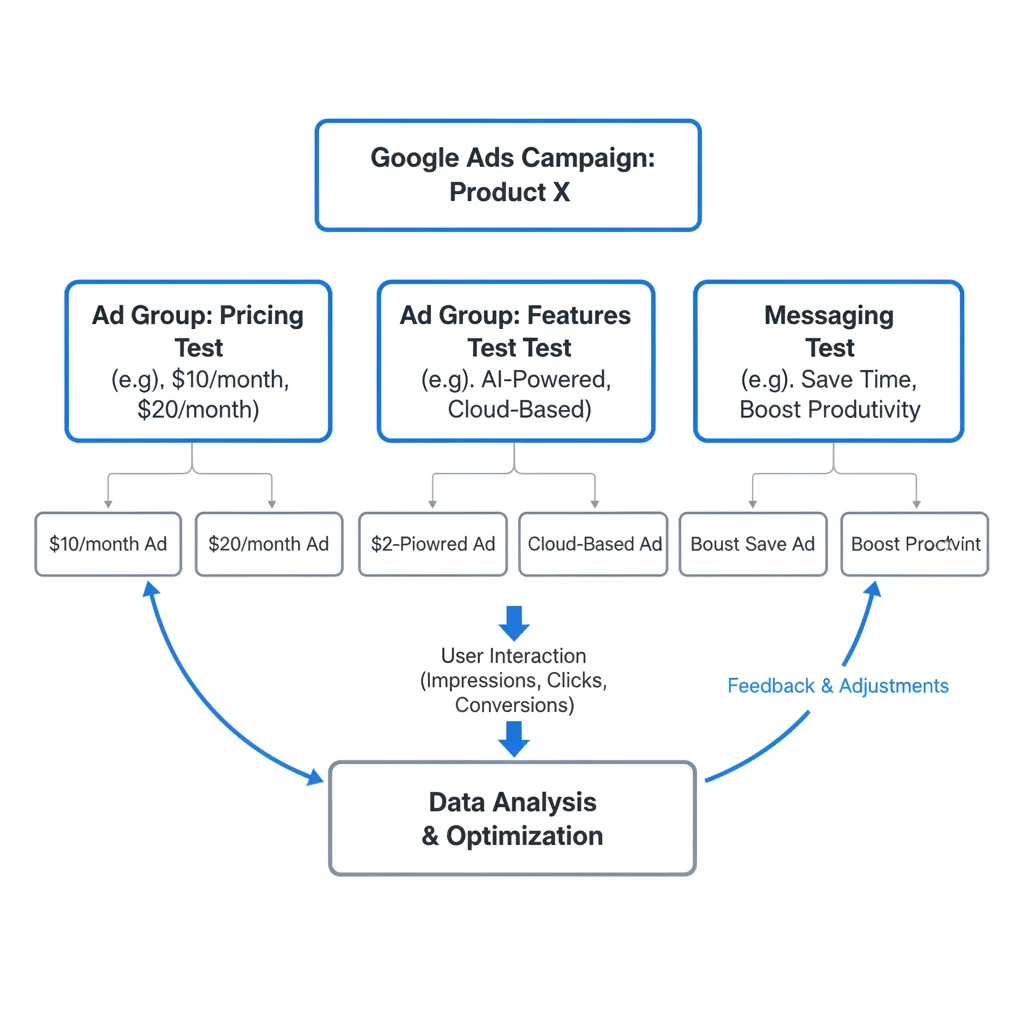 Google Ads campaign structure diagram showing separated ad groups for different micro testing variables” width=”1024″ height=”1024″ loading=”lazy” />
Budget and Timeline Considerations
Start with modest budgets – $20-50 per day often provides sufficient data for initial testing. The goal is gathering insights, not driving massive volume. You can always increase budgets for particularly promising variations.
Run tests long enough to gather meaningful data, typically 1-2 weeks minimum. Stopping too early leads to decisions based on insufficient information, potentially costing far more than the testing budget if you make wrong development choices.
Consider taking advantage of Google Ads promotional credits if you have them. These vouchers provide free testing budget, making micro testing even more cost-effective.
Creating Landing Pages That Convert and Educate
Your landing pages serve dual purposes: testing messaging effectiveness and managing visitor expectations. Since you’re advertising something that doesn’t exist yet, transparency is essential to maintain trust and gather valuable feedback.
The Honest “Coming Soon” Approach
Be upfront about your product’s development status while creating excitement and anticipation. Buffer’s early landing page perfectly demonstrated this approach – apologetic yet exciting, promising updates while collecting valuable lead information.
Include estimated launch dates if possible, or explain your development timeline in general terms. People appreciate honesty and are more likely to engage when they understand what to expect.
Make signing up valuable by offering exclusive early access, special pricing, or input into product development. This transforms potential frustration into anticipation and engagement.
Collecting Feedback for Product Development
Don’t just collect email addresses – actively seek input about desired features, pain points, and preferences. Since your product doesn’t exist yet, this feedback directly influences development decisions.
Keep feedback forms short but specific. Ask 2-3 targeted questions about the most important development decisions you need to make. Long surveys kill conversion rates and provide less useful data than focused questions.
Consider offering multiple landing page variations that emphasise different features or benefits. The variation that generates the most engagement tells you what resonates most with your target market.
Analysing Your Micro Testing Results
Data interpretation determines whether your testing investment pays off. Look beyond surface metrics to understand the full story your campaigns are telling about market demand and positioning opportunities.
Understanding Low Performance Metrics
Low impressions might indicate insufficient demand or bids that are too low for competitive markets. Check if your initial research overestimated demand or if you need higher bids to compete effectively.
High impressions but low clicks often point to ad copy or keyword relevance issues. For innovative products, try problem-focused messaging that addresses pain points rather than describing unfamiliar solutions.
Examples of effective problem-focused ad copy include:
- “Tired of manual invoicing?”
- “Struggling with project deadlines?”
- “Want faster customer support resolution?”
Low conversions on your landing pages might mean visitors aren’t ready to commit to non-existent products. Test different offers like “Get notified first” instead of “Sign up for beta access.”
Identifying Winning Patterns
Look for consistency in your results. Sporadic interest might indicate niche appeal but insufficient market size. Consistent engagement across multiple test variations suggests genuine market demand worth pursuing.
Compare performance across different audience segments, geographic areas, and messaging approaches. The highest-performing combinations guide your actual launch strategy and initial marketing focus.
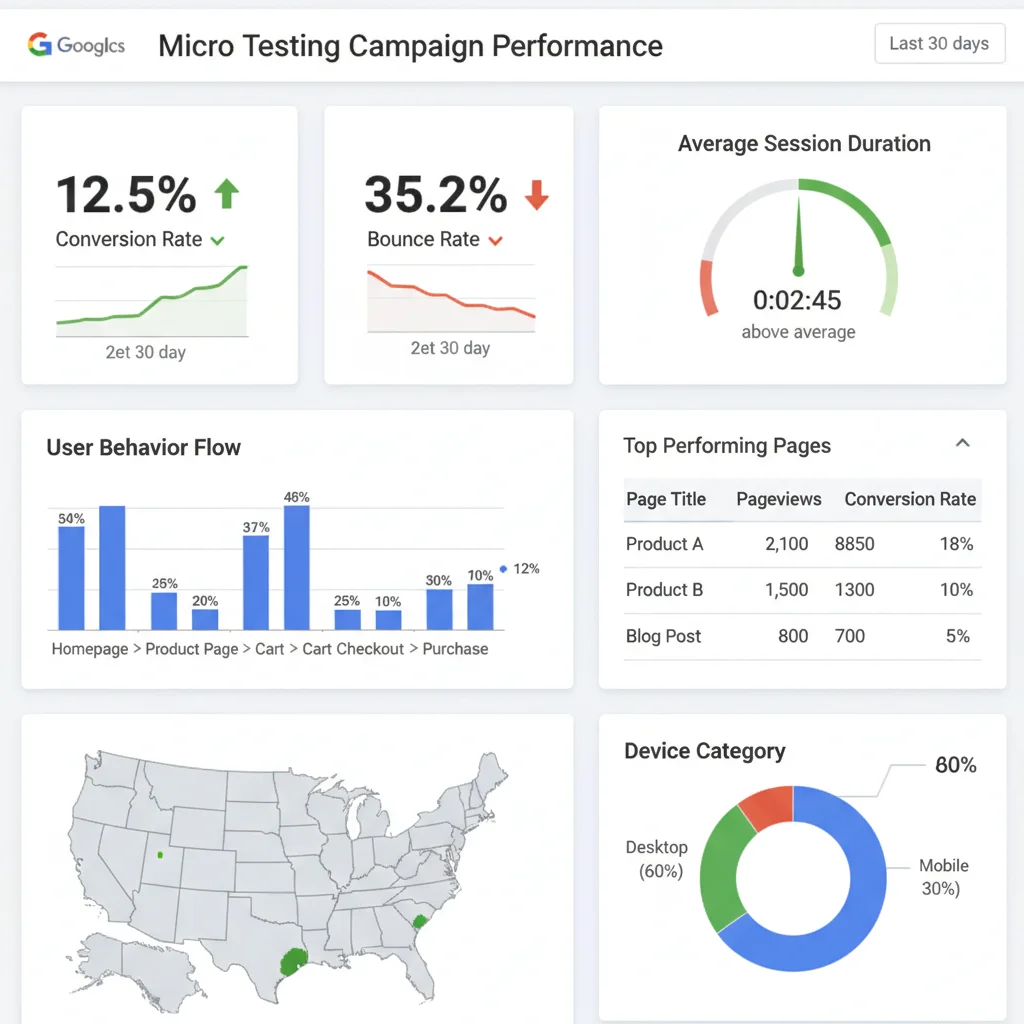
Using Google Analytics for Deeper Insights
Link your Google Ads and Analytics accounts before starting tests to capture detailed behaviour data. Analytics reveals how long people spend on your test pages, which content they engage with most, and how they navigate your site.
Set up Content Experiments in Analytics to test multiple landing page variations without creating duplicate ad campaigns. This saves budget while providing statistical confidence in your results.
Navigate to Behaviour > Experiments in Analytics, create your experiment with clear success metrics, and distribute traffic evenly across variations for accurate comparisons.
Real-World Micro Testing Success Stories
SmartShott increased conversions by 233% by advertising a service that didn’t exist yet. Their micro testing revealed not only effective marketing strategies but also additional features customers wanted, while building a qualified lead list before launch.
Startup Bros achieved a 35% conversion increase by testing three simple tagline variations for the same product. This demonstrates how minor messaging changes can significantly impact market response – insights that directly improve launch success.
These examples show micro testing’s double value: validating market demand while optimising marketing approach before significant development investment.
Best Practices for Effective Micro Testing
Successful micro testing requires discipline and clear methodology. Follow these practices to maximise the value of your testing investment:
- Test one variable at a time for clear results
- Run tests long enough to gather statistically significant data
- Keep messaging simple, even for sophisticated products
- Separate test campaigns from existing product campaigns
- Document everything for future reference and scaling decisions
- Be transparent with potential customers about development status
Remember that micro testing is an investment in reducing larger risks. Spending a few hundred dollars on testing can prevent costly mistakes that waste thousands on unsuccessful product launches.
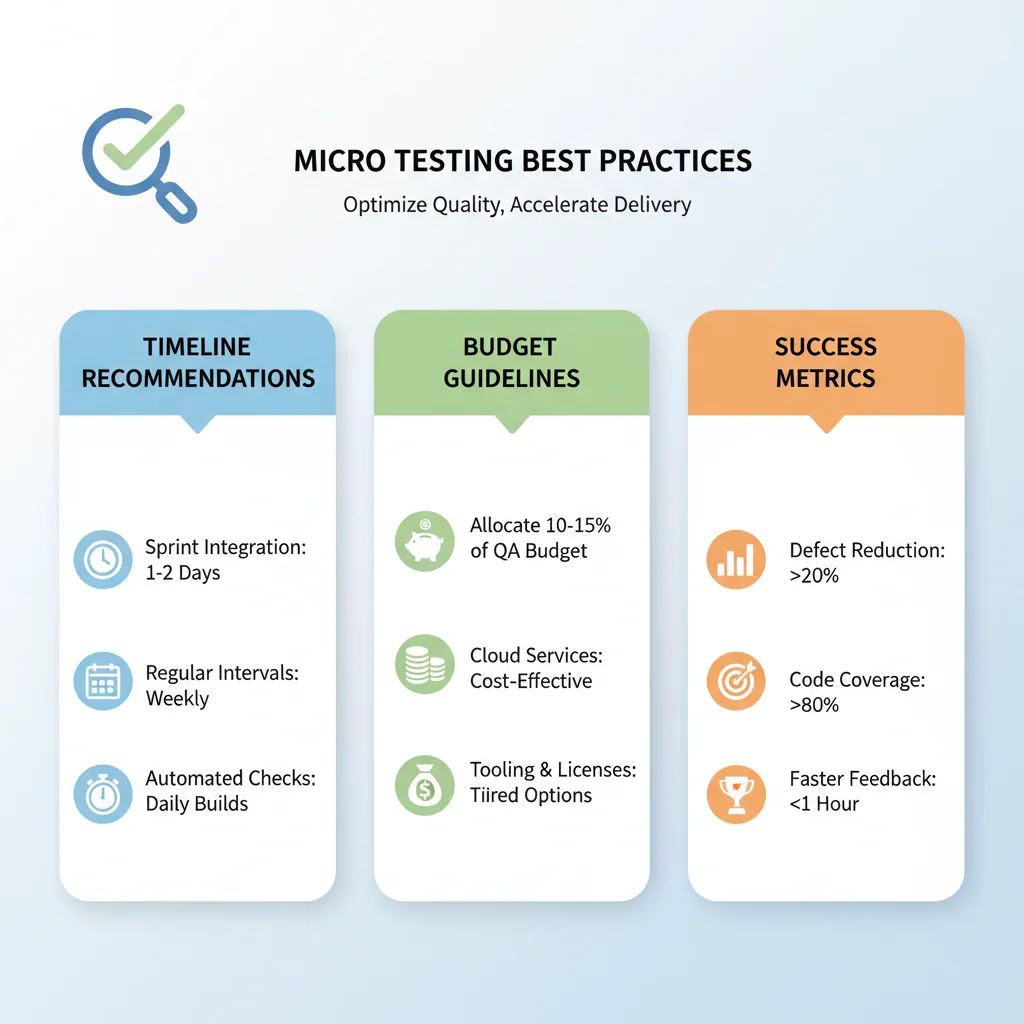
Making Development Decisions from Testing Data
Your micro testing results should directly influence product development priorities and launch strategies. Strong performance in specific feature messaging tells you what to prioritise in development. Geographic performance variations guide launch market selection.
Pricing tests reveal market sensitivity and optimal positioning strategies. Audience segment performance helps refine your ideal customer profile and marketing targeting for launch campaigns.
Don’t rush development decisions based on limited data. Ensure your tests run long enough to capture various market conditions and user behaviours before committing to major development directions.
At PWD Digital Agency, we’ve seen how proper micro testing transforms product launch success rates. The insights gained from controlled testing directly improve both product-market fit and marketing campaign performance from day one.
Common Micro Testing Mistakes to Avoid
The most common mistake is ending tests too early to save money. This often leads to decisions based on insufficient data, potentially costing far more than the testing budget through poor development choices.
Another frequent error is testing too many variables simultaneously. When everything changes between campaigns, you can’t identify what’s driving performance differences.
Avoid setting unrealistic expectations for non-existent products. Your conversion rates will naturally be lower than existing product campaigns because visitors can’t immediately purchase or use your offering.
Finally, don’t ignore negative results. Sometimes discovering there’s insufficient demand saves you from costly mistakes. Failed tests that prevent bad investments often provide more value than successful ones.
Frequently Asked Questions
How much should I budget for micro testing a new product idea?
Start with $300-500 total budget spread across 1-2 weeks. This provides enough data for initial validation without major financial risk. You can increase budgets for promising concepts or reduce spending if early results show limited demand.
Can I micro test without an existing Google Ads account?
Yes, you can create a new Google Ads account specifically for micro testing. You’ll need to spend a small amount to access full keyword data, but even new accounts can run effective micro testing campaigns with basic tools.
How long should I run micro testing campaigns?
Run campaigns for at least 1-2 weeks to gather meaningful data. Shorter periods don’t capture different market conditions and user behaviours. For seasonal products, test during relevant buying periods for accurate demand validation.
What conversion rate should I expect from micro testing campaigns?
Expect lower conversion rates than traditional campaigns since you’re promoting non-existent products. Focus on relative performance between test variations rather than absolute conversion numbers. Even 1-3% conversion rates can provide valuable insights.
Should I test multiple product ideas simultaneously?
Yes, but use separate campaigns for each product idea to get clear data. Testing multiple concepts helps you prioritise development resources and identify the most promising opportunities for your market.
Is micro testing worth it for B2B products?
Absolutely. B2B micro testing is especially valuable because traditional focus groups are more expensive and harder to organise. You can test messaging, pricing tiers, and feature priorities while building a qualified prospect list before launch.