
Digital Marketing for Small Businesses: 6 Top Tips for 2026

As a small business owner, you might feel overwhelmed by digital marketing. Millions of Australians go online every day. Over 21 million use social media. If you ignore digital channels, you miss huge chances to grow your customer base. The good news? You don’t need a big budget to start seeing results.
Digital marketing covers any promotional activity that uses online channels. This includes search engines, social media, email, and mobile apps. It combines both paid advertising and organic strategies to connect with potential customers. For small businesses, it is one of the most cost-effective ways to compete with larger companies and reach targeted audiences.

What Makes Digital Marketing Essential for Small Businesses
Digital marketing works through multiple online channels. These include search engines, websites, social media platforms, email campaigns, and mobile apps. Each channel gives you unique ways to reach your ideal customers where they spend their time.
Unlike traditional ads such as TV commercials, print ads, or billboards, digital marketing offers precise targeting and measurable results. You can track exactly how many people saw your content, clicked your links, and made purchases. And you can see it all in real time.
Search engine optimisation forms the foundation of effective digital marketing. When your website ranks higher in search results, more potential customers find your business naturally. This boosts your online visibility without ongoing ad costs.
The Numbers Don’t Lie
These statistics show why digital marketing is now essential:
- Australia has 25.31 million internet users as of 2023, meaning near-universal connectivity
- Average Australians spend over 6 hours online daily, creating multiple touchpoints for your business
- 21.30 million Australians actively use social media, giving you direct access to engaged audiences
- Digital marketing consistently delivers higher ROI than traditional advertising methods
These figures keep growing year over year. Your potential market expands while traditional media audiences shrink.
Key Benefits Digital Marketing Delivers
Digital marketing changes how small businesses connect with customers. Instead of broadcasting generic messages and hoping someone notices, you deliver targeted content. You reach people who are actively searching for your products or services.
Many tools are free or low-cost. This means you can start right away, no matter your budget. These platforms offer advanced targeting options. They help you reach the right audience for your business type and location.
Once you attract potential customers, digital channels let you build relationships through consistent, valuable interactions. This approach delivers several measurable benefits:
- Much greater brand visibility across multiple platforms
- Stronger business reputation through customer reviews and social proof
- Higher lead conversion rates through targeted messaging
- Better customer retention through ongoing engagement
- Real-time performance tracking and campaign improvement
6 Digital Marketing Strategies That Work
1. Build Your Content Marketing Foundation
Content marketing means creating valuable, relevant material that attracts and engages your target audience. This includes blog posts, videos, podcasts, social media updates, guides, reports, and free resources that show your expertise.
Every piece of content must be optimised for search engines so people can find it. Well-executed content marketing serves multiple purposes. It builds authority, attracts organic traffic, and guides leads through your sales funnel.
 marketing strategy session with team collaboration” width=”2084″ height=”1390″ />
8 Content Creation Strategies That Attract Customers
- Prioritise quality over quantity. One well-researched article per month beats multiple weak posts every time.
- Make every piece strategic. Research important keywords for your industry. Plan content around the search terms your customers actually use.
- Use a content calendar. Planning ahead keeps your publishing consistent. It also gives you time to create quality material.
- Repurpose successful content. Turn a popular blog post into a video, infographic, or social media series to reach more people.
- Tell authentic stories. Real customer experiences and business challenges create emotional connections that drive action.
- Include clear calls-to-action. Every content piece should guide readers toward a specific next step. This could be subscribing, calling, or purchasing.
- Use email newsletters strategically. Regular, valuable updates build direct relationships with your audience outside social media algorithms.
- Invest in visuals. Images, infographics, and videos break up text. They also make complex information easier to understand.
2. Expand Beyond Local Markets
With 5.3 billion internet users worldwide and cheaper international shipping, small businesses can reach global markets like never before. Digital marketing makes this expansion possible, even for companies with limited resources.
To succeed globally, you need content localisation, translation services, and international SEO strategies. If you’re thinking about e-commerce expansion, the numbers speak for themselves. Over two billion people made online purchases in 2023, creating more than 5.7 trillion dollars in global sales.
3. Master These Essential Digital Tools
Many effective digital marketing tools need little investment but deliver big results. Here are the platforms every small business should know:
Social Media Platforms: Create a content calendar and post material that educates and engages your audience. Tools like Hootsuite help you manage multiple accounts, schedule posts, and measure performance. Focus on the platforms where your target customers spend their time, rather than trying to be everywhere.
Google Business Profile: This free tool is essential for local businesses. Optimising your Google Business Profile helps you appear in local search results and Google Maps. It also gives you useful insights into how customers find and contact your business.
Search Engine Optimisation and Marketing: SEO strategies help your website rank higher in organic search results. Search engine marketing uses paid ads to show up for specific keywords. Both approaches drive targeted traffic to your website.
4. Use Lead Magnets to Build Your Database
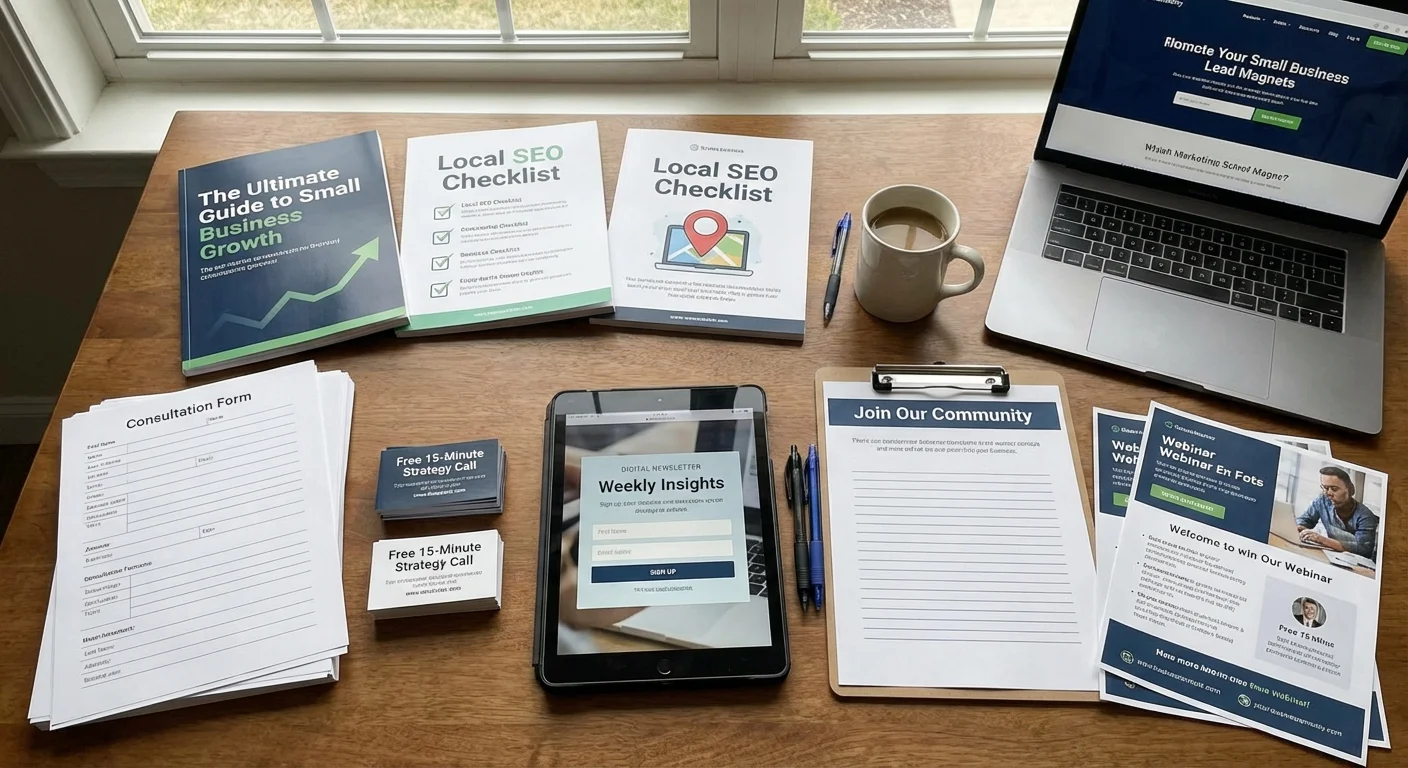
Lead magnets are valuable resources you offer in exchange for contact details. These can include free samples, detailed guides, email newsletters, exclusive consultations, or access to private online communities.
The best lead magnets solve specific problems your target customers face. Detailed resources like white papers or webinars take more time to create. However, simpler options like newsletter subscriptions or brief consultations can work just as well and are much quicker to set up.
5. Build Genuine Customer Relationships
Digital channels let you make personal connections that traditional businesses often struggle to achieve. Through chatbots, social media interactions, and automated email sequences, you can respond to customer questions and concerns in real time.
This responsiveness builds trust. It positions your brand as one that genuinely cares about customer experiences. In competitive markets, exceptional customer service creates loyal advocates who recommend your business to others.
6. Track Performance and Optimise Continuously
Digital platforms give you detailed analytics that show exactly how your marketing performs. Most content management systems include built-in reporting. You can also add Google Analytics for deeper insights.
Your regular analysis should include:
- Reviewing how well your current strategy works and how your audience engages
- Identifying which channels and content types produce the best results
- Studying competitor activities and target audience behaviour
- Tracking customer interactions across all digital touchpoints
- Adjusting strategies based on what the data tells you
This ongoing approach makes sure your marketing efforts improve over time and deliver better results.

Common Digital Marketing Mistakes to Avoid
Many small businesses make avoidable errors that limit their digital marketing success. Common SEO mistakes include keyword stuffing, ignoring mobile optimisation, and overlooking local search factors.
Other frequent problems include:
- Trying to maintain a presence on every social platform instead of focusing on where your customers actually spend time
- Creating content without researching what your audience wants to know
- Ignoring mobile users, even though most web traffic comes from phones and tablets
- Setting up campaigns but never measuring or improving their performance
- Expecting instant results instead of giving organic strategies time to build momentum
Getting Started With Your Digital Marketing
Small business owners can make real progress without draining their entire marketing budget. The key is creating a focused digital marketing strategy, following it consistently, and measuring results regularly.
Start with one or two channels where your customers are most active. Master those platforms before you expand to others. This focused approach produces better results than spreading yourself thin across many platforms.
Remember that digital marketing is not a set-and-forget activity. Businesses that keep refining their approach based on performance data see the best long-term results. Those that launch campaigns and ignore them usually fade as competitors take their market share.
If you’re ready to launch effective digital marketing campaigns but need expert guidance, our experienced team at PWD can help. We develop and run strategies that deliver measurable results. Contact us today to discuss how we can speed up your business growth through targeted digital marketing.
Frequently Asked Questions
How much should a small business spend on digital marketing?
Most small businesses should put 7-12% of their total revenue toward marketing. Of that, 60-70% should go to digital channels. Start with $500-1000 monthly if you’re just beginning.
Which digital marketing channels work best for small businesses?
Google Business Profile, local SEO, and social media marketing usually deliver the best ROI for small businesses. Email marketing and content marketing also produce great long-term results.
How long does it take to see results from digital marketing?
Paid advertising can show results within days. SEO and content marketing usually take 3-6 months to build momentum. Social media engagement often improves within 4-8 weeks of consistent posting.
Can I do digital marketing myself or do I need an agency?
Small businesses can handle basic social media and content creation themselves. However, technical areas like SEO, paid advertising, and website optimisation often need professional expertise for the best results.
What digital marketing metrics should small businesses track?
Focus on website traffic, lead generation, conversion rates, customer acquisition cost, and return on ad spend. These metrics connect directly to revenue and business growth.
Is social media marketing necessary for all small businesses?
Not every business needs social media, but most benefit from it. B2B companies often succeed on LinkedIn, while retail businesses thrive on Instagram and Facebook. Choose platforms where your customers are active.