Every dollar you spend on digital marketing should work harder for your business. Yet most companies send their paid traffic to generic homepages that weren’t designed to convert. The result? Expensive clicks that lead nowhere, and budgets that deliver disappointing returns.
Smart businesses know better. They direct traffic to purpose-built landing pages that turn visitors into customers. Whether you’re running Google Ads campaigns or promoting through social media, converting ad copy needs an equally focused destination.
Here’s why dedicated landing pages aren’t just nice-to-have assets — they’re essential tools that can dramatically improve your conversion rates and marketing ROI.
What Makes Landing Pages Different?
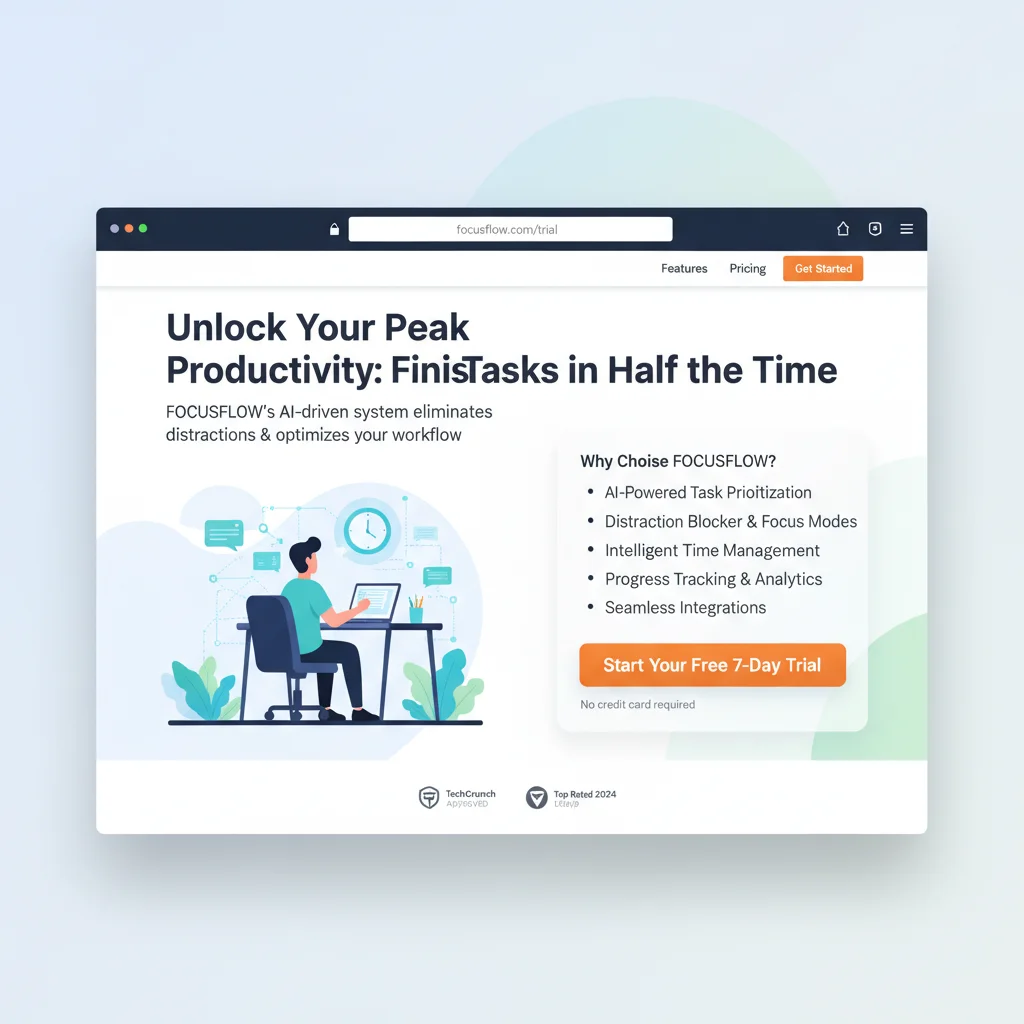
Landing pages serve one purpose: converting visitors into leads or customers. Unlike your homepage, which juggles multiple messages and navigation options, a landing page focuses entirely on a single conversion goal.
Think of your homepage as a shopping centre directory — useful for browsing, terrible for buying. A landing page is the specialised store that sells exactly what your visitor came looking for.
Essential Landing Page Elements
Every high-performing landing page includes these core components:
- Compelling headline — matches your ad copy and visitor intent
- Clear value proposition — explains what you offer and why it matters
- Benefit-focused copy — addresses visitor pain points directly
- Social proof — testimonials, reviews, or client logos
- Strong call-to-action — tells visitors exactly what to do next
- Lead capture form — collects contact information efficiently
- Minimal navigation — removes distractions that kill conversions

Lyft’s driver signup page demonstrates these principles perfectly. Clean design, clear benefit (“Earn money on your schedule”), and a prominent signup button that’s impossible to miss.
Proven Ways Landing Pages Boost Your Business
Generate More Qualified Leads
Landing pages excel at lead generation because they’re built for conversion. A visitor clicks your ad for “free SEO audit” and lands on a page that delivers exactly that — no hunting through navigation menus or competing messages.
The data backs this up. Companies with 30+ landing pages generate 7x more leads than those with fewer than 10. Why? More pages means more opportunities to capture different audience segments at various stages of their buying journey.

We’ve seen this pattern repeatedly with our clients. Our team builds targeted landing pages that match specific search queries and campaign goals, resulting in conversion rate improvements of 200-300% compared to sending traffic to generic pages.
Improve Your Advertising ROI
Sending paid traffic to your homepage is like buying premium petrol for a car with a hole in the tank. You’re paying for quality traffic but losing most of it through poor conversion design.
Landing pages fix this leak. They maintain message consistency from ad to page, reduce bounce rates, and increase conversion rates. Smart PPC strategies always include dedicated landing pages for each campaign.
Google rewards this approach too. Better landing page relevance improves your Quality Score, which reduces cost-per-click and improves ad positions. Your advertising budget works harder when it’s supported by focused landing pages.
Target Different Audience Segments
Your audience isn’t homogeneous. Different segments have different needs, pain points, and motivations. One-size-fits-all messaging dilutes your impact and reduces conversions.
Landing pages solve this by enabling precise targeting. Create separate pages for:
- Industry verticals — healthcare, legal, retail, manufacturing
- Company sizes — startups, SMEs, enterprise clients
- Service types — SEO, web design, paid advertising, content marketing
- Geographic locations — different cities or regions
- Customer stages — awareness, consideration, decision

This targeted approach improves relevance and conversion rates. A healthcare practice searching for SEO services responds better to a page that speaks their language and addresses their specific challenges than a generic “SEO services” page.
Common Landing Page Types That Drive Results
Lead Generation Pages
These pages capture contact information in exchange for valuable content or consultations. Popular formats include:
- Free audit offers (SEO, website, marketing assessment)
- Downloadable guides and ebooks
- Webinar registrations
- Free trial signups
- Consultation bookings
The key is offering genuine value. Your “free SEO audit” should deliver real insights, not a sales pitch disguised as analysis.
Service-Specific Pages
Rather than sending local SEO traffic to a general services page, create focused pages for each offering. This improves relevance and allows for service-specific messaging and social proof.
Each page should address the specific benefits and outcomes of that service, include relevant case studies, and feature a clear next step for interested prospects.
Product Launch Pages
When launching new services or tools, dedicated landing pages build anticipation and capture early interest. These pages work well for:
- Early bird pricing announcements
- Beta program signups
- Waitlist building
- Pre-order campaigns
Landing Page Performance Optimisation
Track the Right Metrics
Landing page success isn’t just about conversions. Monitor these key metrics:
- Conversion rate — percentage of visitors who complete your desired action
- Bounce rate — visitors who leave without engaging
- Time on page — indicates content engagement level
- Form completion rate — how many start vs finish your forms
- Traffic source performance — which channels drive best conversions
Digital marketing metrics provide the insights needed to continuously improve performance.
A/B Testing for Continuous Improvement
Landing pages are perfect for systematic testing. Small changes often produce significant conversion improvements:
- Headlines — test benefit-focused vs feature-focused messaging
- Call-to-action buttons — colour, size, text, placement
- Form length — more fields vs fewer fields
- Social proof placement — above vs below the fold
- Value propositions — different benefit angles
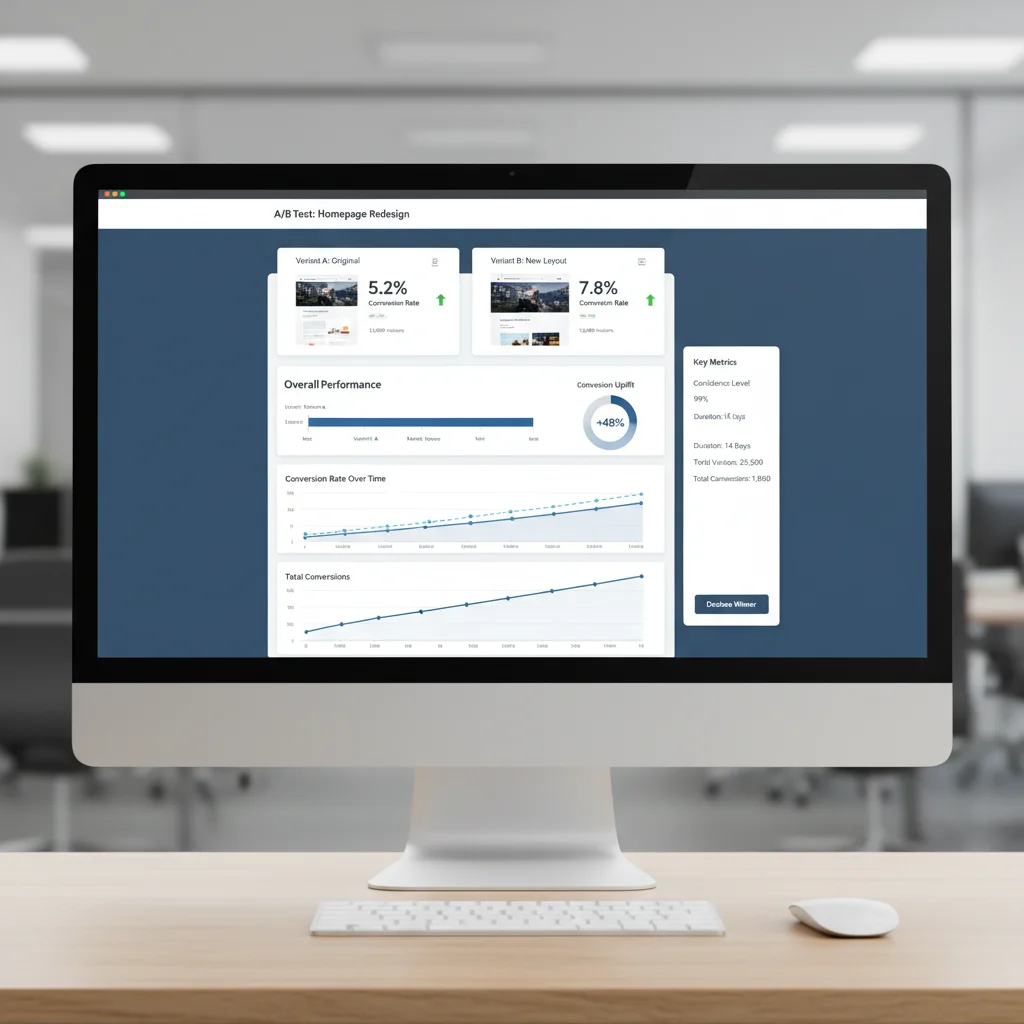
Test one element at a time and run tests long enough to reach statistical significance. Small iterative improvements compound into major performance gains over time.
Mobile Optimisation is Non-Negotiable
Over 60% of web traffic comes from mobile devices, yet many landing pages still provide poor mobile experiences. Website speed matters, especially on mobile where users have less patience.
Mobile-optimised landing pages feature:
- Fast loading speeds (under 3 seconds)
- Thumb-friendly button sizes
- Simplified forms with minimal typing
- Readable text without zooming
- Single-column layouts that flow naturally
Technical Considerations for Landing Page Success
Page Speed and Performance
Slow landing pages kill conversions. Amazon found that every 100ms of latency costs them 1% in sales. Your landing pages need to load quickly across all devices and connection speeds.
Optimise performance by:
- Compressing images without quality loss
- Minimising HTTP requests
- Using efficient hosting and CDN services
- Eliminating unnecessary plugins and scripts
- Implementing browser caching
SEO for Landing Pages
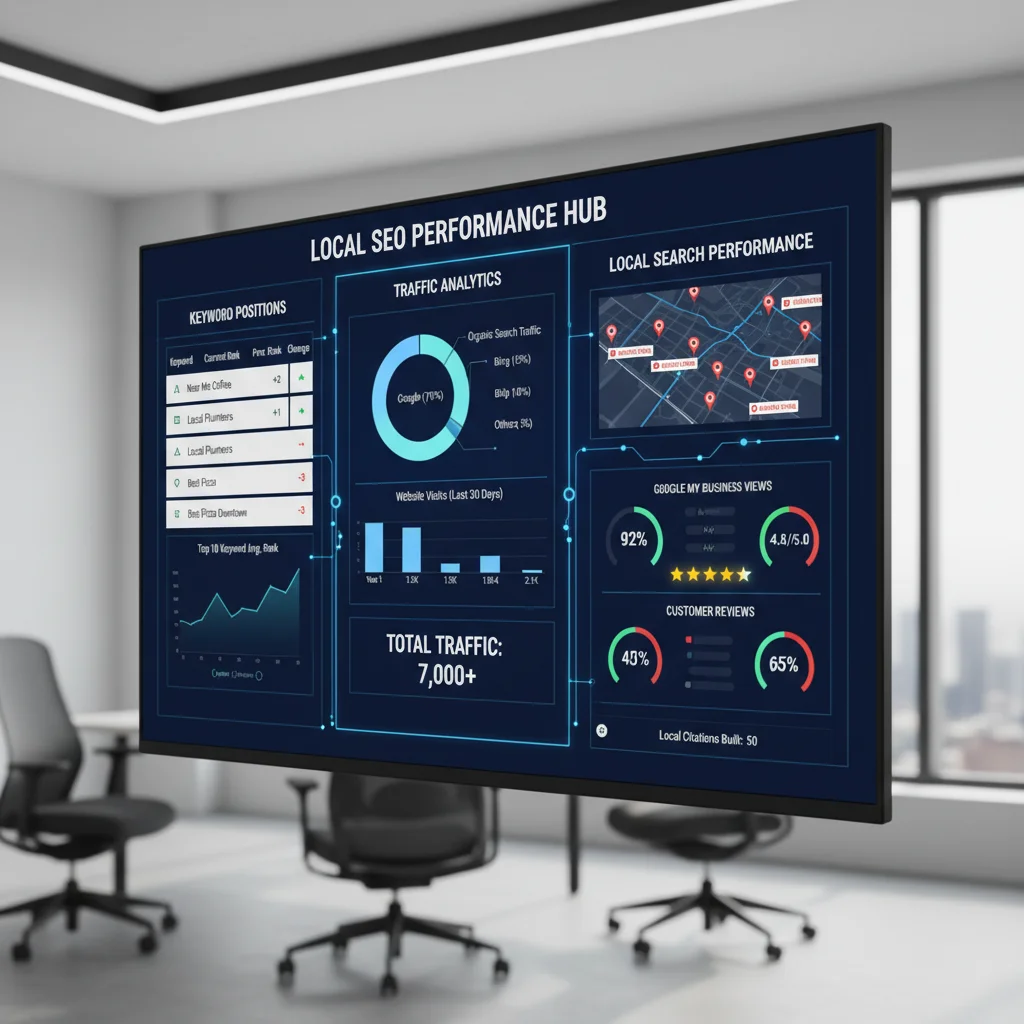
While most landing pages target paid traffic, organic visibility provides additional value. Effective SEO strategies can help your landing pages rank for relevant search queries.
Focus on:
- Target keywords — include primary keywords naturally in headlines and copy
- Meta descriptions — compelling snippets that encourage clicks
- URL structure — clean, descriptive URLs that match page content
- Internal linking — connect to relevant blog content and service pages
- Schema markup — help search engines understand page content
Integration with Your Marketing Strategy
Align Landing Pages with Campaign Goals
Every marketing campaign needs a purpose-built landing page. Generic pages dilute your message and reduce conversion potential. Different digital marketing channels require different landing page approaches.
Match landing pages to campaign types:
- Google Ads — high-intent, conversion-focused pages
- Facebook Ads — engagement-focused with social proof
- Email campaigns — personalised based on subscriber segments
- Content marketing — educational resources and next-step offers
- Retargeting — address specific objections or concerns
Follow-Up and Nurturing
Landing page conversion is just the beginning. What happens after someone submits their information determines long-term success. Plan your follow-up sequence before launching the page.
Effective follow-up includes:
- Immediate confirmation emails
- Automated email sequences with valuable content
- Personal outreach for high-value leads
- Retargeting campaigns for non-converters
- CRM integration for sales team follow-up
The goal isn’t just capturing leads — it’s nurturing them into customers.
Common Landing Page Mistakes to Avoid
Even well-intentioned landing pages can fail due to common mistakes:
- Too many options — multiple calls-to-action confuse visitors
- Weak value propositions — generic benefits that don’t resonate
- Long, complex forms — asking for unnecessary information upfront
- Poor mobile experience — difficult to use on smartphones
- Slow loading speeds — losing visitors before they engage
- Mismatched messaging — page content doesn’t match ad promises
- No social proof — missing credibility indicators
- Weak headlines — failing to capture attention immediately
Avoid these pitfalls by focusing on single conversion goals, clear messaging, and user-friendly design. Web usability principles guide effective landing page creation.
Getting Started with Landing Pages
Start with your highest-value campaigns and create dedicated landing pages for them. You don’t need dozens of pages immediately — focus on the campaigns that drive the most traffic or target your most valuable customers.
The PWD Digital team can help you design and develop high-converting landing pages that align with your marketing goals. We’ve built hundreds of pages across industries, and we know what works.

Remember: every visitor to your website is an opportunity. Landing pages ensure you make the most of every click, every visitor, and every marketing dollar you spend.
What’s the difference between a landing page and a homepage?
A landing page focuses on one specific conversion goal with minimal distractions, while a homepage serves multiple purposes and includes full site navigation. Landing pages typically have higher conversion rates because they eliminate choice paralysis.
How many landing pages should my business have?
Companies with 30+ landing pages generate 7x more leads than those with fewer than 10. Start with pages for your most important campaigns and expand based on different audience segments and offerings.
What’s a good conversion rate for landing pages?
Average landing page conversion rates range from 2-5%, but this varies significantly by industry and traffic source. Focus on improving your own baseline rather than comparing to industry averages.
Should I remove navigation from landing pages?
Yes, removing or minimising navigation reduces distractions and keeps visitors focused on your conversion goal. The only links should support your primary objective or provide essential information like privacy policies.
How long should my landing page be?
Landing page length should match your audience’s intent and the complexity of your offer. Simple offers may need only a few paragraphs, while high-value services often require more detailed information to build trust and address concerns.
Do landing pages help with SEO?
While primarily designed for paid traffic, well-optimised landing pages can rank organically for relevant keywords. They also improve Google Ads Quality Scores, which reduces cost-per-click and improves ad positions.
Frequently Asked Questions
What’s the difference between a landing page and a homepage?
A landing page focuses on one specific conversion goal with minimal distractions, while a homepage serves multiple purposes and includes full site navigation. Landing pages typically have higher conversion rates because they eliminate choice paralysis.
How many landing pages should my business have?
Companies with 30+ landing pages generate 7x more leads than those with fewer than 10. Start with pages for your most important campaigns and expand based on different audience segments and offerings.
What’s a good conversion rate for landing pages?
Average landing page conversion rates range from 2-5%, but this varies significantly by industry and traffic source. Focus on improving your own baseline rather than comparing to industry averages.
Should I remove navigation from landing pages?
Yes, removing or minimising navigation reduces distractions and keeps visitors focused on your conversion goal. The only links should support your primary objective or provide essential information like privacy policies.
How long should my landing page be?
Landing page length should match your audience’s intent and the complexity of your offer. Simple offers may need only a few paragraphs, while high-value services often require more detailed information to build trust and address concerns.
Do landing pages help with SEO?
While primarily designed for paid traffic, well-optimised landing pages can rank organically for relevant keywords. They also improve Google Ads Quality Scores, which reduces cost-per-click and improves ad positions.