How to Recover Abandoned eCommerce Carts in 2026

If you’re running an online store, cart abandonment is probably keeping you awake at night. Picture this: potential customers browse your products, add items to their cart, then disappear into the digital ether, leaving behind virtual shopping trolleys full of unrealised revenue. The Baymard Institute’s research shows that over 55% of visitors to online stores abandon their carts, with some studies reporting rates as high as 81% — and mobile abandonment rates are even worse.
But here’s the good news: cart abandonment doesn’t have to be the death knell for those sales. With the right strategies, you can significantly reduce abandonment rates and recover many of those lost transactions. We’ll show you exactly how to tackle this challenge head-on.

Why Do Customers Abandon Their Shopping Carts?
Understanding why customers abandon carts is the first step to fixing the problem. The reasons are more straightforward than you might think:
- Unexpected costs: Hidden shipping fees, taxes, or handling charges that appear at checkout
- Delivery concerns: Unclear delivery dates, slow shipping options, or expensive express alternatives
- Limited payment options: Their preferred payment method isn’t available
- Security worries: Concerns about sharing credit card information, particularly among older shoppers
- Account creation requirements: Forced registration when they just want to buy quickly
- Complicated returns: Unclear or restrictive return policies
- Poor user experience: Slow loading times, difficult navigation, or lack of mobile optimisation
- Just browsing: No real intention to purchase — they’re using the cart as a wishlist
- Checkout friction: Too many steps, forms, or required fields
Proven Strategies to Reduce Cart Abandonment
Make Shipping Costs Transparent and Competitive
Shipping cost surprises are conversion killers. Display all costs upfront — ideally on product pages, definitely before the final checkout step. If you can’t offer free shipping on everything, consider a minimum spend threshold. This approach not only covers your costs but increases average order values.
When competitors offer free shipping or click-and-collect options, customers won’t choose you if you don’t match their expectations. If you do provide free shipping, make it prominent — place it above the fold on every page and remind customers when they’re close to qualifying for free delivery.
Offer Multiple Payment Methods
Payment preferences vary dramatically between demographics and regions. Millennials prefer mobile payment options like Apple Pay and Google Pay for their one-click convenience. International customers need localised payment options. Older customers often prefer PayPal to avoid sharing credit card details with multiple merchants.
If you’re using WooCommerce for your online store, you’re in luck. It comes with PayPal built-in and supports dozens of payment gateways through extensions. The more payment options you offer, the fewer customers you’ll lose at checkout.
Build Trust and Security
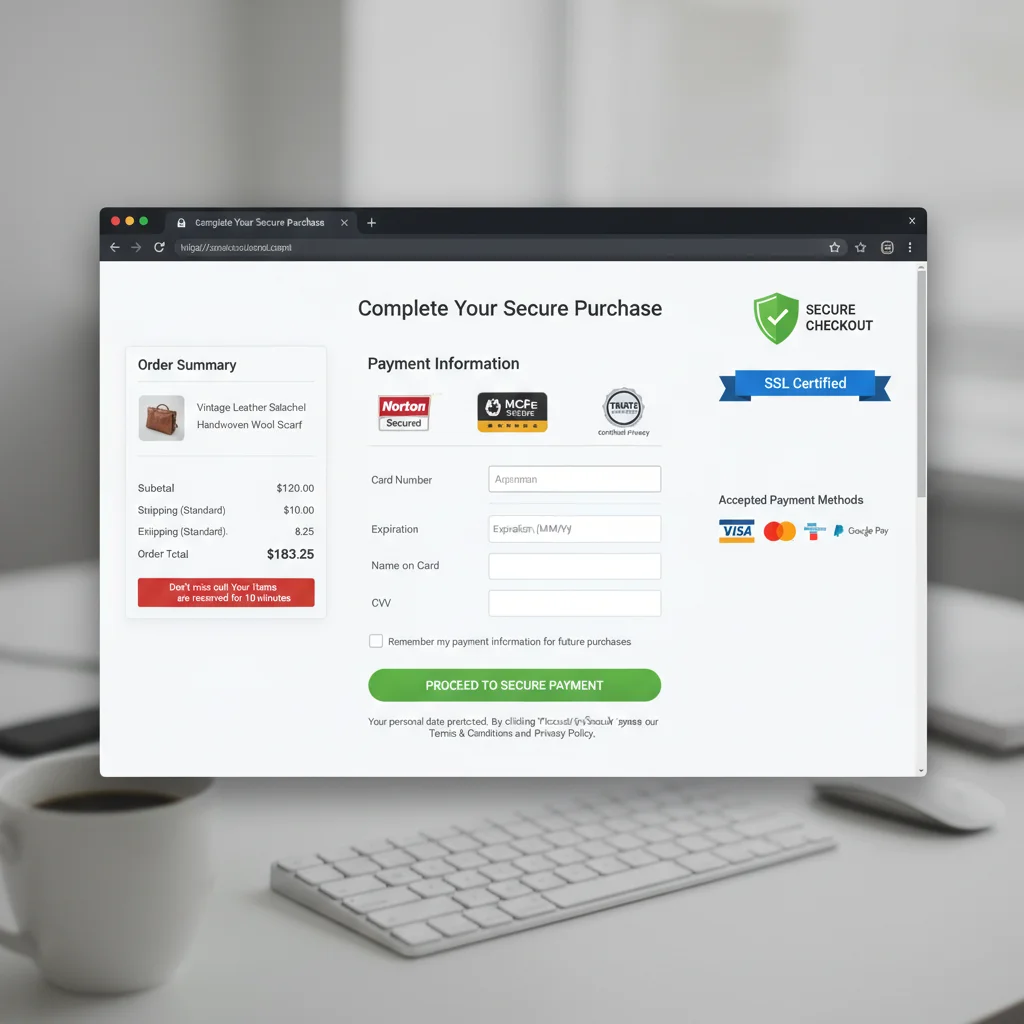
Security concerns drive significant cart abandonment, especially among older consumers who’ve heard too many scam stories. Make your SSL certificates and payment trust seals visible throughout the checkout process. Use recognisable security badges and clearly display your business address and contact information.
Consider enabling guest checkout — many people don’t want to create accounts for every website they visit. You can always offer account creation after purchase completion when the pressure is off.
Optimise Your Checkout Process
A streamlined checkout process can boost conversions by 35%. Here’s how to achieve this:
Reduce Form Fields and Friction
Only collect information you actually need for the transaction. If you require specific details like phone numbers, explain why (“for delivery updates” or “in case we need to contact you about your order”).
Use smart form features:
- Address lookup technology to reduce typing
- Auto-fill billing addresses from shipping information
- Clear error indicators with red text or automatic focus on missing fields
- One-click checkout for returning customers with saved payment information
- Progressive profiling — collect additional customer data after purchase through surveys with discount incentives
Provide Live Support During Checkout
Offer immediate help when customers need it most. Implement live chat during checkout hours or create a detailed FAQ section addressing common purchase concerns. Sometimes a quick answer is all that stands between abandonment and conversion.
Remember to capture email addresses early in the checkout process — you’ll need them for recovery campaigns if the customer doesn’t complete their purchase.
Use Psychology to Drive Conversions
Consumer psychology plays a massive role in purchase decisions. Here are proven psychological triggers that reduce abandonment:
Create Urgency and Scarcity
Humans are hardwired to want things that are rare or limited. Use this to your advantage:
- “Only 3 left in stock — order soon!”
- “Sale ends in 24 hours”
- “Limited time offer — while stocks last”
These messages tap into FOMO (fear of missing out) and prompt immediate action rather than cart lingering.
Display Social Proof
People follow the crowd. Include these trust signals:
- Customer reviews and ratings prominently displayed
- “Best-selling products” filters to highlight popular items
- “Customers who viewed this also bought” recommendations — Smart Insights reports this feature can generate 68.4% of total ecommerce revenue when used on product pages
- Recent purchase notifications showing other customers’ activity
WooCommerce makes displaying reviews incredibly easy, and they’re one of the most effective conversion tools available.
Write Compelling Product Copy
Your product descriptions should sell benefits, not just features. Address common customer concerns about usability, versatility, and value. Sometimes customers like the idea of owning something but aren’t sure how they’d use it — your copy needs to bridge that gap.

Test and Optimise Your Approach
What works for one store might not work for another. A/B testing is your friend — test different discount amounts, checkout flows, and messaging to see what resonates with your audience.
For example, test a 20% discount code against a 15% one. If the smaller discount performs just as well, why leave money on the table? Track your key metrics and implement changes that positively impact your bottom line.
Cart Recovery Tactics That Actually Work
Prevention is better than cure, but when carts are abandoned, you need a recovery strategy. Here are the most effective approaches:
Retargeting Advertisements
Install tracking pixels from Google Ads or Facebook to drop cookies on your site visitors. When cart abandoners visit other websites, they’ll see ads for the products they left behind. These visual reminders are surprisingly effective at bringing customers back.
Email Recovery Campaigns
Email remains the most powerful cart recovery tool. The Predictive Intelligence Benchmark Report from Salesforce shows that strategic emails can recover 60% of abandoned carts within 24 hours. Yet most retailers don’t use this tactic effectively.
Master the Art of Recovery Emails
Perfect Your Timing and Frequency
The email sequence that works best:
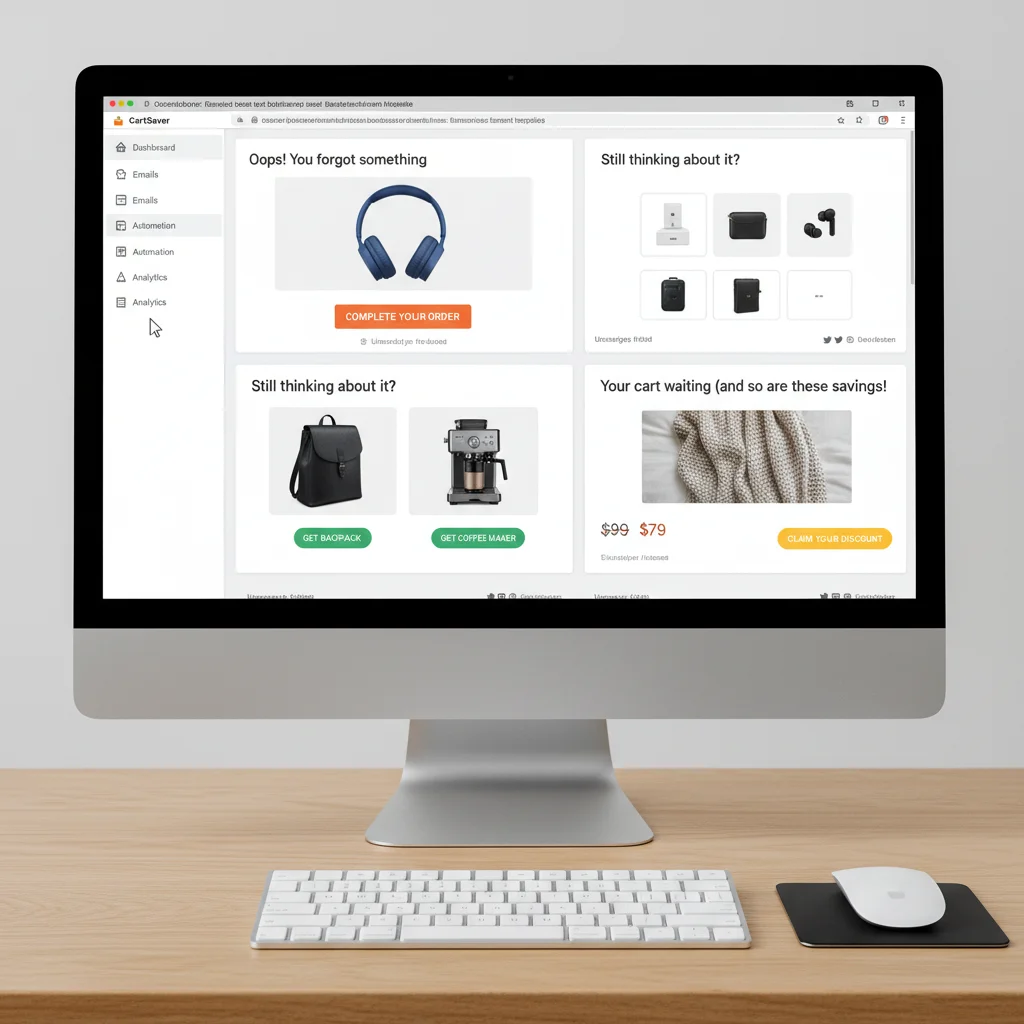
Email 1 (Within 1 hour): Send while the customer is still in buying mode. Keep it helpful — ask if they experienced any problems and display their cart contents with product images. No discounts yet.
Email 2 (Next day): Show cart contents again, suggest similar products, and consider offering an incentive like free shipping or a first-time customer discount. Create urgency by mentioning that their cart will expire soon.
Email 3 (48 hours later): Final reminder with your best offer. This is your last chance, so make it count.
Craft Irresistible Recovery Email Content
Your recovery emails should:
- Match your brand personality — whether that’s playful puns or luxury sophistication
- Appeal to emotions — “Go on, treat yourself” or “Don’t let this one get away”
- Include professional product photography and even GIFs where appropriate
- Use a real person’s email address for replies, not a no-reply address
- Focus on the cart — avoid social media links that distract from the goal
- Display customer reviews and ratings for cart items
- Show loyalty points balances if applicable
Choose the Right Tools and Plugins
The right technology can automate much of your cart recovery process:
WooCommerce Solutions
For WooCommerce stores, you’ll need plugins to capture and recover abandoned carts. The ‘Save Abandoned Carts’ plugin from the WordPress repository captures cart data before it’s submitted and lets you define abandonment timeframes. The pro version integrates with MailChimp for automated email sequences.
Look for plugins that won’t slow down your site — site speed directly impacts conversions, so adding slow plugins defeats the purpose.
Shopify Built-in Features
Shopify includes basic abandoned cart recovery, but third-party apps provide more advanced functionality. Choose tools that integrate seamlessly with your existing workflow and provide detailed analytics.
Technical Foundations for Success
Your cart recovery efforts will fail if your technical foundation is shaky. Ensure your website loads in under 2 seconds — customers won’t wait longer. Optimise your user experience across all devices, especially mobile where abandonment rates are highest.
Don’t forget SEO optimisation for your ecommerce site. If customers can’t find your products through search engines, you won’t have any carts to recover in the first place.

Measuring Your Cart Recovery Success
Track these key metrics to measure your cart recovery performance:
- Cart abandonment rate — your baseline metric
- Email open rates for recovery campaigns
- Click-through rates from recovery emails
- Conversion rates from recovery traffic
- Revenue recovered as a percentage of total revenue
- Time between abandonment and recovery
Set benchmarks and continuously test improvements. Understanding your key performance indicators helps you focus on changes that actually impact your bottom line.
Advanced Recovery Strategies
Segment Your Recovery Campaigns
Not all abandoned carts are equal. Segment your recovery efforts based on:
- Cart value — high-value carts deserve personal attention
- Customer type — new vs. returning customers need different messaging
- Product category — different products require different approaches
- Geographic location — time zones matter for email delivery
- Device type — mobile vs. desktop abandonment patterns differ
Use Dynamic Content in Recovery Emails
Personalise recovery emails with dynamic content that shows:
- Actual cart contents with current pricing
- Stock levels for abandoned items
- Personalised product recommendations
- Location-specific offers or shipping options
- Customer’s browsing history and preferences

Common Cart Recovery Mistakes to Avoid
Even well-intentioned recovery efforts can backfire. Avoid these common mistakes:
- Being too aggressive — bombarding customers with daily emails
- Starting with discounts — train customers to abandon carts for better deals
- Generic messaging — one-size-fits-all emails feel impersonal
- Ignoring mobile experience — recovery emails must work perfectly on mobile
- Not testing different approaches — what works for others might not work for you
- Forgetting about timing — sending emails at 3 AM isn’t optimal
The goal is to be helpful, not annoying. Focus on providing value and removing barriers rather than just pushing for the sale.
Putting It All Together
Cart abandonment will always be part of ecommerce, but it doesn’t have to devastate your revenue. Focus on prevention first — transparent pricing, streamlined checkout, multiple payment options, and mobile optimisation. When prevention fails, have a systematic recovery process in place with well-timed, personalised emails that provide real value to your customers.
Remember that 95% of customers will buy again from merchants who provide good return experiences, and 40% of people use carts as research tools rather than immediate purchase intent. Understanding these behaviours helps you craft more effective recovery strategies.
The most successful ecommerce businesses treat cart abandonment as an opportunity, not a failure. With the right approach, those abandoned carts become a source of recovered revenue and stronger customer relationships. Need help implementing these strategies for your online store? We’ve helped dozens of Australian businesses reduce cart abandonment and increase their conversion rates.
Frequently Asked Questions
What is the average cart abandonment rate for ecommerce stores?
The average cart abandonment rate is around 55-70%, with some studies showing rates as high as 81%. Mobile abandonment rates are typically higher than desktop rates.
How quickly should I send the first cart recovery email?
Send the first recovery email within 1 hour of cart abandonment while the customer is still in buying mode. This has the highest conversion rates.
Should I offer discounts in cart recovery emails?
Start without discounts in your first email — many customers will return without incentives. Save discounts for the second or third email to avoid training customers to abandon carts for better deals.
What’s the most effective way to reduce cart abandonment?
Display all costs upfront, offer multiple payment methods, enable guest checkout, and ensure your site loads quickly. Transparent pricing is the biggest factor in reducing abandonment.
How many cart recovery emails should I send?
Three emails work best: one within an hour, one the next day, and a final one after 48 hours. More than three emails can feel pushy and damage your brand.
Do cart recovery emails actually work?
Yes, strategic cart recovery emails can recover 60% of abandoned carts within 24 hours according to Salesforce research. However, most retailers don’t use this tactic effectively.