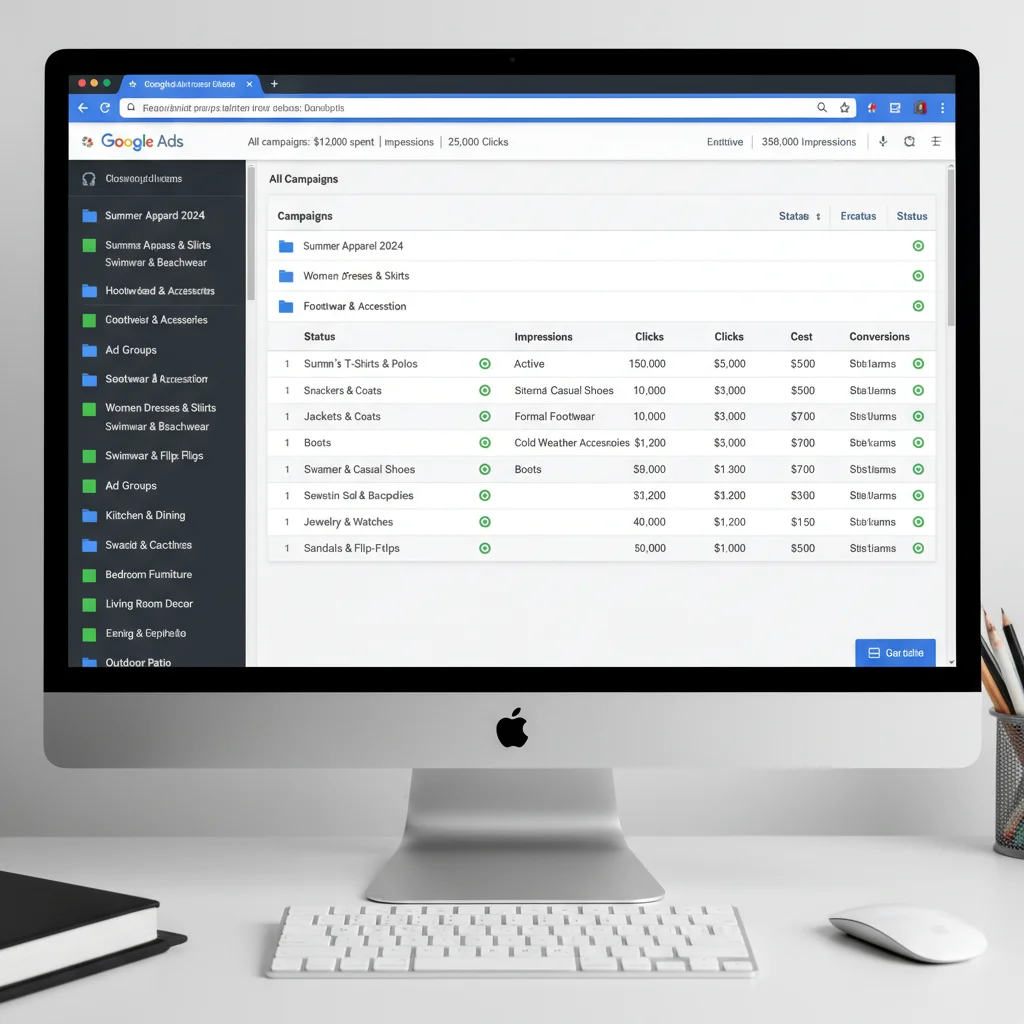
Google Ads Ad Groups: A Complete Guide

Ad Groups form the backbone of every successful Google Ads campaign, yet most businesses struggle to structure them properly. These organisational containers hold your keywords, ads, and landing pages together, directly impacting your cost-per-click and conversion rates.
Getting your Ad Group structure right from the start can slash your advertising costs by 30-50% while dramatically improving your campaign performance. The difference between a well-organised campaign and a messy one? Often thousands of dollars in wasted ad spend.
What Are Ad Groups and Why They Control Your Campaign Success
An Ad Group is essentially a container within your Google Ads campaign that houses three critical elements:
- Your targeted keywords
- Your ad copy variations
- Your designated landing pages
Think of Ad Groups as filing cabinets for your advertising efforts. Each cabinet contains related materials that work together towards a specific goal. When these elements align perfectly, Google rewards you with higher Quality Scores, lower costs, and better ad positions.
The magic happens when your keyword triggers an ad that perfectly matches what someone searched for, then sends them to a landing page that delivers exactly what they expected. This alignment is what separates profitable campaigns from money-wasting disasters.
How Proper Ad Group Structure Cuts Your Costs
Google’s Quality Score algorithm directly affects how much you pay for each click. The more relevant your Ad Group components are to each other, the higher your Quality Score climbs. Higher scores mean lower costs and better ad positions.
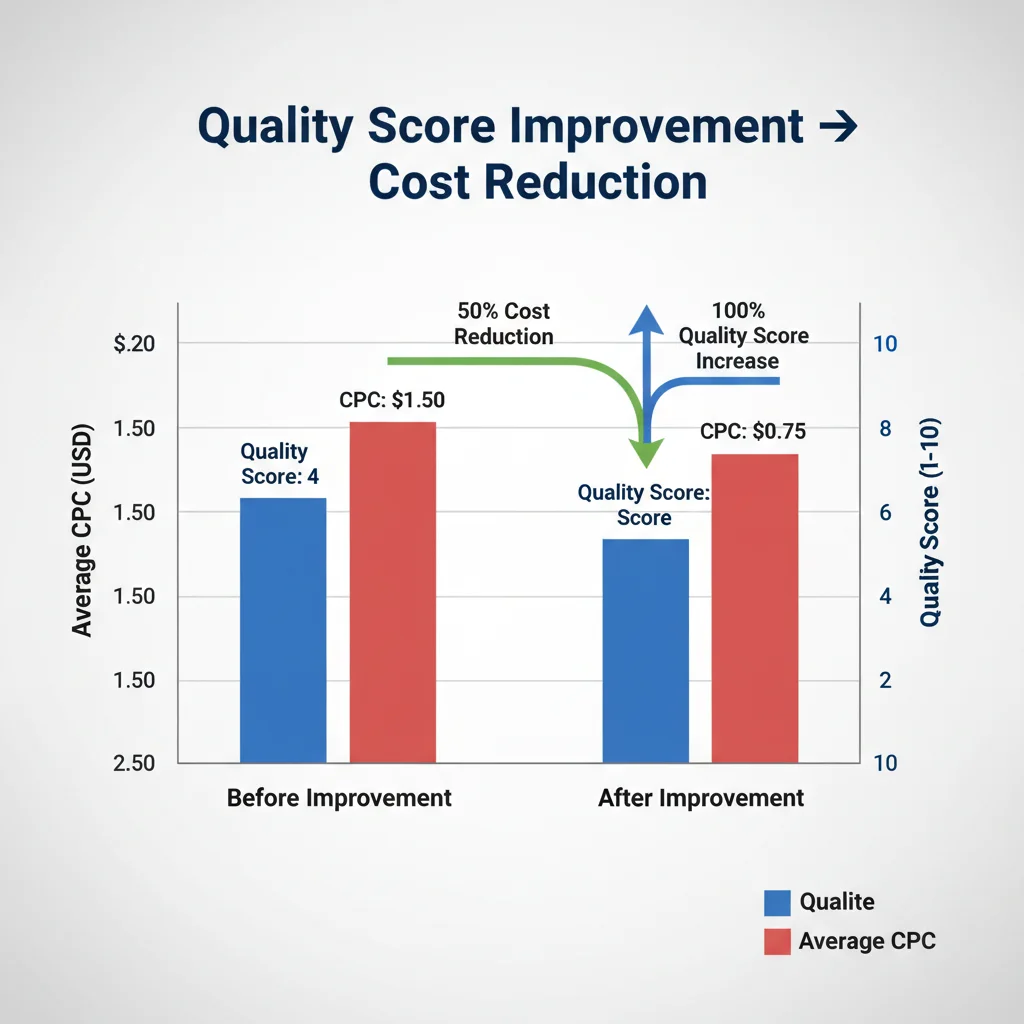
The Quality Score Formula
Google evaluates three main factors when calculating your Quality Score:
- Expected click-through rate: How likely people are to click your ad
- Ad relevance: How closely your ad matches the search intent
- Landing page experience: How relevant and useful your landing page is
A tightly themed Ad Group where someone searches for “red running shoes,” sees an ad about red running shoes, and lands on a page selling red running shoes will always outperform a generic setup. The focused approach typically achieves Quality Scores of 7-10, while scattered campaigns struggle to reach 5.
Real-World Cost Impact
We’ve seen businesses reduce their cost-per-click by 40% simply by reorganising their Ad Groups properly. One client in the fitness industry was paying $8 per click with poorly structured groups. After restructuring around specific product categories, their costs dropped to $4.80 per click while conversion rates improved by 25%.
This improvement stems from Google’s auction system rewarding relevance. When your Ad Groups demonstrate clear intent matching, you can often secure top positions while paying less than competitors with messy account structures. Creating highly converting ad copy becomes much easier when your groups are properly organised.
Essential Ad Group Structuring Strategies
The foundation of any successful Google Ads campaign lies in how you structure your Ad Groups. These strategies have delivered consistent results across hundreds of campaigns we’ve managed.
Mirror Your Website Architecture
Your Ad Group structure should reflect your website’s organisation. If you sell products across multiple categories, create separate Ad Groups for each category. This approach ensures visitors land on pages that directly relate to their search queries.
For example, an online retailer might structure their campaign like this:
- Campaign: Sports Equipment
- Ad Group 1: Running Shoes → Landing Page: /running-shoes/
- Ad Group 2: Tennis Racquets → Landing Page: /tennis-racquets/
- Ad Group 3: Swimming Gear → Landing Page: /swimming-equipment/
Geographic Segmentation
Businesses operating across multiple regions should create location-specific Ad Groups. This strategy allows you to tailor messaging, use local phone numbers, and adjust bids based on regional performance.
A national service provider might structure campaigns as:
- Campaign: Legal Services – Australia
- Ad Group 1: Sydney Legal Services
- Ad Group 2: Melbourne Legal Services
- Ad Group 3: Brisbane Legal Services
This approach lets you include city-specific language in ads and direct users to location-relevant pages, improving both Quality Scores and conversion rates.
Keyword Intent Grouping
Group keywords by search intent rather than just topic similarity. Someone searching “buy running shoes online” has different intent than someone searching “running shoe reviews.” Creating separate Ad Groups for different intent levels allows you to craft more targeted messaging.
Intent-based grouping typically follows this pattern:
- Informational: “how to choose running shoes,” “best running shoes 2024”
- Commercial: “running shoes review,” “Nike vs Adidas running shoes”
- Transactional: “buy running shoes online,” “running shoes sale”
Advanced Ad Group Management Techniques
Once you’ve mastered basic structuring, these advanced techniques can squeeze even more performance from your campaigns.
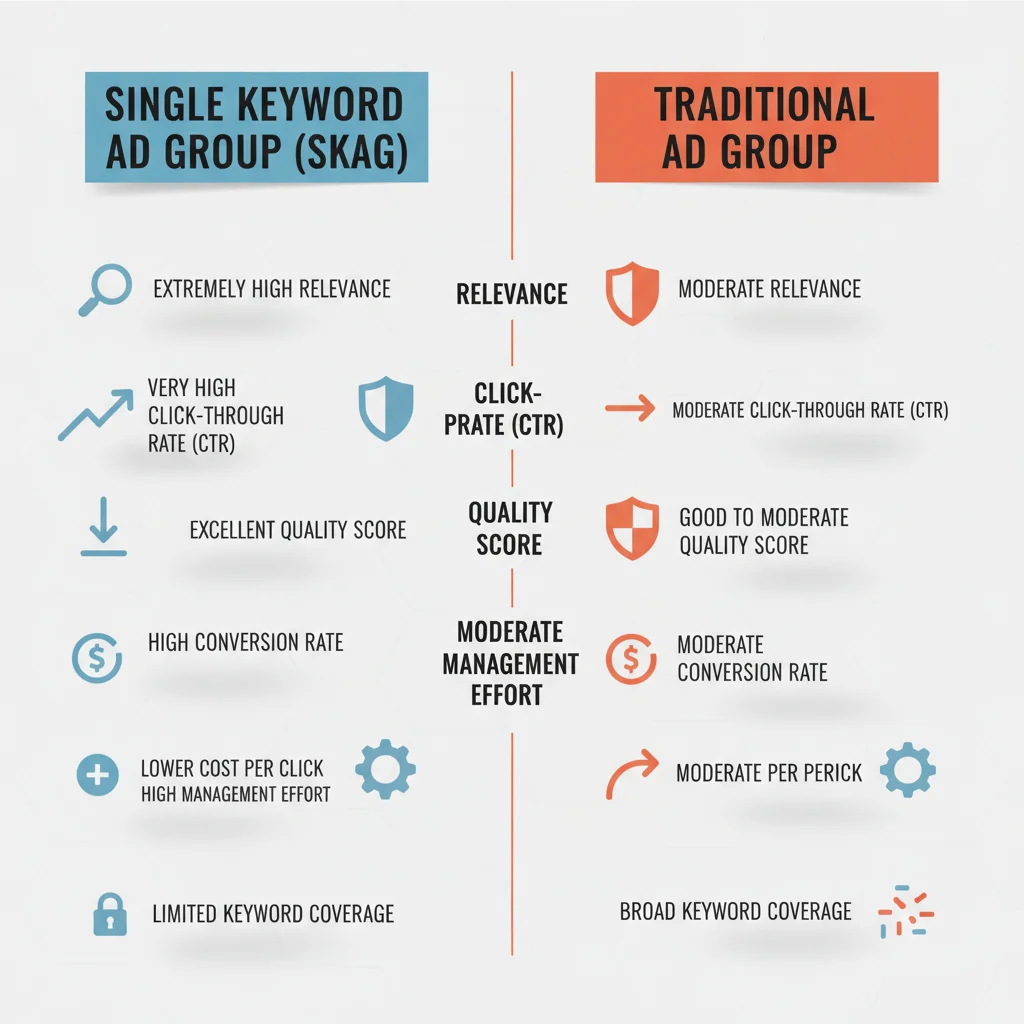
Single Keyword Ad Groups (SKAGs)
For high-value keywords, consider creating Ad Groups containing just one keyword with multiple match types. This ultra-focused approach allows for highly specific ad copy and landing page optimisation.
A SKAG structure might look like:
- Ad Group: Red Running Shoes
- Keywords: “red running shoes” (exact), +red +running +shoes (broad match modifier), “red running” (phrase)
- Ad Copy: Specific to red running shoes
- Landing Page: Dedicated red running shoes category
This method works particularly well for improving PPC results through targeted messaging and typically achieves higher Quality Scores than broader groupings.
Dynamic Keyword Insertion
Use dynamic keyword insertion within well-structured Ad Groups to automatically include the searcher’s query in your ad headline. This technique works best when your Ad Groups contain closely related keywords.
For example, an Ad Group containing “blue widgets,” “red widgets,” and “green widgets” could use the headline: “Buy {Keyword:Widgets} Online – Fast Delivery.” When someone searches “blue widgets,” they’ll see “Buy Blue Widgets Online – Fast Delivery.”
Remarketing Integration
Structure your Ad Groups to support remarketing audience building. Create specific Ad Groups for different stages of your sales funnel, then build remarketing lists based on which ads people clicked.
This approach allows you to create sophisticated remarketing sequences. Someone who clicked an informational ad might see educational content in their remarketing ads, while someone who clicked a product-specific ad might see promotional offers.
Tools and Automation for Ad Group Management
Managing complex Ad Group structures manually becomes impossible as campaigns scale. These tools streamline the process and improve your results.
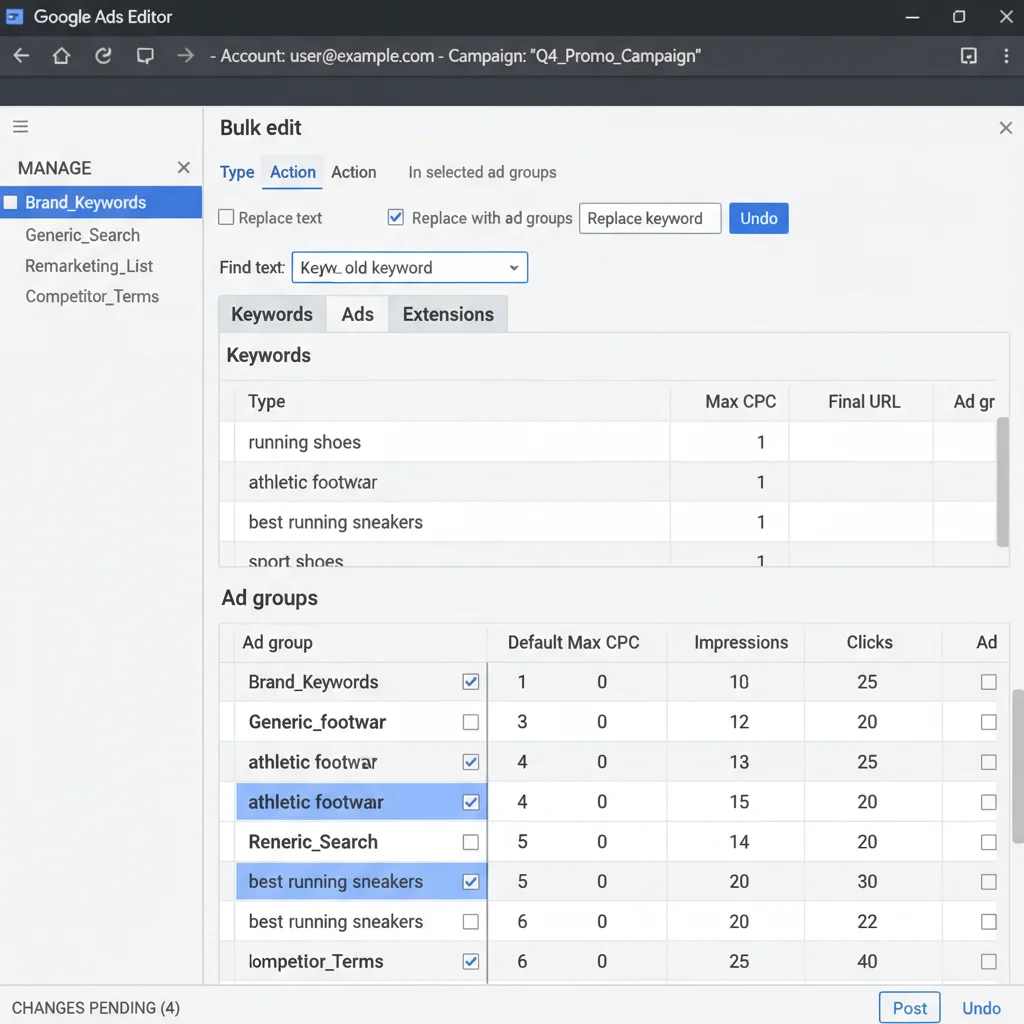
Google Ads Editor
Google Ads Editor remains the gold standard for bulk campaign management. This free desktop application lets you:
- Create hundreds of Ad Groups simultaneously using templates
- Make bulk changes across multiple campaigns
- Copy successful Ad Group structures to new campaigns
- Export and import campaign data for analysis
The tool particularly excels at managing large-scale restructuring projects. You can download your entire account, reorganise everything offline, then upload the changes when ready.
Automated Bidding Integration
Well-structured Ad Groups provide the foundation for effective automated bidding strategies. Google’s machine learning algorithms perform best when they have clean, organised data to work with.
Smart bidding optimisation becomes more effective when your Ad Groups contain keywords with similar commercial intent and conversion values. The algorithm can then make more accurate bidding decisions based on consistent historical performance data.
Common Ad Group Mistakes That Waste Money
Even experienced advertisers make these costly structuring errors. Avoiding them can immediately improve your campaign performance.
Overstuffing Keywords
The biggest mistake we see is cramming too many keywords into single Ad Groups. When an Ad Group contains 50+ keywords covering multiple topics, it becomes impossible to create relevant ad copy for all variations.
Keep Ad Groups focused with 5-20 closely related keywords maximum. This constraint forces better organisation and enables more targeted messaging.
Ignoring Match Type Distribution
Each Ad Group should contain a balanced mix of match types for your target keywords. Using only broad match leads to irrelevant traffic, while using only exact match limits your reach.
A typical distribution might include:
- 1-2 exact match keywords for precision targeting
- 2-3 phrase match variations for moderate reach
- 1-2 broad match modifier keywords for discovery
Misaligned Landing Pages
Each Ad Group should direct traffic to a highly relevant landing page. Sending all traffic to your homepage destroys Quality Scores and conversion rates.
The landing page should contain the main keyword from your Ad Group in the headline, URL, and body content. This alignment signals to Google that your page matches the search intent.
DIY vs Professional Management
Setting up Ad Groups correctly requires significant time investment and ongoing optimisation expertise. While Google Ads appears straightforward on the surface, the complexity multiplies quickly as campaigns scale.
Most businesses benefit from professional management because agencies bring established processes, testing methodologies, and performance benchmarks from managing hundreds of campaigns. Experienced agencies can typically achieve better results in less time while avoiding costly beginner mistakes.
However, understanding Ad Group fundamentals helps you evaluate agency performance and make informed decisions about your advertising strategy. Even if you outsource management, knowing what good structure looks like protects your investment.
For businesses just starting with Google Ads, begin with small budgets and simple structures. Test different approaches, measure results carefully, and scale what works. The learning process often justifies the initial investment in professional guidance.
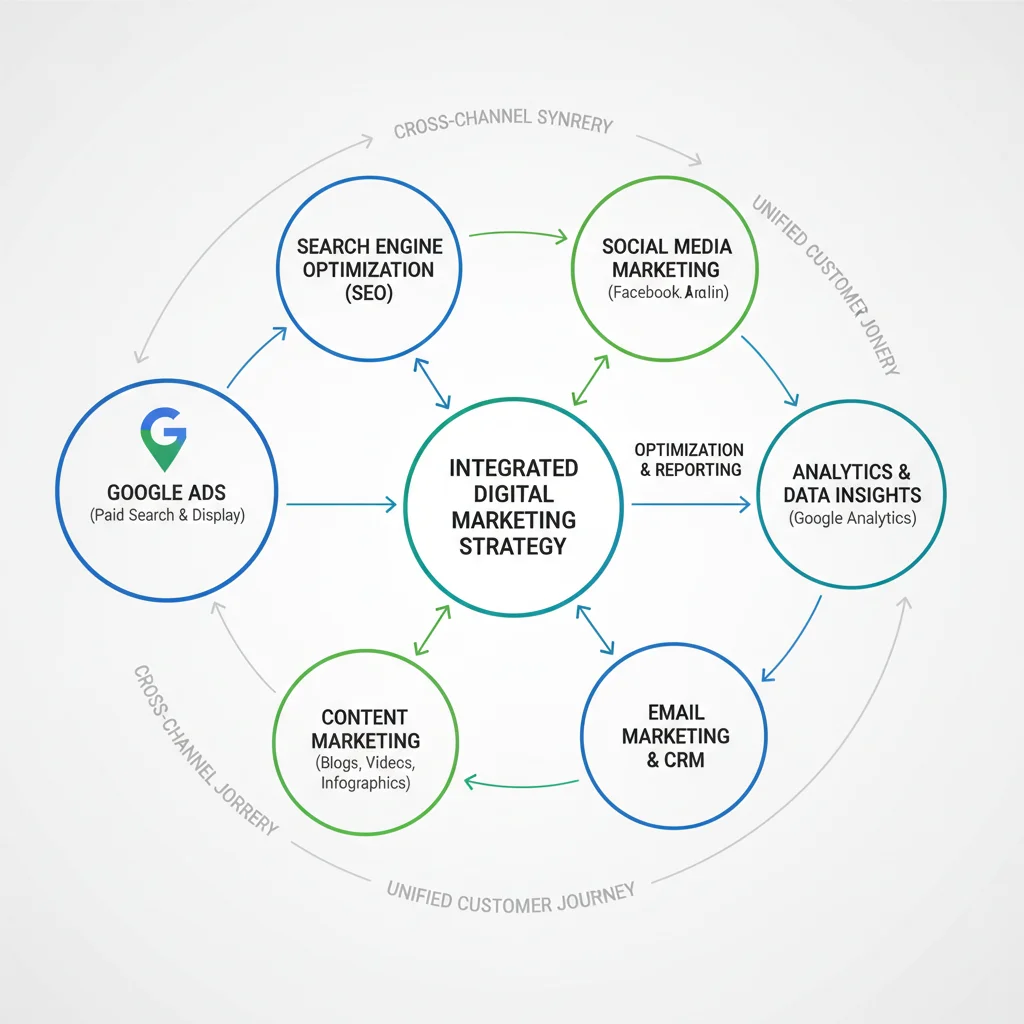
Remember that Google Ads is just one component of effective digital marketing. Your Ad Group strategy should align with your broader marketing objectives and complement other channels like SEO and social media.
Frequently Asked Questions
How many keywords should be in each Ad Group?
Keep Ad Groups focused with 5-20 closely related keywords maximum. This allows you to create highly relevant ad copy while maintaining good Quality Scores. Overstuffed Ad Groups with 50+ keywords make it impossible to write targeted ads.
What’s the difference between campaigns and Ad Groups?
Campaigns are the top-level containers that control budget, targeting settings, and bid strategies. Ad Groups sit within campaigns and contain your keywords, ads, and landing page assignments. Think of campaigns as folders and Ad Groups as files within those folders.
How do Ad Groups affect Quality Score?
Ad Groups directly impact Quality Score through relevance alignment. When your keywords, ad copy, and landing pages are closely related within an Ad Group, Google rewards you with higher Quality Scores, lower costs, and better ad positions.
Should I create separate Ad Groups for different locations?
Yes, if you operate in multiple regions. Location-specific Ad Groups allow you to customise messaging, use local phone numbers, and adjust bids based on regional performance. This typically improves both relevance and conversion rates.
What are Single Keyword Ad Groups (SKAGs)?
SKAGs contain just one keyword with multiple match types. This ultra-focused approach enables highly specific ad copy and landing page optimisation, typically achieving higher Quality Scores than broader groupings.
How often should I optimise my Ad Groups?
Review Ad Group performance weekly for the first month, then monthly for ongoing optimisation. Focus on adding negative keywords, adjusting bids for top performers, and splitting high-volume Ad Groups into more targeted segments.