Keyword Intent for SEO: How to Drive ROI With Smarter Targeting

Most Perth businesses waste thousands on SEO by targeting keywords without understanding buyer intent. We see it constantly – companies ranking for high-volume terms that generate zero revenue. The difference between success and failure isn’t keyword volume or difficulty. It’s intent.
Keyword intent reveals what searchers actually want to do. Buy something. Find information. Compare options. Navigate to a specific site. Match your content to that intent, and you’ll capture qualified traffic that converts. Miss it, and you’re just burning budget.
Watch: The Mixed Intent Myth Explained

Oliver Wood explains why basic SEO keyword intent frameworks waste your budget – and what to do instead.
Why Keyword Intent Drives ROI Better Than Volume
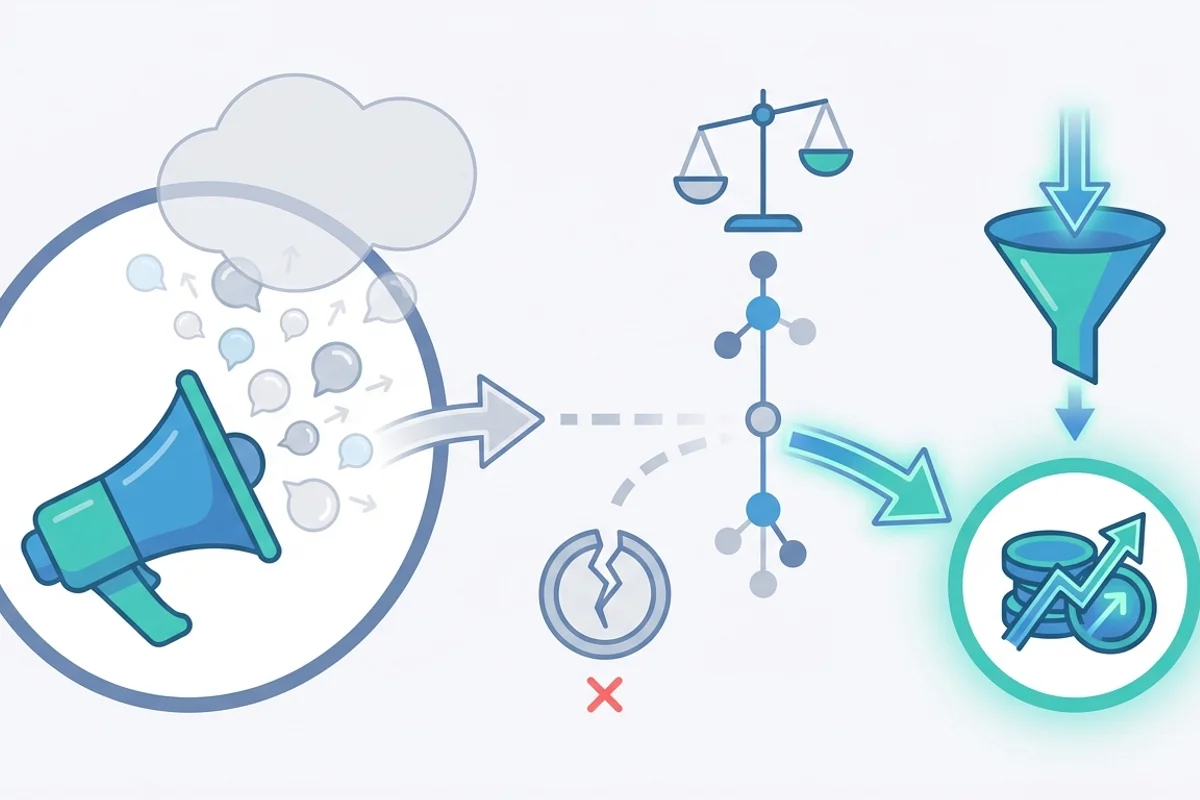
Volume metrics lie. A keyword with 10,000 monthly searches might seem attractive, but if those searchers aren’t ready to buy, that traffic won’t pay your bills. We’d rather rank for 500 searches with high buyer intent than 5,000 with zero commercial value.
Intent-focused SEO changes everything about campaign performance. Your conversion rates improve because you’re attracting people who actually want what you’re selling. Your cost per acquisition drops because you’re not competing for irrelevant terms. Your content performs better because it matches searcher expectations.
This isn’t theory – it’s measurable. When we rebuilt SBR Collective’s keyword strategy around commercial intent rather than volume, their organic leads increased 340% in eight months. Same budget, better targeting, exponential results.
The Four Core Types of Search Intent
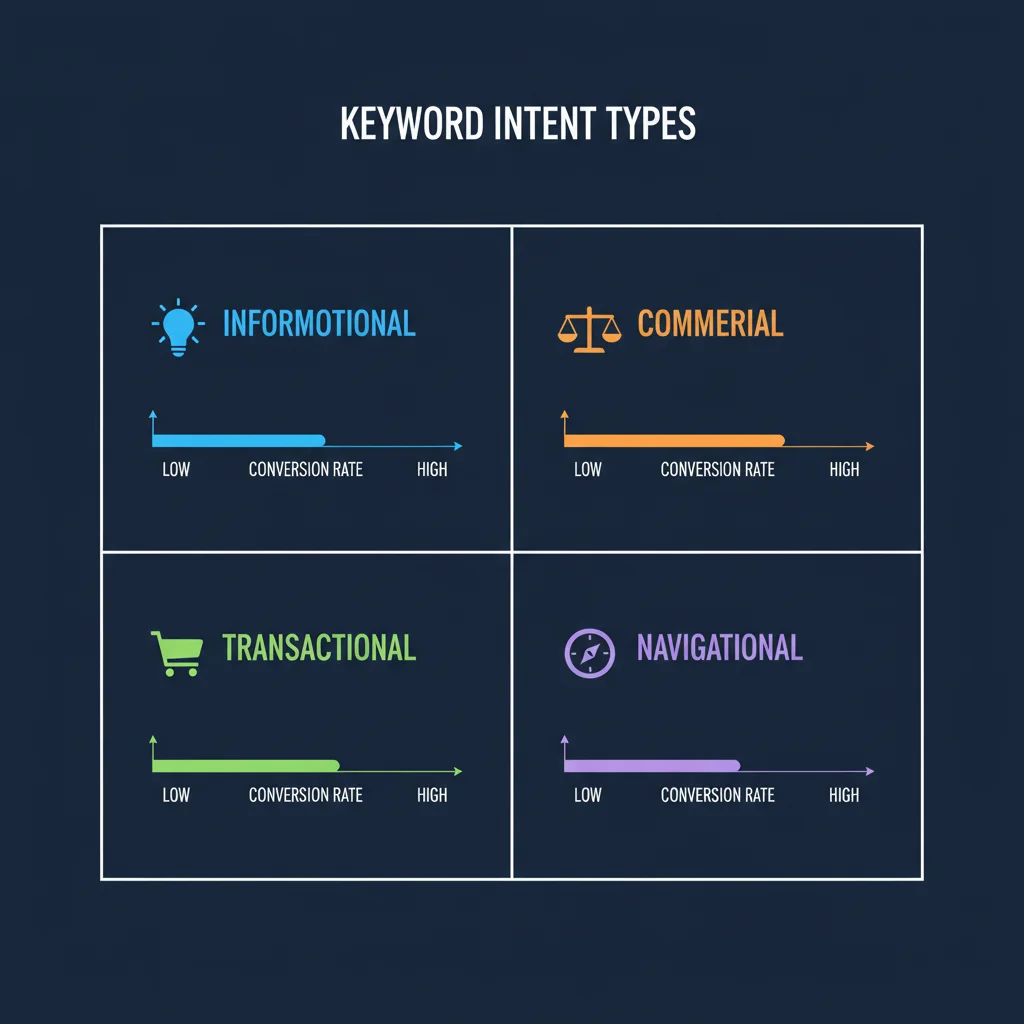
Every search query falls into one of four primary intent categories. Understanding these categories lets you predict what content searchers expect and what actions they’re likely to take.
Informational Intent: Building Authority
Searchers want answers, not products. They’re researching problems, learning concepts, or seeking explanations. Queries like “how to improve website speed” or “what is conversion rate optimisation” signal informational intent.
These searchers aren’t ready to buy, but they’re worth capturing. Informational content builds topical authority with Google and nurtures prospects through the early stages of their buyer journey. Blog posts, guides, and educational resources work best here.
The key is providing genuine value without being pushy. Answer their questions thoroughly, then offer related resources or next steps. We’ve seen informational pages drive 60% of new newsletter signups for service businesses.
Commercial Investigation: The Sweet Spot
Commercial intent sits between research and purchase. Searchers know they need a solution and they’re evaluating options. Keywords include “best”, “top”, “review”, “comparison”, or “vs” – like “best SEO agency Perth” or “Mailchimp vs ActiveCampaign”.
This is where most B2B conversions happen. Prospects have identified their problem and they’re ready to shortlist providers. Your job is getting on that shortlist with comparison pages, case studies, and detailed service explanations.
Commercial intent content requires balance. Be helpful and objective while showcasing your strengths. Include real client results, transparent pricing information, and clear differentiation from competitors. We typically see 15-25% higher conversion rates on commercial intent pages compared to informational content.
Transactional Intent: Ready to Convert
These searchers have made their decision and want to take action. Transactional queries include “buy”, “hire”, “book”, “contact”, or “get quote” – think “hire SEO consultant Perth” or “book website audit”.
Transactional intent demands frictionless conversion paths. Your content should remove barriers, not create them. Service pages, product pages, and landing pages work best. Include clear pricing, compelling offers, and prominent contact forms.
Don’t overthink transactional content. Searchers already know what they want – make it easy for them to get it. We’ve increased conversion rates by 45% simply by moving contact forms above the fold on transactional pages.
Navigational Intent: Brand Protection
Navigational searches target specific brands or websites. People search “PWD Digital login” or “SBR Collective contact” because they want to reach a particular destination quickly.
You should own navigational searches for your brand, but there’s limited SEO opportunity here. These searchers already know where they’re going. Focus on ensuring your branded pages load quickly and provide clear navigation to popular sections.
The real opportunity is competitor navigational searches. Ranking for “[competitor] alternative” or “[competitor] vs” can capture prospects evaluating your competition. It’s competitive, but the traffic quality is exceptional.
Local and Branded Intent: The Additional Categories

Beyond the core four, we track two additional intent types that matter for Australian businesses.
Local Intent: Geographic Goldmine
Local intent includes geographic modifiers – “Perth web design”, “digital marketing agency near me”, or “SEO services WA”. These searches often trigger Map Packs and local business listings.
Local intent converts incredibly well for service businesses. Searchers want providers they can meet face-to-face or who understand their local market. Local SEO strategies like Google Business Profile optimisation and location-specific landing pages capture this intent effectively.
For Fortawall’s expansion into Brisbane, we created location-specific service pages targeting local commercial intent. These pages generated 23 qualified leads in their first quarter, directly contributing to two major project wins worth over $180,000.
Branded Intent: Competitive Opportunities
Branded intent focuses on specific companies or products. Beyond navigational searches, this includes comparison queries like “HubSpot vs Salesforce” or reputation searches like “PWD Digital reviews”.
Branded intent varies in commercial value. Someone searching your brand name might be ready to buy, or they might be researching after a bad experience. Context matters more than the keyword itself.
The biggest opportunity is competitor branded terms. Creating helpful comparison content positions you as an alternative when prospects research your competition. This strategy requires careful execution – be factual and helpful, never disparaging.
How to Identify Keyword Intent Accurately
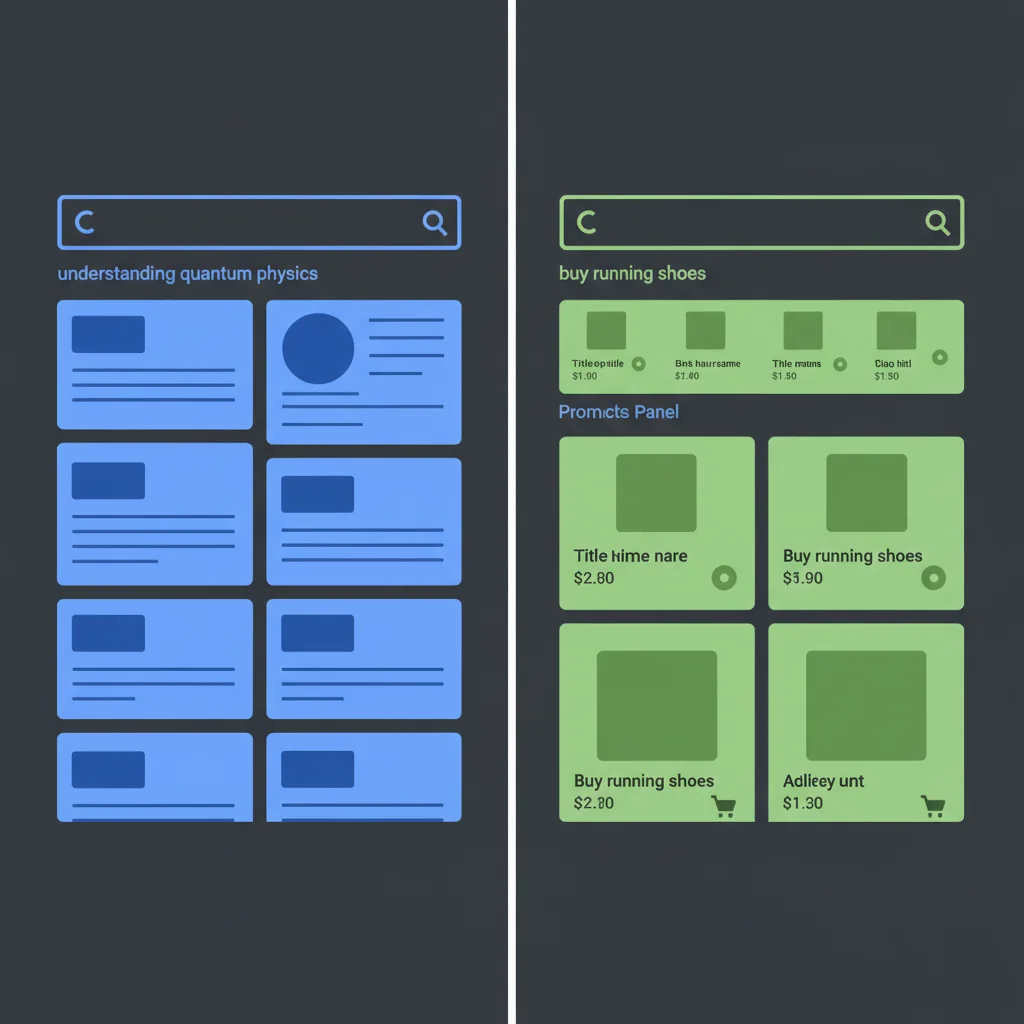
Intent identification combines manual analysis with tool-assisted classification. Both approaches have strengths, and we use them together for complete intent mapping.
Manual SERP Analysis: The Gold Standard
Google’s results reveal intent better than any tool. Search your target keywords and examine what ranks. Blog posts suggest informational intent. Comparison articles indicate commercial intent. Product pages signal transactional intent.
Look beyond organic results. Shopping ads, Map Packs, and knowledge panels all provide intent clues. Featured snippets often appear for informational queries. Local packs indicate geographic intent. Multiple ad formats suggest high commercial value.
Pay attention to SERP features like People Also Ask boxes and related searches. These reveal the questions and variations searchers care about, helping you create more complete content that matches their full intent.
SEO Tools: Scale and Efficiency
Tools like Ahrefs, SEMrush, and Surfer include intent classification features. They’re not perfect, but they’re useful for processing large keyword lists quickly. We use them for initial classification, then verify manually for high-priority terms.
Most tools classify intent based on keyword patterns and SERP features. They catch obvious signals like “buy” (transactional) or “how to” (informational), but they miss nuance. “Digital marketing consultant Perth” might be classified as informational when it’s clearly commercial.
Use tools for efficiency, not accuracy. They’re excellent for sorting thousands of keywords into rough categories, but manual review remains essential for strategic terms.
AI and LLMs: The New Frontier
Large language models like GPT-4 and Claude excel at intent classification. They understand context and nuance better than traditional tools. We feed them keyword lists with specific classification criteria and get remarkably accurate results.
AI works best with clear prompts and examples. Instead of asking “classify these keywords by intent”, we provide detailed definitions for each intent type and examples of how they should be classified. This improves accuracy significantly.
The advantage of AI is speed and consistency. It can process thousands of keywords in minutes while maintaining consistent classification criteria. Human reviewers sometimes interpret intent differently – AI doesn’t have that variability.
Mixed Intent and Double Ranking Opportunities
Some keywords serve multiple intents simultaneously. “Website design” might show informational articles, commercial galleries, and transactional service pages all ranking together. This creates opportunities to capture multiple SERP positions.
We call this “double ranking” – having multiple pages from your site appear for the same keyword. It increases your visibility, provides more entry points for prospects, and helps you capture searchers at different stages of their journey.
For Birds Eye Media’s video production services, we created both educational content (“video marketing guide”) and commercial pages (“corporate video services”). Both rank for “video marketing Perth” – the guide captures informational searchers while the service page converts commercial intent.
Double ranking requires careful internal linking and content differentiation. Your pages need to serve distinct purposes while supporting each other’s rankings. It’s advanced keyword mapping that pays dividends when executed correctly.
Content Mapping: Matching Intent to Page Types
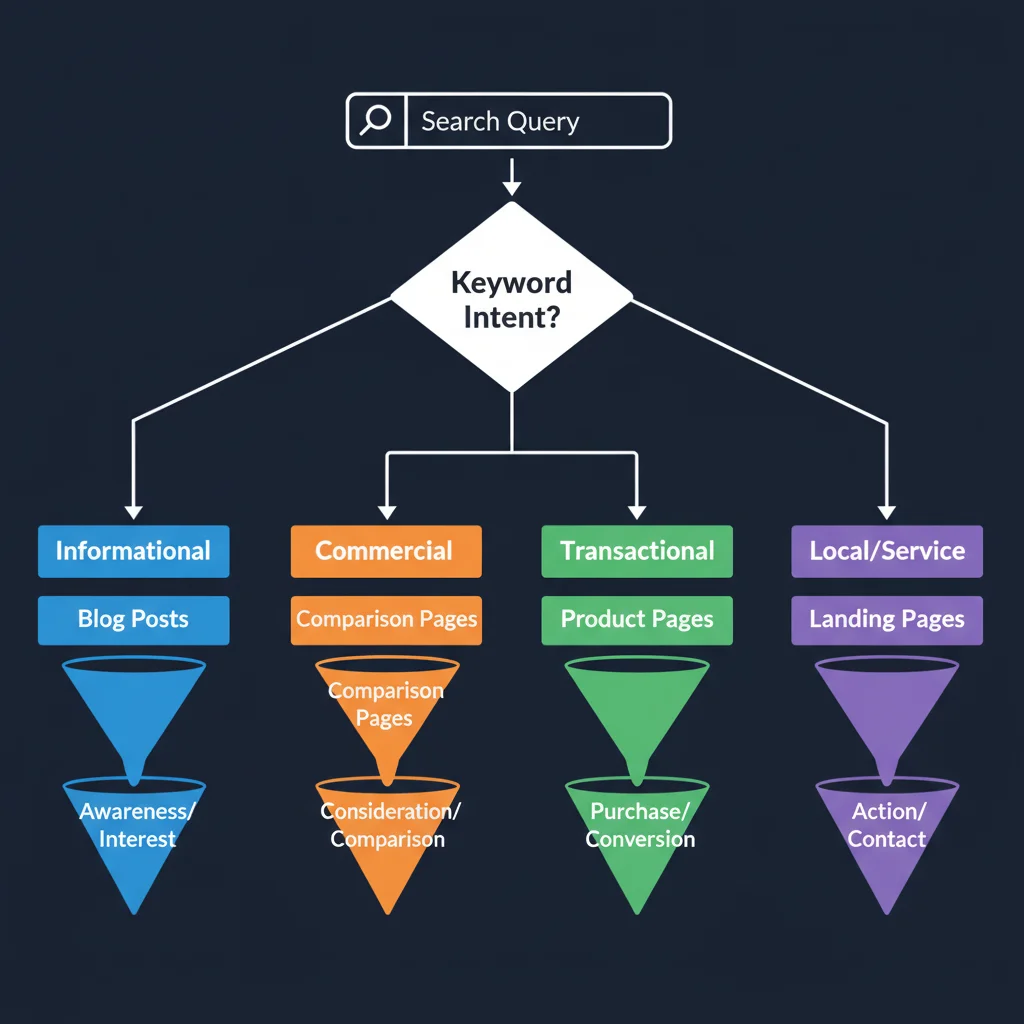
Different intent types require different content formats. Get this wrong and you’ll rank poorly regardless of your keyword research quality.
The Content-Intent Matrix
Informational intent works best with blog posts, guides, tutorials, and resource pages. These formats provide complete answers and establish expertise. Long-form content often performs well for competitive informational terms.
Commercial intent needs comparison pages, case studies, service overviews, and review content. These formats help prospects evaluate options and build confidence in your solution. Include client testimonials, pricing information, and clear differentiation.
Transactional intent demands service pages, product pages, and conversion-optimised landing pages. Strip away distractions and focus on conversion elements. These pages should be short, specific, and action-oriented.
Local intent requires location-specific landing pages, Google Business Profile optimisation, and locally-relevant content. Include geographic markers, local case studies, and area-specific service information.
Content Architecture Strategy
Structure your site to capture searchers at every intent stage. Create topic clusters with informational hub pages linking to commercial and transactional sub-pages. This approach builds topical authority while guiding prospects toward conversion.
Your homepage should target navigational and branded searches. Service pages capture transactional intent. Blog content addresses informational queries. Comparison pages grab commercial intent. Each page type serves its purpose while supporting overall site authority.
Internal linking connects different intent types strategically. Link from informational content to related commercial pages. Connect commercial pages to transactional conversion points. This creates natural progression paths that match the buyer journey.
Micro-Intents and AI Classification at Scale
Beyond broad intent categories, micro-intents reveal specific motivations within each type. Someone searching “SEO audit” might want to learn how audits work (informational), find audit tools (commercial), or book an audit service (transactional).
Micro-intent analysis requires examining search modifiers, related queries, and SERP variations. “Free SEO audit” suggests tool-seeking behaviour. “Professional SEO audit Perth” indicates service intent. “SEO audit checklist” implies informational needs.
AI excels at micro-intent classification because it processes subtle linguistic cues that humans might miss. We use custom prompts that consider word choice, phrase structure, and contextual signals to identify specific intent variations within broader categories.
For Croeso Financial’s keyword expansion project, AI helped us identify 47 distinct micro-intents within their “financial planning” keyword cluster. This granular analysis informed content creation that captured searchers at very specific points in their research journey.
Intent Optimisation Across Digital Channels
Intent understanding improves performance across all digital marketing channels, not just SEO. The same principles that guide content creation inform PPC campaign structure and social media strategy.
Google Ads campaigns benefit enormously from intent-based keyword grouping. Informational keywords get different ad copy and landing pages than transactional terms. Commercial intent searches need comparison-focused messaging and detailed landing pages.
Social media content can be mapped to intent stages too. Educational posts serve informational intent. Client showcases address commercial evaluation. Special offers target transactional readiness. This creates consistent messaging across all touchpoints.
Email marketing sequences follow intent progression naturally. Newsletter subscribers often start with informational interest, then move through commercial evaluation to transactional readiness. Your email content should support this journey with appropriate calls-to-action at each stage.
Measuring Intent-Based SEO Success
Traditional SEO metrics don’t capture intent effectiveness. Rankings and traffic matter less than conversion quality and revenue attribution. We track different KPIs for each intent type.
Informational content gets measured by engagement metrics – time on page, scroll depth, and internal link clicks. These signals indicate whether you’re providing value and moving prospects through the funnel.
Commercial intent pages focus on lead generation metrics – form completions, brochure downloads, and consultation bookings. These actions indicate prospects are seriously considering your services.
Transactional pages need conversion tracking – actual sales, contract signings, and revenue attribution. These are your money pages and should be measured accordingly.
Local intent requires geographic attribution. Track leads by location, measure local ranking positions, and monitor Google Business Profile interactions. This data helps optimise local market penetration.
Common Intent Classification Mistakes
Most businesses misclassify intent because they assume searcher motivation rather than analysing actual behaviour. “Digital marketing” seems informational, but many searchers want to hire agencies.
Another mistake is ignoring geographic intent signals. Australian businesses often target global keywords when local variants convert better. “Web design” gets massive competition, while “web design Perth” offers better conversion potential with less competition.
Tool over-reliance creates classification errors. SEO tools miss context and nuance that manual analysis catches. They’re useful for scale but terrible for accuracy on strategic keywords.
Content mismatch is the biggest failure point. Creating blog posts for transactional keywords or service pages for informational queries wastes resources and disappoints searchers. Match content format to searcher expectations.
Future of Intent-Based SEO
Search behaviour continues evolving with AI integration and voice search adoption. Intent signals are becoming more sophisticated as searchers use natural language and longer queries.
Google’s algorithm updates increasingly reward content that matches searcher intent over keyword density optimisation. The search engine gets better at understanding context and user satisfaction signals.
AI tools will improve intent classification accuracy, but human insight remains valuable for strategic decision-making. The businesses that combine AI efficiency with human understanding will dominate search results.
Personalisation is adding complexity to intent analysis. The same keyword might signal different intent based on searcher history, location, and device. Successful SEO strategies will need to account for these personalisation factors.
Getting Started with Intent-Based SEO
Start by auditing your current keyword targets against actual search results. Are you ranking informational content for commercial keywords? Are your service pages targeting informational searches? Fix the obvious mismatches first.
Identify your highest-value commercial and transactional keywords. These drive revenue and deserve priority attention. Create dedicated pages that match searcher intent precisely.
Build supporting informational content that nurtures prospects toward commercial consideration. This creates topical authority while capturing early-stage searchers.
Implement proper tracking to measure intent-specific performance. Set up goals and attribution models that reflect different intent conversion paths.
Intent-based SEO transforms digital marketing performance by aligning content with searcher needs. It’s more complex than traditional keyword targeting, but the results justify the effort. Our SEO services help Perth businesses implement intent-focused strategies that drive qualified traffic and actual revenue.
Ready to optimise your keyword strategy for intent? Contact our team for a complete SEO audit that identifies intent gaps and revenue opportunities in your current approach.
Frequently Asked Questions
What is keyword intent in SEO?
Keyword intent reveals what searchers want to accomplish with their query. It falls into four main types: informational (seeking answers), commercial (comparing options), transactional (ready to buy), and navigational (finding specific sites). Understanding intent helps create content that matches searcher expectations.
How do you identify keyword intent?
Analyse Google’s search results for your target keywords. Blog posts indicate informational intent, comparison articles suggest commercial intent, and product/service pages signal transactional intent. Tools like Ahrefs provide intent classification, but manual SERP analysis remains most accurate.
Why does keyword intent matter more than search volume?
High-volume keywords with wrong intent generate traffic that doesn’t convert. A keyword with 500 monthly searches but high buyer intent often produces better ROI than 5,000 searches with informational intent. Intent alignment drives qualified traffic and actual revenue.
What content works best for each intent type?
Informational intent needs blog posts and guides. Commercial intent requires comparison pages and case studies. Transactional intent demands service pages and landing pages. Local intent benefits from location-specific pages and Google Business Profile optimisation.
Can one keyword have multiple intents?
Yes, mixed intent keywords show different content types ranking together. This creates ‘double ranking’ opportunities where you can capture multiple SERP positions with different pages serving different aspects of searcher intent.