Why Perth SEO is different: what a Perth-based agency knows that an interstate one has to learn

Local knowledge matters in Perth SEO because Perth is an isolated, suburb-driven market. Searchers qualify by area (north or south of the river, coastal or hills, Joondalup or Mandurah), most local categories are contested by a small set of well-known businesses, and WA runs two to three hours behind the eastern states. A Perth-based agency starts with that context, meets you in person and reports during your working day. An interstate agency can do the job, but it has to learn all of that first, on your budget.
Why is Perth SEO different from eastern states SEO?
Perth SEO differs from eastern states SEO in four structural ways: isolation, geography, a smaller competitor set and the time zone. None of them change how Google works. All of them change what the work should be.
Isolation. Perth is more than 2,000 kilometres from the nearest capital city. A national campaign planned in Sydney or Melbourne assumes spillover between markets that does not exist here. A Perth searcher does not buy from a Melbourne supplier when the job needs a van or a site visit, so Perth has to be planned as its own market with its own keyword set, content and links.
Geography. The metropolitan area runs well over 100 kilometres from Two Rocks in the north to Mandurah in the south, with the hills suburbs to the east. Searchers know that distance matters, so they qualify by suburb or region. “Electrician Joondalup” and “electrician Rockingham” are different searches with different competitors, and a single “electrician Perth” page rarely wins either.
A smaller competitor set. In most local categories the same ten to twenty businesses hold the local pack and the first page across the metro area. The picture is easier to read than Sydney’s, but the businesses you are up against are established, well reviewed and familiar to local searchers. Beating them takes work aimed at them, not generic best practice.
Time zone. WA runs two hours behind the eastern states for most of the year and three hours behind during their daylight saving. That decides when reports arrive, when campaign changes go live, and whether anyone at the agency is at their desk when your leads start calling at 8am Perth time.
How important is local knowledge for Perth SEO campaigns?
Local knowledge decides keyword selection, content and Google Business Profile strategy before any technical work starts. Technical SEO is the same in Perth as it is in Brisbane. What differs is which searches carry money, which suburbs deserve their own page, and who actually holds the rankings you want.
WA search behaviour
Perth searchers attach an area to commercial searches out of habit: a suburb name, “north of the river”, “near me” with a suburb, or a region such as Peel, the Swan Valley or the hills. A keyword plan built from national search volumes misses most of these because each one is small on its own. Together they are where the enquiries come from.
Two more WA patterns matter. FIFO workers and regional buyers often search from site or from a regional town and buy for a Perth address on their next swing, so a campaign that filters out everything beyond the metro boundary loses real customers. And demand is seasonal in ways an interstate planner will not predict: air conditioning, pools and reticulation peak into summer, trades demand rises and falls with the mining cycle, and EOFY and school holidays shift what people search for in the weeks around them.
Suburb-level competition
“Plumber Joondalup” and “plumber Rockingham” are separate campaigns because Google builds the local pack per search and per searcher location, and the businesses that win one rarely win the other. The pack is decided by proximity, relevance and prominence for that specific search, so your Business Profile address, service areas, categories and review base count suburb by suburb.
The practical answer is a service-area page for each suburb or region you genuinely cover, with content that could only be about that place: jobs completed there, travel times, the older plumbing in Fremantle or the new estates in Alkimos and Byford. The same page with the suburb name swapped does not rank and can drag down the pages around it. PWD’s work with Direct Homes WA, a Perth home builder, was built around individual design and location pages, and organic search visits rose 96% year on year with enquiries up 46%.
Local competitor knowledge
Knowing who really holds the local pack in your category, and why, shortens the campaign. A Perth agency already knows which competitors have the review base, which have built suburb pages, and which are ranking on an old domain that a well-planned site can overtake. It also knows which directories still matter in WA, which associations and chambers of commerce give links that count, and which community papers and sporting clubs will cover a Perth business. An interstate agency’s link list was built for its own market.
Are Perth agencies better for local SEO than national agencies?
For local-pack and suburb-level work, a Perth agency has a head start. For national or enterprise SEO, the agency’s postcode matters far less. That is the honest split, and both halves are worth being clear about.
A national e-commerce brand shipping Australia-wide needs category expertise, technical depth and content at scale, and a good agency in any city can supply that. A Perth business whose customers live within 30 kilometres needs an agency that knows which suburbs convert, which competitors are real and what a Perth searcher types. That knowledge is context, not magic. The Perth agency still has to do the work, and you should check its results the same way you would check anyone’s.
Do Perth agencies perform better for local lead generation and Google Ads targeting?
Performance follows account ownership and skill, not postcode, but local targeting is where Perth knowledge shows first. Four settings separate a locally managed account from one run on national defaults.
- Radius and suburb targeting. Targeting “Perth” as a city misses Mandurah and the hills and can include people who are merely interested in Perth. Suburb and radius targeting built around where your jobs actually come from spends the budget where it converts.
- Ad scheduling in Perth hours. An account managed from the eastern states on default settings can run your ads at 5am Perth time and pause them mid-afternoon. Schedules should follow when your phone is answered.
- Excluding interstate and offshore traffic. Location settings that include people “interested in” your area pull clicks from Sydney and overseas. For a local service business those clicks are waste.
- Call tracking in the same time zone. Tracked calls, missed-call alerts and lead reports should land in your day, not three hours after it.
The results follow the same pattern as SEO. ABC Paint & Deco, a Perth painting business, took website form enquiries up 131%, with roughly $200K of work won from web enquiries and $700K quoted, through SEO, Google Ads and conversion work on the same site.
Why hire a Perth-based digital marketing agency?
There are three practical reasons to hire a Perth-based agency: same time zone reporting, in-person meetings, and experience with WA councils and government buyers.
Same time zone reporting
Your 9am is their 9am. Reports, campaign changes and lead alerts land during your working day, and when a form breaks or a campaign overspends, someone can act on it before your afternoon is gone. An eastern states agency on a nine to five day has finished by 2pm or 3pm Perth time, so anything that goes wrong in your afternoon waits until tomorrow.
In-person meetings
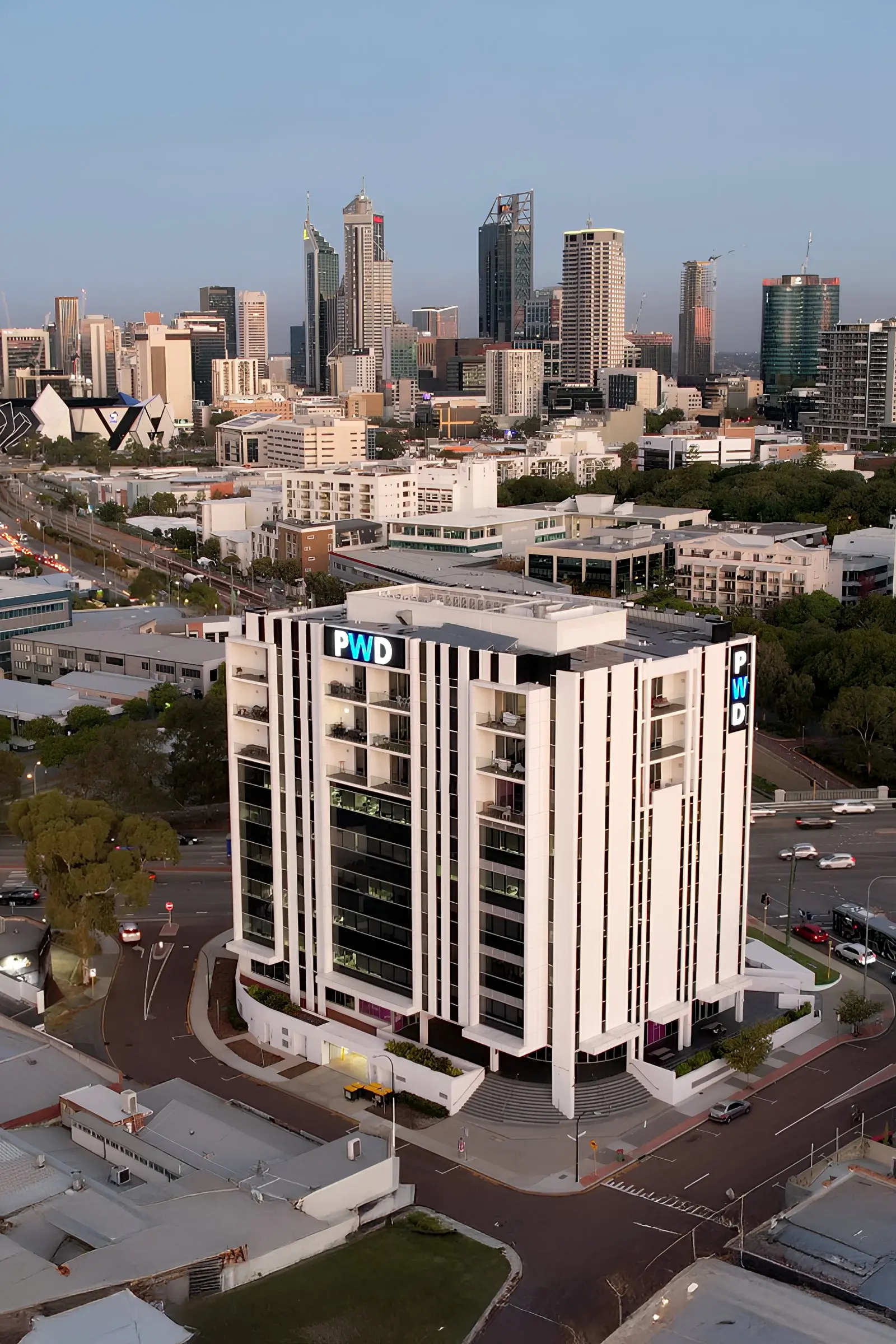
Site visits, photography and video shot at your premises, workshops with your sales team, and a review meeting across a table rather than a screen. PWD’s office is at 3 Loftus Street, West Leederville, and every part of the work is delivered in-house in Perth, so the people you meet are the people doing the work.
WALGA and local government experience
WA councils and government agencies buy differently from private businesses. They expect suppliers on recognised procurement panels, sites that meet WCAG accessibility standards, data hosted in Australia, documented security practice and a clear approval process. PWD is a WALGA preferred supplier, is ISO 9001 and ISO 27001 certified, and builds GovCMS websites for WA councils and agencies. An agency that has not worked with a WA council will learn those expectations on your project.
To see where you stand suburb by suburb, get a free Perth local visibility check through our SEO services in Perth page or call 08 6146 0195.
Do Perth digital agencies understand WA consumer behaviour?
The good ones do, because they live in it, but “Perth-based” is not proof on its own. Test any agency, local or interstate, with questions that only WA experience answers:
- Which suburbs convert for a business like mine, and which produce enquiries that never turn into jobs?
- What does the mining cycle do to demand in my category, and how should the budget move with it?
- How do regional WA buyers find a Perth supplier, and are they worth targeting for me?
- Which local directories and associations are worth a listing, and which are dead?
- Who holds the local pack for my top three searches today, and what would it take to displace them?
An agency that answers from experience, with names and examples, understands the market. One that answers with a generic process will learn it on your account.
Should WA businesses avoid interstate digital agencies?
No. A WA business should not avoid interstate agencies outright, but it should insist on three things: reporting and meetings in Perth hours, local keyword research done from a Perth perspective rather than national volumes, and a named account lead who has run WA accounts before.
Interstate makes sense in specific cases: a national e-commerce business selling to every state, a specialist enterprise platform with only a handful of expert agencies in the country, or a sector niche no Perth agency covers. In those cases choose the expertise, then manage the distance with the three conditions above.
How do I know I’m ready to hire a Perth digital agency?
You are ready to hire a Perth digital agency when you have a measurable goal, a working website and a budget that covers at least six months. The goal can be simple (20 qualified enquiries a month, a target cost per lead), but it has to be something a report can show moving. The website needs to load quickly, work on a phone and have a way to enquire, or the first job is fixing it. And six months is the realistic minimum for SEO to show movement, so a budget that only stretches to three is better spent on Google Ads or on the site.
What size business should hire a Perth agency?
Any size. Sole traders with a service area, family businesses with a few vans, professional firms, builders and ASX-listed companies all hire Perth agencies. What changes is scope, not eligibility. A sole trader might need a Business Profile, a handful of suburb pages and a review process, while a multi-site business needs location pages, structured data, a content program and a link strategy.
How do Perth businesses decide on an agency shortlist?
Shortlist three to five agencies, put the same ten questions to each, and verify the proof they give you. The questions should cover who does the work and where, which accounts you will own, what reporting you get and how often, the contract term and exit conditions, and two current clients of similar size you can call. Read how to choose a digital marketing agency for the full list.
Then check. Search your own top terms from a Perth location and see whether each agency ranks for its own services. Look up certifications and partner status on the official registers rather than the agency’s website. Ask for a screen share of a live client account, with that client’s permission, rather than a PDF.
Local SEO tactics that work in Perth
Five tactics do most of the work for a Perth business, and none of them are secrets. The difference is in doing them suburb by suburb.
- Google Business Profile. Complete every section, choose the most specific primary category, set service areas that match where you actually work, add photos of real jobs and the team, post updates, and answer every review. The profile is the biggest single factor in the local pack.
- Suburb and service-area pages. One page per suburb or region you genuinely serve, with content specific to that place. Fremantle, Subiaco, Cottesloe, Joondalup and Rockingham are different markets and Google treats them that way.
- Citations. Consistent listings on the directories that still matter in WA, industry associations and local business groups. Ten accurate listings on sources that count beat a hundred on directories nobody uses.
- Reviews. Ask every satisfied customer at the moment the job finishes, respond to every review, and watch Facebook and industry review sites as well as Google. A steady flow of recent reviews outperforms a large old pile.
- NAP consistency. Your business name, address and phone number must match exactly across the website, the Business Profile, social profiles and every directory. “St” on one listing and “Street” on another read as two different businesses.
Measure it with local rankings by suburb, Business Profile calls and direction requests, organic traffic from WA, and enquiries by source. Local SEO results typically become visible within three to six months of consistent work, with Business Profile changes showing sooner. For the full seven-step method, see our local SEO method.
Get a free Perth local visibility check
PWD was established in Perth in 2007 and works from West Leederville, with every part of the work delivered in-house. We will show you where you rank suburb by suburb against the businesses that actually hold the local pack in your category, and what it would take to move.
Request your free Perth local visibility check through our SEO services in Perth page, or call 08 6146 0195 to talk to someone in your time zone.