10 Small Business SEO Tips + Checklist for 2026

Running a small business means every marketing dollar needs to deliver results. That’s where SEO becomes your best investment – it brings customers directly to your door when they’re actively searching for what you sell.
Unlike expensive advertising that stops working the moment you stop paying, SEO builds long-term visibility for your business. When someone in your area searches for your product or service, proper SEO ensures you show up in those search results instead of your competitors.
We’ve helped hundreds of Australian small businesses climb the search rankings since 2007. Here’s exactly how you can do the same, with practical strategies that work without breaking your budget.
Why Small Business SEO Actually Works Better
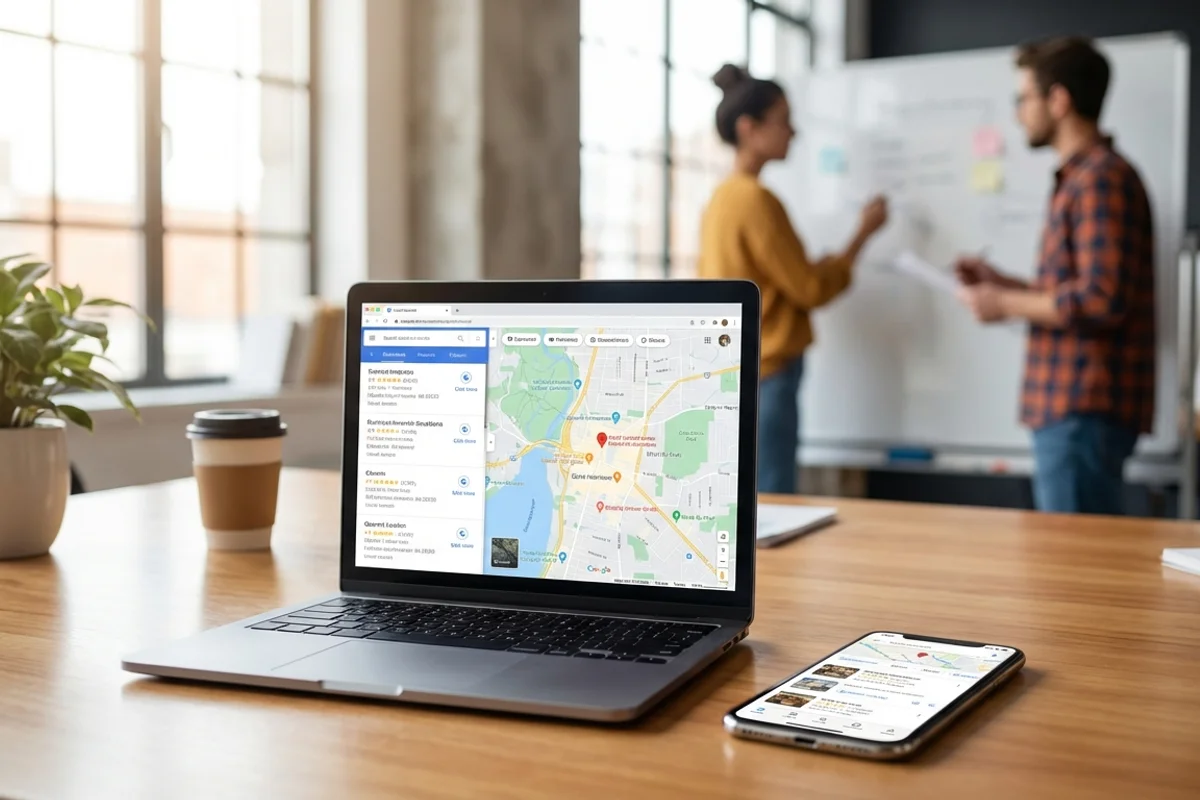
Big corporations might have massive budgets, but small businesses have something better – the ability to dominate local search. When someone searches for “accountant near me” or “plumber Brisbane”, Google prioritises local results. This levels the playing field.
Small businesses also move faster. You can update your website content, respond to customer reviews, and optimise for new keywords without waiting for corporate approval. This agility gives you a real competitive advantage in search rankings.
The Four Pillars of Small Business SEO
Before diving into tactics, understand these four fundamentals that drive every successful SEO campaign:
- Keyword Research – Understanding exactly what your customers search for
- Content Optimisation – Creating pages that answer those search queries
- Technical Performance – Ensuring your site loads fast and works perfectly
- Local Authority – Building credibility in your geographic area
Master these four areas, and you’ll outrank competitors who focus on just one or two. The statistics prove that businesses with strong SEO see 14.6% higher conversion rates than traditional marketing methods.
Keyword Research That Actually Drives Business

Most small businesses get keyword research wrong. They target broad, competitive terms like “web design” instead of profitable local phrases like “web designer Geelong” or “small business website design”.
Start with your actual customer conversations. What words do they use when describing their problems? How do they ask for recommendations? These real phrases often convert better than textbook keywords.
Free Tools That Deliver Real Results
Use Google’s Keyword Planner, but don’t stop there. Check Google’s autocomplete suggestions and the “People Also Ask” sections. These show you exactly what people are typing into search engines right now.
Answer The Public reveals question-based searches that work perfectly for blog content and FAQ pages. When someone searches “how to choose a plumber”, they’re much closer to hiring than someone just searching “plumber”.

Content That Converts Searchers Into Customers

Good SEO content does two jobs: it ranks in Google AND it convinces people to choose your business. Too many websites nail the first part but fail the second.
Write for humans first, search engines second. Answer the real questions your customers ask, address their concerns, and make it clear why they should choose you over competitors. Our blog optimisation guide shows exactly how to balance SEO with persuasive copy.
The Content Types That Drive Local Business
Service pages work harder when they include local information. Instead of generic “web design services”, create “Web Design for Melbourne Restaurants” or “Plumbing Services in Suburbs We Service”. This targets local searches while addressing specific customer needs.
FAQ pages capture long-tail searches beautifully. People search in question format constantly – “How much does kitchen renovation cost?” or “What’s the best accounting software for tradies?” Answer these questions thoroughly, and you’ll rank for valuable search terms.
Case studies and customer stories build trust while targeting industry-specific keywords. A title like “How We Helped a Café Increase Sales by 40% With Better POS Systems” targets multiple search phrases while providing social proof.
Local SEO Strategies That Actually Work
Local SEO makes or breaks most small businesses. Get this right, and you’ll dominate your local market. Get it wrong, and you’ll stay invisible to nearby customers.
Google Business Profile Optimisation
Your Google Business Profile (formerly Google My Business) controls how you appear in local searches and Google Maps. This listing often determines whether someone calls you or your competitor.
Complete every section thoroughly. Add high-quality photos of your work, your team, and your premises. Post regular updates about projects, seasonal services, or special offers. Google treats active profiles as more trustworthy than abandoned ones.
Respond to every review, positive and negative. Thank customers for good reviews and address concerns in bad ones professionally. This shows potential customers you care about service quality.
Local Citation Building
Citations are mentions of your business name, address, and phone number across the web. Consistent citations across directories, review sites, and local websites build trust with Google.
Start with major directories like TrueLocal, Yellow Pages, and Yelp. Then target industry-specific directories. If you’re a restaurant, get listed on Zomato and Urbanspoon. If you’re a tradie, focus on service directories like Hipages or ServiceSeeking.
Keep your NAP (Name, Address, Phone) information identical everywhere. Even small differences like “St” vs “Street” can confuse Google and weaken your local rankings.

Technical SEO Essentials for Small Business Websites
Technical SEO sounds intimidating, but it’s mainly about making your website fast, mobile-friendly, and easy for Google to understand. Get these basics right before worrying about advanced tactics.
Site Speed Optimisation
Slow websites kill conversions and rankings. Page speed directly impacts both user experience and search rankings. Google’s research shows 70% of users abandon sites that take longer than 5 seconds to load.
Use Google PageSpeed Insights to identify speed issues. Common fixes include:
- Compressing images (WebP format works brilliantly)
- Minimising CSS and JavaScript files
- Using browser caching
- Choosing fast web hosting
Most small business websites can achieve excellent speed scores with these basic optimisations. Choosing the right CMS also makes a huge difference – some platforms are naturally faster than others.
Mobile-First Design
Google uses mobile-first indexing, meaning it judges your site based on how it performs on smartphones. If your site isn’t mobile-optimised, you won’t rank well regardless of your content quality.
Test your site on various devices and screen sizes. Buttons should be easy to tap, text should be readable without zooming, and navigation should work smoothly with fingers, not just mouse cursors.
Mobile users behave differently than desktop users. They want information quickly and contact details prominently displayed. Put your phone number and “Get Quote” buttons where mobile users can find them easily.
Link Building Strategies for Small Businesses
Link building doesn’t require expensive PR campaigns or dubious link farms. Small businesses can build authority through genuine relationships and valuable content.
Local Partnership Links
Partner with complementary local businesses for mutual link benefits. If you’re a web designer, partner with local photographers, copywriters, and marketing agencies. Feature each other’s work and link to each other’s websites naturally.
Sponsor local events, sports teams, or charity drives. These often include website mentions and links from respected local organisations. The SEO value combines with genuine community involvement.
Our link building guide details more tactics, but remember: quality beats quantity every time. One link from a respected local business beats dozens from random directories.
Content-Based Link Earning
Create content other websites want to reference. Industry guides, local market reports, and useful tools naturally attract links from other businesses and bloggers.
A plumber might create “The Ultimate Guide to Perth Water Pressure Issues” that local real estate agents and home inspectors would reference. An accountant could publish “Tax Calendar for Australian Small Businesses” that business websites would link to regularly.

Voice Search and Modern Search Behaviour
Voice search changes how people find businesses. Instead of typing “restaurant Sydney”, they ask “Where’s the best Italian restaurant near me?” Your content needs to match these conversational search patterns.
Target question-based keywords and provide direct, clear answers. Create FAQ sections that address common voice search queries about your business, location, and services.
Voice searches are often location-specific and immediate. Someone asking “plumber near me emergency” needs contact information fast, not lengthy service descriptions. Structure your content accordingly.
Social Media Integration and SEO
Social media doesn’t directly impact search rankings, but it amplifies your SEO efforts by increasing content visibility and driving website traffic.
Share your blog posts, case studies, and business updates across relevant platforms. LinkedIn works well for B2B services, Instagram suits visual businesses like restaurants and retail, and Facebook remains strong for local services.
Use social media to build relationships that lead to natural link opportunities. Engage with local business groups, industry associations, and potential customers who might reference your business online.
Video Content for Small Business SEO
Video content keeps visitors on your site longer, which Google interprets as a quality signal. It also helps you rank in video search results and Google’s featured snippets.
Create simple, helpful videos that showcase your expertise. A landscaper might film seasonal garden maintenance tips. A mechanic could explain common car problems. An accountant might break down tax planning strategies.
Optimise videos for search by including transcripts, descriptive titles, and relevant tags. Upload to YouTube but also embed them on your website to increase dwell time.
Measuring and Improving Your SEO Performance
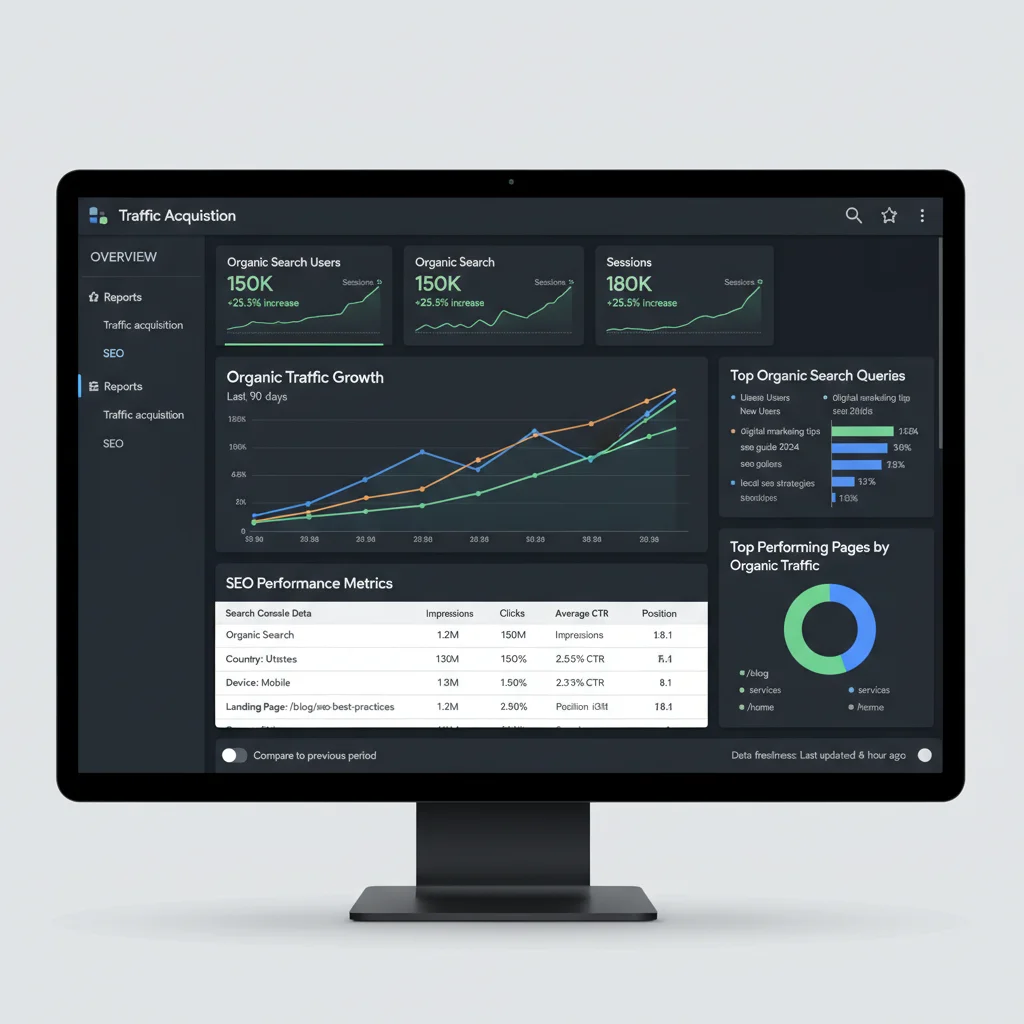
SEO success requires consistent monitoring and adjustment. Set up Google Analytics and Google Search Console to track your progress and identify opportunities.
Focus on metrics that matter to your business: organic traffic growth, keyword ranking improvements, and most importantly, leads and sales from organic search. Track the right SEO KPIs to measure real business impact.
Regular SEO Audits
Conduct SEO audits quarterly to identify technical issues, content gaps, and new opportunities. Avoid common SEO mistakes by checking for broken links, duplicate content, and missing meta descriptions.
Use free tools like Google Search Console to spot crawl errors and indexing issues. Monitor your competitors’ strategies and adapt successful tactics to your own campaigns.
Small Business SEO Action Plan
Ready to start? Follow this step-by-step action plan to build your SEO foundation:
Month 1: Foundation Setup
- Claim and optimise your Google Business Profile
- Set up Google Analytics and Search Console
- Conduct keyword research for your top 5 services
- Audit your website’s technical performance
- Create or update your NAP listings across major directories
Month 2-3: Content Development
- Optimise existing service pages with target keywords
- Create a detailed FAQ page addressing common customer questions
- Write 2-3 helpful blog posts targeting local search terms
- Add customer testimonials and case studies
- Ensure all content is mobile-optimised
Month 4+: Ongoing Optimisation
- Publish new content regularly (aim for weekly blog posts)
- Build local partnerships and earn quality backlinks
- Monitor rankings and adjust strategies based on performance
- Expand into video content and social media integration
- Conduct quarterly SEO audits and competitor analysis
Remember, SEO is a marathon, not a sprint. Consistent effort over 6-12 months typically delivers significant results for small businesses. Need professional help accelerating your results? We’ve been helping Australian small businesses dominate local search since 2007.
Common SEO Mistakes to Avoid
Learn from others’ mistakes rather than making them yourself. These common errors can seriously damage your search rankings:
- Keyword stuffing – Using keywords unnaturally makes content unreadable
- Ignoring local search – Most small businesses are local, so local SEO is essential
- Neglecting mobile optimisation – Mobile traffic dominates most industries
- Buying low-quality links – Google penalises paid link schemes heavily
- Focusing only on rankings – Traffic and conversions matter more than rankings
- Expecting instant results – SEO takes 3-6 months to show significant impact
The businesses that succeed with SEO are those that focus on genuinely helping customers while following search engine best practices. This approach builds sustainable, long-term results rather than short-term ranking boosts that disappear quickly.
Your Next Steps to SEO Success
Small business SEO works because it targets people actively searching for your services. Unlike traditional advertising that interrupts people, SEO connects you with customers who already want what you’re selling.
Start with the basics: claim your Google Business Profile, research your keywords, and optimise your most important pages. Our local SEO guide provides additional detail for businesses serving specific geographic areas.
Remember, your biggest competitors probably aren’t doing SEO properly either. Small improvements in your search visibility can translate into significant competitive advantages and increased revenue.
Ready to outrank your competition? Contact our team for a free SEO consultation, or start implementing these strategies today. The sooner you begin, the sooner you’ll see customers finding your business through search instead of your competitors.
Frequently Asked Questions
How long does SEO take to work for small businesses?
Most small businesses see initial SEO improvements within 3-6 months, with significant results typically appearing after 6-12 months of consistent effort. Local SEO often shows results faster than competitive national keywords.
What’s the most important SEO factor for small businesses?
Local SEO is typically most important for small businesses. Optimising your Google Business Profile, getting positive reviews, and targeting local keywords often delivers the biggest impact on leads and sales.
How much should a small business spend on SEO?
Small businesses typically invest $500-$2000 per month on SEO, or 5-10% of their marketing budget. Many tactics can be done in-house, making SEO more cost-effective than paid advertising for long-term results.
Can I do SEO myself or do I need an agency?
Basic SEO can be done in-house using the strategies outlined above. However, technical SEO and competitive link building often require professional expertise to achieve maximum results efficiently.
What’s the difference between SEO and Google Ads for small businesses?
SEO builds long-term organic visibility that continues working without ongoing payments, while Google Ads provides immediate traffic but stops when you stop paying. Most successful small businesses use both strategies together.
How do I track if my SEO is working?
Monitor organic traffic growth in Google Analytics, track keyword rankings for your main services, and most importantly, measure leads and sales from organic search. These metrics show real business impact from your SEO efforts.